That was a poem (if you can call it that) I wrote yesterday—don’t ask me to explain it—I think the title does that, if anything can.
Had some strange recordings today—well, it’s yesterday now—and the day before was pretty awesome also. That day I played a slow but nearly accurate ‘Arabesque’ by Debussy—and then, after listening to Sibelius’s Second Symphony in e minor, I tried to pick out the finale theme on the piano—and that one I call ‘Playing with Sibelius’—I really shouldn’t use his name, since I made quite a mess of his music (which is really beautiful—check out the YouTube of Leonard Bernstein conducting it) but I couldn’t pretend that his theme, even as jacked-up as I played it, was my own creation.
Then today, or yesterday rather, our good neighbor, Harlan, came over to repair our plumbing—you can hear some handiwork clunking about and such—while I was making a video of the snow falling outside our window—and I played some song covers that came out good enough to post. The camera was pointed towards Harlan’s house (even though you can’t see it in the video) and you can hear Harlan, at the end of the recording, asking why we’re filming his house (ha ha).
The two improvs I played after everyone else left, so they have no interesting stories to them—but I kinda like the way they turned out anyhow. February has been a big recording month for me—this makes twenty-six recordings for February and it’s not even over yet…. But the biggest thrill for today is—the toilet flushes again! Yayyy. (You never appreciate stuff until it goes away, do you?)
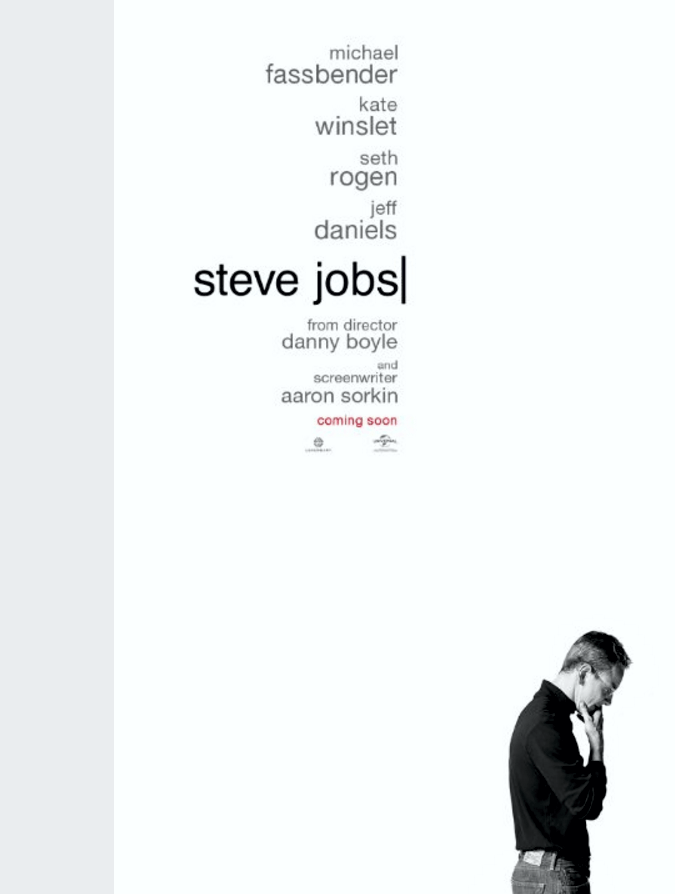
I watched two movies – “Trumbo” and “Steve Jobs” –both bio-pics, obviously, but truth is stranger than fiction and Hollywood has done as much with non-fiction drama as it has with plain old movies—and I use the phrase ‘plain old movies’ advisedly, since the most impressive movies of recent days have either been historical (“Selma”, “Straight Outta Compton”) or biographical (“The Imitation Game”, “Unbroken”) or both (“Jersey Boys”, “Race”) and, since the first blush of CGI’s thrill has long since worn off, block-bluster fictional movies like “Spectre” or “The Force Awakens” (or any Marvel or DC movie) just seem that much more formulaic. Movie-making embraced childhood with its abject surrender to science fiction, sword and sorcery fantasy, and especially comic books—all the things that leant themselves to the new SFX tech’s possibilities. Now that such whiz-bang-ery is a given, these themes are poised to return to the children’s entertainment from which they came.
Don’t get me wrong—good science fiction (and yes, I’ll admit it, for Tolkien’s sake—fantasy) can still be great entertainment, suitable for grown-ups—but science fiction encompasses both sweeping visions and ‘space opera’ (i.e., soap operas with spaceships in them, like the Star Wars franchise) and for every Kubrick’s “2001: A Space Odyssey” there are a thousand “Transformers”. So I’m glad that science fiction has been taken out of the kiddy-corner—now all we need is a little judicious bifurcation between age-levels, and everything will be fine.
Maybe it’s my age—or maybe it’s my lifelong interest in history—that makes me lean towards the ‘based on actual events’ movies. Or maybe I just like the challenge—everyone knows that a movie is a movie first, and a historical archive last—and my favorite thing to do is watch a historically-based movie, especially one based on a serious non-fiction book, like “Unbroken” or “The Imitation Game”, and compare in my mind what I read with what I see. I have discussions with myself about why they cut this interesting fact or added that spurious made-up scene. It’s like a review quiz for those of us who read the book first. And it’s a reminder that all history, written included, has to be taken with a grain of salt—we can never know the whole story, because even the people who lived it never know the whole story—the whole idea of ‘knowing’ history is a misunderstanding of what history’s limits are.
We see it on the news—especially now, during campaign season—the call and response ritual of two people trading ‘That’s not what I said’s back and forth—illustrating that even in a single conversation, the ‘truth’ is a combination of context, syntax, attitude, and intent—all whipped together with the vagaries of language and the pitfalls of hasty assumptions. To imagine that a student of history from a century or two back would reach any more than a vague abstraction of what really happened is, well, silly.
Those abstractions, however, are dead serious—they are the paradigms of our present. Our ideals, our ideas of what our country is, of what we are—are all bound up in the history that led to this present. Thus the desire for history to be something we can nail down and dissect—but all we can ever really do is postulate—to suggest that this is the way it might have gone. To me, this is one of the great reasons for the need for pluralism—disagreement is a given, within groups as often as between groups—and so we should see groups of any kind as a superficial distinction that is always overridden by our commonalities.
But I was talking about movies. Okay, first off, I read “Johnny Get Your Gun”, Dalton Trumbo’s historic novel, when I was a teenager. Being a bookworm, I just came across it—no one warned me what it was about, or suggested it—I just opened to the first page and started reading. Oh my fucking God!—this book was meant to be an ‘anti-war’ novel—it starts with a disembodied person talking to himself, wondering why he’s blind, and deaf, and can’t move. It turns out, as you read along, that you are reading the thoughts of a wounded veteran who is lying in a hospital bed, covered in bandages and missing an appendage or two. I can’t remember specifics—just the horror of Trumbo’s description of what it’s like to be blind, deaf, helpless, and alone. The book turned my stomach—I recommend it to anyone who’s considering enlisting, just for a second opinion.
But I didn’t hate it—I was enthralled by what I was reading—disagreeable as it was, it pulled me in. And I think that is what made Dalton Trumbo both a martyr of the Blacklist, and its vanquisher—he not only wouldn’t look away from the unpleasant or the inconvenient, he was bound and determined to get you to look at it too—but in a way that made it impossible to look away.
As for the movie—it was great. I’m a big fan of Bryan Cranston and Diane Lane and Louis CK and John Goodman and Helen Mirren—jeez, if they’d made a bad movie, hell would’ve froze over. I watched the movie, then I hit the replay button on my remote and watched it again.
As for “Steve Jobs”, I vaguely remember writing a blog not too long ago where I defended Aaron Sorkin from reviewers who shrugged at his latest effort—even though I hadn’t yet seen the movie. Well, I’ve seen the movie now—and I was right. It’s fantastic—it tells so many stories in the interstices between the obvious stories—to call it multi-layered is to damn it with faint praise.
Again, big fan of Fassbender, Winslet, and Rogen—and Sorkin, of course—so I expected great things. But the ‘frame’ everyone made so much of—the movie being set in the minutes before three major product launches, separated in reality over many years of actual time, is very fitting for a historical precis—each launch was a nexus of time, pulling together all that went before and all that would follow, and the combination of personal, business, and technical conflicts in the moments before—well, it gives a lot of depth and texture without trying to nail down exactly who said what when, and that sort of thing.
I said something in yesterday’s post about my favorite artists’ biographies invariably disappointing me by revealing that they had feet of clay—Jobs is certainly in that category—but every movie needs a bad guy—even if he’s the hero.
Billie Holiday’s discography includes some beautiful old standards—one of my favorites is “I Can’t Believe That You’re In Love With Me” written by Jimmy McHugh & Clarence Gaskill in 1926. I find the sheet music demanding and if I can’t play the thing properly, I certainly can’t give you the slightest idea of how exquisitely simply beautiful it is on the Billie Holiday recording. Those early recordings of Billy Holiday with the Teddy Wilson Orchestra are, in many ways, the apotheosis of musicality—so weirdly perfect and so perfectly weird. (Apotheosis means “the highest point in the development of something; culmination or climax.”—I looked it up to make sure I wasn’t being stupid.) Here’s another favorite Holiday recording:
And that’s the context in which I first heard performed “Everybody Loves My Baby (But My Baby Don’t Love Nobody But Me)” written by Jack Palmer & Spencer Williams in 1924. Again, I struggle too much with getting this sheet music played to give it the easy bounce that it should have.
The middle piece from today’s video is by Vincent Youmans—a real class act—influenced in later years by Jerome Kern—but this early song is more of a jazz take on a revival-tent choir—“Hallelujah” written by Vincent Youmans, with words by Clifford Grey & Leo Robin in 1927. Here’s another from 1927, “I Know That You Know”:
“Hallelujah” is a tricky piece, included today because I’m not likely to get a better take of it. So there you go, caveats included—my piano cover video for today:
We rely on the Brownian motion of personal relationships—we don’t acknowledge it outright, though—instead, we tend, when things are going well, to say ‘uh-oh, I just know something bad’s gonna happen’—or when things are going badly, to say ‘oh well, things will get better’. We don’t assume our lives will always get better—but we like to assume they’ll always change. And I suppose one of my biggest fears is that I would someday find myself in a situation that never changed—I can take the bad with the good, but I can’t take the nothing. That wouldn’t work for me.
I think that’s the horror of poverty—looking at the situation and seeing no possibility that it will ever change. Even the American Dream has something of that—the pursuit of happiness doesn’t guarantee happiness, but it implies change of some kind—the possibility of it, at least—and that is why President Obama’s call for hope and change resonated so deeply for Americans—change is the American Dream. The financial inequality and the shrinking of the middle class frighten us—because they signal an end to mobility. America is becoming set in its ways—and that’s exactly what people yearn to escape when they dream of coming here. It’s the curse of ancient roots—to lose even the dream of change—and America, at a mere two centuries, is already getting as stagnant as the rest of the world.
Americans used to travel more—we used to relocate more—we were restless—‘cruisin’ was the national pastime. Growing job markets used to attract relocated workers looking for new opportunities—now growing industries hide inside our computers—we don’t even go outside anymore—except to go to the gym. When did fresh air and new sights become the enemy? The person who figures out how to reinvigorate the millennials is going to make a revolution—and a butt-load of money. But what kind of app gets people outdoors?
I recorded a lot today—a whole bunch of Chopin mazurkas (only three made it onto YouTube) and a bunch of scraps of improvising that I threw together into one video—it isn’t nearly as bad as I thought it would be—it’s really kind of a nice change for me.
If I don’t post before then–have a good Valentines Day!
I’m working on backups—I’ve had it in the back of my mind ever since the new year turned—and when the PC crashed yesterday, I was worried about how much writing, music, scans, and who-knows-what-else I might have lost—so—backups, right away—before I forget. And I have it in mind to try and think of a way to do intermediate, frequent backups of work-in-progress—just to keep this sort of thing from covering too broad a time period.
Thursday, February 11, 2016 11:05 AM
The pain is obscene—I’m having a bad day. God, I could scream. I’m not usually Mr. Comfortable—but I’m used to that. It’s when the pain is just so severe and so constant that I can’t think straight—that’s when I get a little bitchy about it.
I resisted the strong urge to respond to all the political posts on my Facebook wall—thankfully—there’s nothing to be gained by venting my ‘old crabby guy’ sentiments all over Facebook, just so some trollish meathead can engage me with what he or she is sure is ‘cogent reasoning’, but which in the end only proves how superficial, emotional, and peer-pressured their thinking is. The trouble with Facebook is that an educated, intelligent person can find himself or herself put on the same level as the dumbest ass in the country—and I recoil at the waste of time represented by arguing with someone who can’t even use the English language (or, at least, spell-check).
Also, there’s a mountain of difference between someone with fifty years of engagement in history, politics, and current events—and someone whose political involvement began when they decided to jump on Bernie’s bandwagon two months ago. I won’t even go into the depths of stupidity, and lack of self-preservation, represented by favoring the GOP. I could face standing in front of a classroom, trying to teach people what they don’t know—but I’ll be damned if I’m going to face them as equals, trading quips, while I try to educate them—and while they pretend to an equal understanding. That’s too hard for me—and much too easy on them.
And it is too easy to be a troll—they can just keep spewing bullshit until someone calls them on it—I, on the other hand, feel a responsibility to know what I’m talking about before I argue a point. I could twist the truth eight ways from Sunday—but I call myself on that stuff before it even leaves my lips—I don’t just throw it out there and dare someone else to refute it, just because it wins my argument for me. That’s debate-team bullshit—and everyone knows it—even the people who habitually use it in place of verisimilitude. Debate and argument are like government—none of it works properly without good will on both sides.
Not that I intend to leave the battlefield to the morons—I’ll post political comments on Facebook again someday—but using the cold logic of reason—not out of this pit of bitterness and pain.
Here’s some piano music from before the recent computer crash:
Well, let’s see, lately I’ve watched “Bridge Of Spies”, which was fantastic, “Suffragette”, which was beautifully made, and some other movie that escapes me at the moment—no reflection on the movie—I just have a swiss-cheese brain. I did a nice post the other day, “Lachrymosa Regina”, which is about as good as my writing gets—and a new improv, “Suffragette” (which I named in honor of the film) which is about as good as my piano-playing gets—so I’ve had a banner post-birthday few days. Claire and I watched the last hour of the Super Bowl last night, waiting for Stephen Colbert—but the game ran long and Claire had to give up and go to sleep—I only saw Tina Fey, his first guest—I fell asleep before Will Ferrell came on.
That’s my autobiography of the last few days—pretty insular stuff—I did take at least one walk up and down the street outside my house during that time—not much, but I did see the sun. And I just recorded another decent improv (I think—I still have to listen to the playback). Okay—I just listened to the playback—I’d forgotten that, about one minute in, I’m trying to figure out Tom Wait’s “Jersey Girl” (I just heard it during the credits of the eponymous Kevin Smith film)—I only get a few chords from the chorus before I give up and start improvising, but it does kinda drag down the whole recording—which is, otherwise, as good as I’d hoped it was while I played it.
I also recorded a cover of the old Association hit, “Cherish” (by Terry Kirkman)—which I bang on quite wildly—like the piano owed me money or something—but that’s how I play when I think I’m being expressive—maybe I should take anger-management—but I think the problem goes too deep for group therapy to fix.
I am sixty years old today. I was born in 1956. Television is only a few years older than I am—but I’m a few years older than NASA. Some of my sharpest childhood memories are of watching NASA on Television—in between Civil Rights protests, Vietnam War news-reports, the assassinations of Martin and John and Bobbie, the Flintstones, Mary Poppins, and Star Trek. Computers used to be building-sized machines—cars used to have curves—and so many things used to be ‘shocking’—I miss ‘shocking’.
There was shocking art, shocking music, shocking language, shocking nudity (remember “Hair”?) and shocking space flights—orbiting the earth (Mercury), docking in orbit—and space-walking (Gemini), and landing on the moon (Apollo). I am not the only thing that has gotten old—‘shocking’ is showing some gray hairs as well—here in the future of wrist-computers, gay marriage, black presidents, and robots on Mars. I like it—I’m happy that we’ve matured to the point of accepting these new normalities—but I do miss ‘shocking’.
I miss kids outside, too. That used to be where you found kids—outside playing. I’m too old for kick-the-can—but it’s sad that no one plays kick-the-can anymore. I play Candy Crush now—and, yes, I’m too old for that as well, but I enjoy it—still, it’s no kick-the-can. As a kid, I was often chided for staying indoors all day, reading books—but even then, I spent more time playing outside than the heartiest of today’s kids.
My parents took us five kids camping in the summertime—Taconic State Park was a wilderness to a kid from Bethpage, Long Island—but we also hit Maine, Pennsylvania, Virginia—hiking in the woods, building a campfire, sleeping in a tent—I’m often disappointed with myself that I didn’t do the same with my kids. Being the son of a Scout Troopmaster, I certainly had the skills—I guess it’s just one of those things where you have to grow up to appreciate it—and my kids grew up before I did.
My dad taught me carpentry, too. I knew how to use power tools before I had a shop class—my dad had a workshop in the cellar—and I used to have a small workshop of my own—I could build furniture and fix parts of our house—but it’s a library now and most of my tools are gone. My son is familiar with basic tools, but I never taught him as much as I should have—he’s like me—more a reader than a builder.
I find myself thinking about time—the past, the present, the future—and while my head is whirling with thoughts, I have nothing to write down here—I suspect I’ve blogged for so long that I’ve already told most of my life story—and I hate to repeat myself.
Claire has put flowers all over the house to mark the day for me—and with the rain pattering down outside the open front door it’s very spring-like for my birthday—how bizarre—I remember one early Long Island birthday party when my father had to shovel a tunnel from the front door to the street—not a path—a tunnel—to allow my party-goers into the house after a blizzard. While blizzards are not the standard, either, it is true that a February-third birthday has always been snow-covered—whether Long Island or Westchester, February’s coming is well into winter—and a lack of snow is unnatural—though these easily-chilled bones have trouble complaining about warm winters.
I feel sorry for my contemporaries—hitting sixty has traditionally been the beginning of a slow, comfortable slide towards the sunset—but for us, it’s more like someone has hit a reset button—saying, “All that you have known is no more—and all that is new is strange to you”. Between climate change and technology change and social change I don’t know which is more disorienting. I wish I could come at all of this brave new world with a young heart and a young body—that I could face with some relish. But to have things go whirling off into the unknown, now, when I’m no longer a real part of it—that’s disheartening.
Still, I cheer the good changes—and there have been many—the world is undoubtedly a better place than it was in 1956—all our present troubles notwithstanding. You learn that progress changes for good and for bad—the people with bad agendas and self-serving goals adapt and overcome obstacles just like the good people—computers and rockets can be used for good or ill. The fight for the soul of humanity abides—and always will—no progress can change that.
Have you ever heard the fourth movement of Sibelius’ 2nd Symphony? It’s the greatest—I mean the whole symphony is nice, but that last movement—OMG. It’s like the Beatles—you can hear the same tune a million times, but it stays exciting and new, year after year. The difference, with classical music, is that you get something that lasts a half hour or more—instead of a four minute tune—that alone makes classical music great—to me, at least—I like something that hangs around for a while. And the conductor can alter the tempo and phrasing so much—I swear, I’ve heard Tchaikovsky’s Fifth by at least five different conductors and it’s like they’re five different pieces of music—it’s really something. Even a piano solo—look at the difference between Bach played by Wanda Landowska and Bach played by Glenn Gould—you’d swear it was a different composer.
Anyways, here’s some of my piano-playing:
Wednesday, February 03, 2016 10:21 PM
Surprise Party!
Okay—talk about a contrast of moods—this morning I was all contemplative—I played a thoughtful improv—I got sentimental with my blog post. I assumed I’d have a quiet day—I had asked Claire specifically not to have any party plans for my birthday—and Pete had called and said we’d get together to jam today. But as soon as we set up to record—Claire threw me a surprise birthday party—Pete was there as a decoy—to make sure I was up and dressed when people arrived, and Harlan and Sherryl came, and Marie and Evan—Claire and Spencer, of course—and Greg came along eventually. It was a lovely time—there was Swedish meatballs and mac’n’cheese and angel-food cake with strawberry icing—and I got nice presents (mostly colored socks—my specialty)—and I had a captive audience while I played the piano. Jessy called by I-phone from California—so we got to see her baby-bump and her pregnancy ‘glow’—she’s so beautiful as a mother to be—even more beautiful than usual. But maybe I’m biased. I gave the camera to Spencer and asked him to take pictures of everyone.
I had “Groundhog Day” playing in the background for part of the day—Comedy Central ran it on a loop, in honor of the day. And for those of you following at home, Puxatawney Phil did not see his shadow this morning—which legends tells us betokens an early spring—as if global warming wasn’t threatening to bewilder the spring bulbs out of the lawn right here in early February. I have a special fondness for Groundhog Day because it has always been the day before my birthday—which I share with Horace Greeley, among others. And the eponymous film is one of my favorites because lots of people say they don’t care for science fiction—but everybody loves “Groundhog Day”, and if that’s not science fiction, nothing is.
My CD-library-designated external hard-drive died, and today I purchased a new one-terrabyte Passport by Western Digital to replace it. I’ve started ripping my CDs to the new drive—but I have hundreds of CDs, so it’s going to take a few days. I hope I didn’t lose anything irreplaceable—but I’m not going to spend $500 to find out (that’s the average cost of a data-retrieval service to restore a broken hard-drive’s data). I’m enjoying the review of my CD collection, anyway—so I’m just going to relax and enjoy rebuilding my digital music library. I was fortunate in using my C: drive for the downloaded music files delivered by Amazon or I-Tunes—I don’t know where I’d begin to restore that part of my music collection. Do I re-order it? Do I have to pay for it twice? What’s the deal? Here’s hoping I never have to find out.
Hillary won (just barely) and Trump lost in last night’s Iowa Caucuses, so I’m cautiously optimistic. I think people forget that Hillary Clinton would be our first woman president—and that’s aside from being the best candidate, regardless of gender. We’ve been so excited and proud, most of us, to have elected Barrack Obama—and now we have a chance for another first—but somehow, the fact that we’ve had our first non-white president takes some of the luster off of the idea of our first woman president—which is weird. I guess, emotionally, people can get too much of a good thing.
Ms./First Lady/Senator/Secretary Clinton has done a lot of the downplaying herself—I guess she doesn’t want to make her gender the focus of her candidacy—and I can see why she’d think that—but I’m excited. Female heads of state may be rare—but guess what’s rarer? Female heads of state who commit war crimes, or get caught in corruption, or do the many bad things that male heads of state get up to when they get the chance—that’s what (or should I say who?). Not that women are always good—perhaps they get less chances to ruin the world—but that still leaves them with pretty good track records.
Good old Bernie is a nice guy—but he’s promising the moon to college kids—and those young people have enough school-loan-debt and unemployment to make them hungry for change—even hungry enough to vote. But let’s get serious about a Socialist running in the national election—the Democratic primary is one thing, but getting the whole country behind him is altogether different. And that’s just getting him elected. Look at Bernie Sanders’ voting record in office and ask yourself how much bi-partisan support his programs are liable to generate—even an elected Bernie could never deliver on his promises unless those same people vote in progressive Democrats to the Congressional and Senate seats.
Anyway, I continue to watch the race with interest. Now here are some videos I posted recently—I hope you like them:
And, finally, this is a post originally from my Amazon Customer Reviews:
Monday, February 01, 2016 3:58 PM
Book Report: “This Long Vigil” by Rhett Bruno (2016Feb01)
This would be more properly titled ‘Short Story Report’ but I often fall into the pit of convention—and in this case I am helped along by my Kindle, which renders the purchase and consumption of all fiction into the same seamless ‘buy-with-one-click’ stream—with the exception of the length of time for which we will be beguiled by the author. In this case—blink and you’ll miss it.
I found ‘This Long Vigil’ entertaining, well-written, and engrossing—but far too short. In the case of such snippets, one is more likely to feel the resonance of what’s missing than the paucity of what’s not. In this particularly case, I was left wondering how the premise came to be—what devilish organization would decide to put humans into the situation which the protagonist of this story finds himself? A solitary life leavened only by the voice of a parental computer, but surrounded by a thousand sleeping bodies who will never wake—this story leaves a lot unexplored—particularly how someone could survive such a life without succumbing to emotional imbalance or outright insanity. The protagonist’s final option skirts the issue, but couches it as a hero’s choice—not the ultimate desperation of a tortured guinea pig.
In programming we have the ‘reality check’—we look at a program’s results and, rather than check the calculations, we’d ask ourselves ‘does the output make any sense in general?’ If the ‘number of orders shipped’ equals negative two, or twenty million—you know you have a program bug—that’s a ‘reality check’. Story’s like “This Long Vigil” can be haunting and evocative—but the lack of a ‘reality check’ in the premise always breaks my vicarious concentration. Fortunately, this story is over before you have too long to dwell on it—the doubts come after. I look forward to reading something of Rhett Bruno that is longer and less darkly-toned—and I must stop here lest my review outstrip the story.
Caregivers are the big growth sector in the jobs market—as the population skews toward seniors, which all developed countries’ populations do, the need for people to assist the aged, infirm, or confused mushrooms with places, buildings, groups, and the individual caregivers around which such systems form. For as the need for caregiving expands, the reaction of capitalist free-marketry is to create an ‘industry’. Suppliers of equipment, materials, and medications form one sector while organizers/suppliers of the caregivers themselves form another—and they accrue protocols and regimens that conform to existing gatekeepers, such as the FDA and the AMA—and regiment themselves in such a way as to conform with business expectations. It’s a growth industry.
Meanwhile, for the less well-to-do, caregiving is more of a homegrown thing—people like me end up being cared for by our spouses, our parents, or (as with most seniors) our own offspring. In my case, my wife went back to school for her bachelor’s degree in computer science, went to work for Scholastic’s online encyclopedia, left to get her master’s degree in occupational therapy, and became an accredited occupational therapist—all while shepherding me through a decade of HepC, liver failure, three cycles of treatment with Interferon and Ribavirin, liver cancer, a liver transplant—and another decade of recuperation and infirmity while the HepC attacked my new liver—only to be stopped last year by the new cure for HepC.
I was one of the lucky ones—many people I knew with HepC are long gone—but I can’t help thinking that my wife may be one of the unlucky ones—having to subsume her own drives and ambitions to account for an ailing dependent. She is looking forward to a new career in occupational therapy, one which I presume will remit commensurate with the need for a master’s degree and passing an accreditation exam—but for over twenty years she has already worked as an unpaid caregiver. The millions like her will see only a handful reach the same success—most unpaid family caregivers find themselves hobbled by the constant needs of a dependent, finding it difficult to make ends meet, much less get ahead.
Caregiving can be, all familial sentiment aside, a form of involuntary servitude—and in this country, where we question even a mother’s need to care for her children over the demands of capitalism, we give little thought to the efforts imposed on those who care for the aged and infirm. Neither do we consider, as we are still embroiled in the debate over giving equal health care insurance to rich and poor, how caregiving takes on its double aspect—paid servants caring for the rich while indentured family members care for the poor.
Medical-related care and technology is unnatural—the Christian Scientists recognize this—whenever we delay the natural course of a life, we enter a somewhat science-fiction-y world. Not that there’s anything wrong with that, as Seinfeld would say—I’m no Christian Scientist, but it is fitting that the religion with ‘science’ in its name has some logical basis for its eccentricities. But caregiving really reaches into the outer limits of this question. In the case of seniors, for example, how long is it a good thing to prolong the life of someone with ever-decreasing mobility and awareness? When do we ever reach the point where life is too much a readout on a medical monitor—and too little actual living?
I find myself questioning whether my own quality of life justifies the ongoing expense and effort—and that’s without even beginning to consider whether my needs justify my wife’s sacrifices. But of one thing there is no question—respect must be paid. When people give of themselves, whether it’s the raising of children or the caring for the old or the sick—they transcend the earthly plain of profit and survival and make of their lives an expression of humanity. We glorify those who express their creative passion, but we fail to marvel at those who express an even more transcendent quality—mercy.
Caregiving gives us a window into capitalism—for the rich, caregiving becomes something they pay money for, in lieu of gratitude—while they overlook the importance (and expense) of the same service among the less fortunate. For the rest of us, caregiving remains a sacrifice worthy of our respect and gratitude—and sometimes, a job for which no payment is sufficient.
I had much more to say, but the gas-tank in my brain is empty for now. Here are two piano doodlings from yesterday:
I saw “Goosebumps” last night—I doubt I enjoyed it as much as a fan of the book series might have, but I enjoy Jack Black in anything and I enjoy any story where horror gets a light touch—the paranormal is usually treated with such darkness in films. I also saw the re-boot of “Fantastic Four”—I wondered at a re-make of such a recent film, but then I remembered the original had Chris Evans playing Johnny Storm and he’s now obliged to play Captain America in the whole tapestry of Marvel movies. The good news is that this new cast allows for a meeting of Fantastic Four and the Avengers in some future ‘free-for-all’ Marvel movie—wouldn’t that be cool?
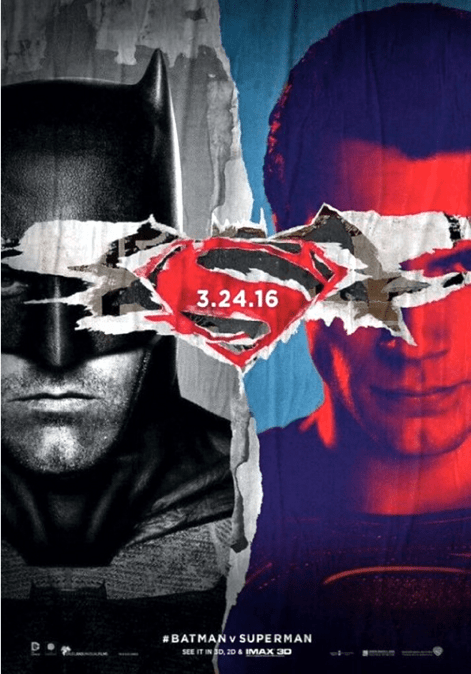
DC Comics is making up for lost time with their new WB series “Legends of Tomorrow” and the upcoming film “Batman vs. Superman: Dawn of Justice”. Marvel has done a great job of translating their comics library into films, but DC has made more inroads into the television-series-adaptation and the animated films (I also watched an excellent animated “Wonder Woman” yesterday)—in a way, DC is more true-to-form in that comic books are for kids, and TV series on ‘the WB’ and animated films are more kid-centric, where Marvel sticks to live-action cinematic realizations meant to cover all age demographics.
I preferred DC Comics as a kid in the sixties—but now that I’m sixty myself, I lean towards the Marvel efforts. I can see how “Legends of Tomorrow” would appeal to the young—it has as many characters as Pokemon and it plays with time-lines and time-travel, creating a wealth of niggling details that appeal to obsessed kids, but are a turn-off for grown-ups. The WB already had Green Arrow and Flash series (and Supergirl is on CBS) which provide a steady stream of villains, co-heroes, and sidekicks—meat for endless discussions over ‘who can beat who’. The ultimate ‘who can beat who’ is, of course, “Batman vs. Superman: Dawn of Justice” But I’ve never seen the fascination—Superman is Superman—Batman could spend his life in a gym and it wouldn’t help much—besides, who wants to see to good-guys fight each other? Aren’t there any villains, for crying out loud?
Anyhow, my VOD menu is pretty empty now—I’m trying to psych myself up to watch Spike Lee’s “Chi-raq”, but I expect it’ll be fairly heavy sledding. Greek Tragedy and Inner City Violence—not a light-hearted combo—but Spike Lee is a great filmmaker, so I’m going to watch it—I just need to steel myself first.
My biggest problem is the passage of time—I’ve watched a lot of movies. As a fan of the classics, I’ve seen silent films, black and white films, the classics, the not-so-classics, and ‘the essentials’ (as TCM calls them). I’ve seen many movies in drive-ins, in old movie palaces in NYC, and in local theaters—and since my illness, I’ve had ample opportunity to watch films on TV—some of them multiple times. With the exception of a few genres, like straight horror, I’ve seen every movie there is. I’ve thought about their stories, their plotlines, the process of movie-making, the work of acting, and the possibilities and the confines of dramatic tension—if I were any more involved with movies, I’d have to get a job in Hollywood.
This is a problem because I have acquired some pretty high standards—and originality is pretty hard to come by, after a century of creative people racking their brains for new angles, unexpected twists, and engaging serendipities. It’s been said that there are only a few stories—and that all stories are variations of these few ‘wireframe’ concepts—but I don’t know about that. There are a lot of stories out there—and while many of them are ‘road trips’ or ‘buddy’ films, ‘quests’ or ‘comings of age’, there are also a lot of unique stories that have no variations or spin-offs—modern-day fairy tales, and fantasies of myth, romance, or science that are unique in both plot and setting. Still, while there may be more than a handful of basic story ideas there are still not enough of them to fill sixty years of movie-watching with unending surprise. I’m in danger of outgrowing movies entirely—though I’m sure there are those who might think I should have done so long ago.
After all, movies are meant to be diversions from real life—and when illness took away my ‘real life’, I leaned heavily on diversion as an anchor for my sanity. Unfortunately, diversions are not meant to be the whole of a person’s life—so I’ve come to ask of movies rather more than they can possibly provide.
And now for the musical portion of our presentation—two improvs from last night that I share with you now. I’ve recently begun to question whether I should bother to post my improvs—their uniqueness is questionable and while they may each be technically unique, their style and sound is deathly familiar. I’m only one person playing one piano—the same person playing the same piano—and I’ve been posting improvs for years now. That’s my excuse, but it still makes me wonder some days why I bother. By my calculations, a person could listen to my YouTube improvs for a solid week-and-a-half—that’s hundreds of two-to-six minute improvs—and even Beethoven and the Beatles would get tiring in such large doses, never mind that I’m no Beethoven.
Still, here are two more. The first one, “In The Old Town” is followed, at the end, by a rendition of “A Hot Time In The Old Town Tonight”—a song old enough to be in the public domain, so I don’t give it ‘cover’ status on YouTube, even though, officially, I should. The second improv is so weird that I had to call it “Spaghetti Fingers”. I hope you like them.
Unhappiness can seem like a deep pit from which there is no escape—but then something happens and happiness dawns—we look back and see that the shadows that surrounded our thoughts have all dispersed, that nothing is quite so bad as it seemed—that life is, in fact, good. And this happens to us whether we are rich or poor, lonesome or crowded, silly or distinguished.
The difference is that unhappiness has reasons—ask anyone who is down and they’ll tell you the many reasons for their dismay. Ask someone why they’re happy, however, and they’ll tell you they don’t know—they just are. Is happiness merely an escape from reason? That’s entirely possible—there are plenty of reasons for worry—happiness may be simply the ability to transcend the knowledge that all life ends, that all things must pass, that human beings are not always nice people.
Consider intoxication-it’s got ‘toxic’ right there in the word—we poison ourselves with alcohol, etc. to escape from reason, to become happy. Consider the song lyric: “Forget your troubles, come on, get happy.”—we are not told to solve our problems, just to forget them. Happiness isn’t the absence of trouble, it’s the ignoring of trouble.
This brings us to the somewhat insane conclusion that happiness is not about conditions, it’s about attitude—we can be miserable in total comfort, and we can be happy in a snake pit—how we feel doesn’t necessarily match what we feel. So be happy—nothing can stop you. Just don’t go to your friends’ funerals that way—sometimes we are obligated to be unhappy. On the other hand, don’t be unhappy at a party—nobody likes a wet blanket.
To some degree, happiness comes from being busy—being busy is like being intoxicated—things happen, we get distracted from our thoughts, and happiness can spring out of any corner of our minds. That’s why being idle is so depressing—our unhappiness is uninterrupted and we need to be interrupted to remind us that happiness is an option. Loneliness and idleness are dangerous because they form pools of uninterrupted unhappiness—no distractions.
Charity and charitable works, likewise, do not make us happy because we are being ‘good’, they make us happy because they keep us busy thinking about someone else. But nothing makes us happier than danger—life is never so sweet as when death has been recently avoided. Life is so friggin weird.
Well, don’t expect much, because it’s been a rough few days and it is Sunday after all. I’ve been thinking about Bernie Sanders and his surge in the early states’s polls—and while that doesn’t mean a change in the overall Democratic nomination process—it does feed into my worry that I’ve been so set on Hillary Clinton for so long that I might be overlooking something in her number one rival for the Democratic nomination. However, now that I’ve taken some time to think on it—this is why I’m ‘still for Hil’:
A couple of things—first, Sanders supporters might not be taking into account that Bernie’s message, while attractive to the Democrats themselves, may fall on deaf ears in the nationwide election. Secondly, while I applaud all of Bernie’s most thrilling reforms, I question whether any person could deliver on any big, sudden financial reform—there’s a lot of headwind in that process—and while Hillary may be promising to do less, she has more chance of getting it done.
Hillary Clinton, because of Bernie’s rhetoric, is becoming the ‘bird in the hand’ candidate. You can take what she offers and be fairly certain she’ll win the election (and, as importantly, work better with a probable GOP-majority congress) or you can reach for what Bernie is offering, even though the realpolitik of his succeeding in both the election, and in working with a GOP-led congress, are less than promising.
I kind of think of Bernie Sanders as an Elizabeth Warren without the wisdom to see that such reforms will require a longer game—and greater influence—than a presidential term or two. In fact, Liz Warren, continuing her struggle in the Senate, has more chance of getting these kinds of reforms passed than a President Sanders ever would.
The chaos of the Republican campaign has caused the Democratic race to be shrunk down into a cartoon of itself, with little room in the meager coverage—between Trump sound-bites—to get the subtle nuances of why Hillary Clinton is still far and away our best bet, in spite of Bernie’s pyrotechnics in live performance (who’d a thunk it, huh?) And I admit that my fear that one of those Republican clowns could possibly ‘slip through’ is another factor in my favoring Hillary Clinton. Bernie supporters should recognize that his appeal stems from the very things that will make him beatable by a Republican—‘Socialist’ isn’t a dirty word to Democrats—but to the rest of the country? Please. Not that I have any objection to Bernie Sanders—wonderful guy—great ideas—total champion of the little people—but as presidential candidate in lieu of Hillary? No.
So, that’s my two cents on the Sanders surge.
I played some music the other day, right after several days of practicing nothing but my book of Chopin’s Mazurkas—so I’ve entitled it ‘Mazurkoid’—not because it sounds like Chopin, but because it has harmonies and rhythms I’ve never have thought of, had I not immersed myself in his genius—and I like to give credit where credit is due. All my improvising, honestly, is informed by constant practice, sight-reading through the great composers, the great song-writers, and any sheet music I can find, really—so while I don’t know where my fingers will go next, I know that their paths have been shaped by others—and all I’m adding is my personality.
Today I played from my Jazz Standards book—these are songs that I may have posted previously but if so I guarantee that these are better versions than I’ve ever recorded before, so I want to post my progress, if nothing else. They’re even kind of listenable, if not professional grade, renditions—so please feel free to give them a listen. I also ended with a tiny improv that I call ‘Moving On’, because it sounded so bright and sunny—like a fresh start. Wish it was longer, but I was pretty tired from all that jazz. I had just failed to play a decent rendition of Gerry Mulligan’s “Five Brothers” which was so bad it’s not on the recording—and you can hear me mumble, “I ain’t no Gerry Mulligan.” as I begin to play the improv….
Xper Dunn plays Piano – January 17th, 2016
Nine Jazz Standards:
Wrap Your Troubles In Dreams
Cute – by Neal Hefti
Don’t Get Around Much Anymore
Moonlight In Vermont
Imagination
Bernie’s Tune – by Bernie Miller
Let’s Get Away From It All
Fly Me To The Moon
Moonglow
Eight years and many a fine speech—but perhaps more impressively, never a stupid remark—take that, Republicans. We used to handicap poor Dubya whenever he made a speech. Bill had a good run—until the end when he started debating the definition of ‘is’—and lying some, which is its own kind of stupid. Before Bill we had Reagan and Bush—theirs was a kind of dazed-bully kind of stupid. But President Obama is an intellectual—he’s used to having to talk down to people without ‘talking down’ to them—but he’s always been more the knowledgeable guy you look up to than the guy you want to drink beer with. I’ll never understand the ‘drink beer with’ BS.
You may want to feel good towards your candidate for president—but you have to feel that they are more knowledgeable than Joe Schmoe from the local bar. I mean—even Dubya was a college grad—he wasn’t stupid stupid, just stupid for a president. It’s a hard job—you can’t have no idiot at the switch in there.
Which brings me to my favorite part of Obama’s final State of the Union Address—when he called out Trump and Cruz for their anti-American rhetoric of hate and division, saying we should reject all politics that target people by race or religion. That was good. I also enjoyed when he pointed out that America is too strong to be threatened in any real way by ISIL or Al-Qaeda—that citizens may be under threat from random craziness, but the country as a whole should deal with that without jumping the shark about national security. It’s refreshing to hear a politician tell us not to be afraid, isn’t it?
I’ll tell you why the healots have gotten out of hand—progressives have progressed—they learned that progressive programs are more subtle than a catch-phrase. The world’s complexity demands thought and patience—and we have to be sturdy in our grasp of change. Change without thought breeds chaos—catch-phrases work on the emotions, not on governance. The divide between good politics and good governance widens every day—it has always created a paradox, but now the ubiquity of media makes a monster of campaigning, completely overshadowing the whole idea of good government. So, while thoughtful politicians must be ever more careful of statements they know will be picked apart by nitpickers, the hucksters can shout their vitriol to the rafters without fear of an answering shout from their more serious rivals—people handicapped by their insistence on thinking before speaking.
I understand that people like Trump have to be covered by the media while they are running for president—but I hope we can enjoy a moratorium on idiots after the election is over (assuming we don’t elect one). I’ve heard enough from Trump to last me—and if I never hear him again it’ll be too soon. On the other hand, President Obama’s cool will be sorely missed—it’s hard being an egghead—and there’s something reassuring about having one in office. I felt like, even if the rest of the country is going crazy, at least the president gets it—I’ll miss that—I truly believe it’s better to have some brains in the executive office.
Yesterday when I heard that Bowie had died, my sadness was mixed with intrigue—the newspeople put it as “…died just days after the release of his last album, ‘Blackstar’”. That seemed the result of either overly-coincidental providence or macabre planning on David Bowie’s part—more likely the latter, I figured, when I also learned he had battled cancer for eighteen months prior to his end. But that begs the question—what was the plan, exactly? Was Bowie’s creative spirit so intense that he had to give us one more offering—or was he writing his own funeral score?
Bowie once said in an interview something to the affect that he was lucky to have been permitted to reach middle age without ever having to stop being a twenty-year-old. Artistry demands self-involvement—ego always threatens to overwhelm ability—but giving up ego, even for something worthwhile, like a satisfying but settled-down sort of life, leaves an artist creatively paralyzed. Self-expression requires a surplus of self-respect—enough to make one get up on stage before a mob to share one’s inner self. As we mature, we learn to respect cooperation, responsibility, and patience—and so much respect for all these things other than ourselves leaves us wondering if we ‘dare to eat a peach’. Bowie gorged on them.
But he wasn’t lost in his ego—he was fully aware of it—in fact, he ‘rode’ it in a way few people have the confidence to do. And, as an ‘ego-rider’, it would have been strange had he not left us with his own requiem. For someone like me, it would seem infinitely overweening—but for Bowie, it must have seemed virtually obligatory. Over and out, Major Tom—you Peter Pan of Glam—this is Ground Control ceasing transmission.
NOTE: Later on today, I sat at the piano and, with the above musings in mind, decided to try to be completely unconcerned with anything but my own experiences—not wondering if it was real music, not wondering how others might hear it—it was a liberating thought and, whether for that reason or not, today’s recording came out satisfactory to me.
Tuesday, January 12, 2016 1:20 PM
I have an embarrassment of riches today: $100 credit on my Amazon account, just waiting for me to spend on whatever my heart desires; Three new movies of promising qualifications on my VOD menu—“A Walk in The Woods” with Robert Redford and Nick Nolte, Woody Allen’s latest, “Irrational Man”, and Matt Damon in “The Martian” ( I read the book—fantastic book!); and I’ve made a breakthrough with my Android tablet—I’ve figured out how to use it as a Kindle while my Kindle is charging –and- I’ve figured out how to use OneDrive to move photos, docs, etc. from the tablet to my PC. I also found the button that changes its built-in camera from the front lens to the back lens (so now I can photograph something other than my own ugly face). It’s a small victory—but important to us old folks, who sometimes feel overwhelmed with all the new tech.
But now I’m just confused—I do better with one thing at a time—a bunch of stuff all at once—even good stuff—tends to push my ‘tilt’ button. So now I’m just sitting here, a little dazed, talking about movies I haven’t watched yet. I’ll be back, much later, writing reviews of the movies—I’ve started to enjoy reviewing movies (a bad sign) so I’m probably enjoying the anticipation right now more than I’ll enjoy the actual watching of the movies—we’ll see.
I turn sixty in three weeks—which is a problem for my Amazon shopping—I mean, who gets to sixty and doesn’t already own pretty much whatever they really need to own? I’ll probably end up looking at stuff that I can’t afford—I’ll almost certain spend more than the $100, so it’s really just unnecessary expense, in the end. I miss the early days of the Sharper Image catalogs—remember them? Page after page of strange new gadgets and devices—it all seems a little tawdry now—now that we’ve seen many new gadgets break, or not work as advertised, or become forgotten on a shelf after the first blush of interest in something, ultimately, useless. We’re still waiting for the real thing—jet packs and immersive-VR harnesses and hot-coffee spigots in every room.
Tuesday, January 12, 2016 7:43 PM
Well, there’s another day gone and nothing much got done by me—I’m not concerned—I have to take the long view of ‘getting stuff done’ these days. I’ll be off to watch President Obama’s final State of the Union Address in an hour or so—typically, the GOP spent the day front-loading their pooh-poohing, claiming the speech will be crap, that Obama’s last year will be crap—hey, if these guys could predict the future, our political landscape would look a whole lot different—but that doesn’t stop’em. I spent half the day playing Candy Crush and I feel more mature than those—oh, words escape me, profanity fails me—I yearn to insult them because they insult my mind—and they insult the whole country. The Childish Party? Isn’t that more representative than the enigmatic ‘Tea Party’? Come to think of it, GOP—Grand Old Party—is a pretty childish monicker—kind of like The He-Man Woman-Hater’s Club.
How has the world changed? Maybe it’s just me, but I think we’ve lost shock value and fashion. All those years of movie-makers trying to top Hitchcock at fear and horror, to top DeMille at sin and sensuality—we have no limits in film any longer—only tightening demographics and a rating system that affects ticket sales projections. Censorship has only taught us to hear dirty words as ‘bleep’, where even suggesting profanity was once forbidden.
Over those same years we’ve had so many career comebacks, period fads, ‘I Love the [decade]s’ TV shows, and retro fashions that no haircut, no pair of shoes, no ensemble is truly out of fashion—that monolith doesn’t exist anymore. We only see shadows of it in boardroom meetings and comic-cons—where participation requires a costume. But I remember a time when you weren’t allowed in a restaurant without a tie—when girls couldn’t wear jeans to school—when you could actually be judged by the clothes you wore or the length of your hair—nobody cares anymore. Are there exceptions? Sure. But where a man with long hair was once the exception, now the exception is those few people who still think such things important.
And good riddance, I say—both shocking our morals and dictating our appearances were based on a rigidity of mind that we are well rid of. It was the main target of the sixties counter-culture—a generation that saw JFK put an end to men’s obligation to wear a hat when outdoors was made afraid of authority. And authority gave them plenty to fear—a pointless war, destruction of our ecosystem by industry, persecution of women and minorities—protest and rebellion were the order of the day. Conformity for its own sake finally became visible as an enemy of our collective pursuit of happiness.
But conformity goes hand in hand with authority—accepting authority is conformity. The emperor’s-new-clothes of politicians and business leaders has been revealed as naked power and corruption—Nixon wasn’t our first bad president, he was just the first bad president to be publicly shamed—the tobacco industry wasn’t the first bad industry—they were just the first industry to be proven, in court, to be liars and their products killers.
Back then the good guys, the champions of justice, were the grass-roots, behind-the-scenes influence, fighting against publicly recognized authority. After the truth had won one too many battles, we now have the rich and powerful generating non-truths through grass-roots, whisper campaigns—fighting against publicly recognized humane ideals—like clean air or abortion rights. They have developed tricks of public debate, ways to twist the truth around, which we refer to as ‘teaching the controversy’, but are simply the latest methods of bullshitting the disaffected.
The fat cats love that crap—until ISIL does it—then we call it radicalization. But ISIL is just another organization funded by rich people, selling their bullshit through modern methods—they may be more bloodthirsty than the climate-denying industrialists or the profiteers of arms manufacture, drugs, or GMO crops—but in the long run, they are far less dangerous—ISIL only kills people the old-fashioned way, by hand, one at a time. Not that I’m a fan of those dickwads.
It’s a topsy-turvy place in time, the present—the tough-guy bullies whose favorite phrase used to be ‘Be a Man’ are now urging all of us to run and hide under the bed—from everything and everyone—cowardice is the new American way. Cops aren’t ashamed to panic at the sight of tween minorities—they proudly declare they emptied their service piece into a pre-pubescent because they were afraid of a little boy. People aren’t ashamed to be terrorized by the sight of a turban on an airplane. Politicians are stealing material from Hitler, advertising their fear of a religious group that has been around since before they were born—since before America was born. Then there’s my favorite—immigrants—this nation of immigrants has decided to be afraid of immigrants—what the actual fuck?
What’s my problem with being afraid—I’ll tell you—it’s unproductive. Being prepared is productive—I’m not saying I don’t protect myself. But I don’t own a gun. I live in a place where guns are bad news—and I want that—I want to be surprised when someone shows a gun—I want to say ‘what the hell, man—where’s the invasion?’ I know there are places, like Syria and downtown Chicago, where that is not the case—and I feel for the people that live there—but the answer is not for all of us to start living as if Syria has come to our town. We pay a shitload of money for the United States Military—if they need my help, they’ll let me frickin know. I wasn’t afraid last year or the year before—I ain’t going to be afraid today. The News is messed up—it’s their business to get us excited about stuff—and we have to kick that monkey off our backs.
The worst of fear is that scared people aren’t nice—it takes courage to be nice. That’s why the fat cats like fear-mongering—it keeps us from caring about each other, from coming together as a community. I’ll wait until I meet some Syrian refugees before I decide whether to be afraid of them or not—that’s just common sense.
I’d like to take this moment to thank my foreign readers—I just checked my stats for this blog—and today, so far, this is xperdunn.com’s international reach:
I don’t want to brag, but I’m being read around the world (in droves of one, mostly, but still). It’s exciting. Even my online poetry book, bearlybliss.com, six years on, is still getting traffic:
Now for a special treat—Pete has returned. Fighting off a holiday shoulder injury (he fell out of his attic getting Christmas ornaments) he joined me yesterday to re-form the Buds Up Restoration Project. We had a special guest star drop in—the fabulous Sherryl Marshall—and join us for a cover of “Norwegian Wood” that was lots of fun. I can’t post that until I ask Sherryl about permission—but afterwards, Pete and I had an exceptional improv jam that I’m happy to present herewith:
Suicides are up; random violence is rising; Europe is turning away from its march towards unity—back towards nationalism; borders are being walled off; and worst of all, stupidity is on the ascendant. I don’t think even Hillary can handle all of America’s problems—and I don’t think even America can handle all the world’s problems. Yet population continues to grow—meaning there’s less of everything for everyone. And our planet is hurting, which means we can’t use as much of it as we used to.
We’ve been told that racism is over—but it isn’t. We’ve been told that population growth is no longer a problem—but it is. We’ve been told that capitalism is good for us—but it isn’t good for all of us. People will be what people have always been—talking a good game, but walking the walk of self-centered-ness. Problems that can be solved are not—and problems that make money for somebody are lied about—their existence denied outright.
It looks pretty hopeless, doesn’t it? How do we solve one problem when that one problem is enmeshed with a hundred others? How do we discuss our problems when the kibitzers get all the air-time—and the words of wise men and wise women get bumped for Bieber updates? As I look over this post I see nothing but bummed-out despair in my words—but am I lying? No. Am I focusing on the bad and ignoring the good? No—the good’s ‘all good’ but it doesn’t solve the problems of the bad. Sunshine and laughter would make far better material for a post—I know that. But our problems abide.
What do we do? I don’t know. All I know is what we shouldn’t do—we shouldn’t turn to demagogues like Trump—he’s just a 21st century Hitler waiting to happen. And we shouldn’t throw up our hands, just because there are too many problems. We should care about each other—that’s the only answer. Pass all the laws you like—if we don’t care about each other, it’s all just wasted paper.
Trump’s recent call to register Muslims reminds me of a story I heard—about Sweden during the Nazis—when they were told to have all their Jews wear Stars of David on their clothes, the entire population put stars of David on their clothes. They found an answer to Hitler—through the simple expedient of caring about each other. And they did something else—they put their fear aside. Americans used to think of themselves as that kind of people—people that put their fear aside.
Today America is the world’s largest producer of fear—we have become a nation of cowards. We cower before black teens, we cower before people who wear headdresses, we run to the gun store to stock up on firearms, as if our neighborhoods are different than they were last year, or the year before—fear is in fashion.
We have to stop being afraid of our neighbors and start caring about them. And we have to act on that caring—and stop acting on our fears. People will never be sensible—it’s not in our nature. We cannot ‘formulate solutions’ to all the threats our imaginations can conjure—we have to care about each other and embrace the courage that made this country great.
Personally, I’d prefer to take all the super-wealthy out back and shoot’em—but Iraq taught us that evil is a snake without a head—destruction without caring about what comes after just makes things worse. We are quick to listen to the shouters, the bullies, the hecklers—as if there was no wisdom in silence, no good in quiet reason, and no point in patience. We can’t help it—people are like that. But if we care about each other—and if we act on that care—we might start voting for people who care about people, too. We might start voting for people who aren’t rich or pretty—like Berny. But he’s just one guy—electing him wouldn’t do nearly as much good as emulating him. Better we should all become him than expect him to change the world all by himself.
A phrase from T. S. Eliot’s “Ash Wednesday” has always stuck in my head:
“Teach us to care and not to care
Teach us to sit still.”
I think it means that we need to learn what to care about—and we have to have the courage to sit still—to not flinch at every worry that flies past our heads—and to have the patience to work things out the hard way—instead of going with ‘Hulk smash!’
So, anyway, my two improvs for today are titled “Teach Us To Care” and “To Sit Still”.
The camera didn’t work today, so I’ve substituted video of photos randomly selected from my hard drive–if you are a relative or friend of mine, you’re probably in the video–then I ran out of material and used illustrations from my book of Bear Poems to fill up the rest of the video. For the classical recital’s video, I used some of the great art from my library of images.
I also played from my “Classics To Moderns” piano book today—the stuff towards the end of the book. Run down to Stanton’s Sheet Music to get your own copy—there’s a whole series of easy-to-middling piano works for the amateur (like me) that are nonetheless very beautiful and satisfying to play—I’m sure with a little practice, you could play them much better yourselves in a surprisingly short time.
Xper Dunn plays Piano, January 6th, 2016
12 Works from ‘Classics To Moderns’:
Romance –Reinhold Gliere (1876-1958)
Brisk Game, Novelette, & The Horseman –Dmitri Kabalevsky (1904-1987)
Chanson Sans Paroles (Op. 40, No. 2) –Jan Sibelius (1865-1957)
The major American wars were over legislation—the Revolution and the Civil War were both ultimately fought over pieces of paper. Granted, slaughtering the indigenous people—that original sin, the century-long continental sweep of genocide—that was pretty bloody. But given that, the subsequent Americans traditionally never fought over territory—we prefer to fight over the rules. We elect officials to office—but we are led by a piece of paper—it’s a doozy, but it’s still just words written on paper.
The words represent ideas, perhaps even ideals—but they’re not perfect words—they prescribe three branches: two places to argue over the words—and one place for a tie-breaker. It’s a prescription for an imperfect world—thus it breathes, it morphs, it accommodates us, as the changing times alter our problems and our perceptions. But I didn’t start out to write an Ode to the Constitution—I just can’t help myself—Hi, my name is Chris and I am a Yankee-Doodle Dandy.
But we do argue over the rules—we recognize that our rights and our voices are more valuable than property or privilege. Americans are a litigious bunch—and we’ve always been quick to expose corruption and malfeasance. Perhaps that is why gun violence is on the rise—now that the printed word is digitized, it’s lost some of its weight—not to mention the competition for attention from screens. Politicians and corporations play fast and loose with words now—words are branded rather than defined. Hard science is denied. Fear is popularized. The pen has lost its power—and we revert to pointless violence—something we’re used to seeing elsewhere in the world, but not here, in the land of the free.
An educated, literate constituency is so important to the proper function of America—our once-leading position in the world on Public Education was a major factor in all that we have become. And now our educational system seems to be broken—how can that be? How is it possible that we knew how to educate our kids in the 1950s, the 1960s, and the 1970s—but we don’t know how now? How the hell did that happen? That’s our present government’s major malfunction—lack of education bleeds into the economy, human rights, our international status—into government itself. It is the foundation—the fountainhead—our most valuable natural resource. Do we act that way? Do we fund it that way? No and no. That’s messed up.
Higher education has been made into a profit center—it now produces more debtors than scholars—score another victory for capitalism free of reason and restraint. How’s that ‘trickle-down’ feel on the back of your neck?
And that is what enrages me when I hear a Republican advocate persecution of Muslims—not that it’s Hitlerian (which it is) not that it gives aid and comfort to ISIL (which it does) but because it is crap like this that keeps our eye off the ball. Education and Infrastructure—and fuck the rest. Or rather—take care of the rest without performing Wagner’s Ring-Cycle over every goddamned affront to your God-given bigotry. And focus on Education and Infrastructure—that’s your job. People elect you—you work for them.
See, this is the trouble with turning politics into a popularity contest—in a democracy, you vote for the best person to do the job—not the one you like the most. That is, if voters have the sense to understand that government is work—it’s not a debate society—it’s supposed to be a bunch of adults who work out their differences and come up with compromises. It’s not a show. They make it one on TV, but government is not a show. It’s hard enough to get a good effort out of a bunch of politicians without giving them all the wriggle-room that mass-media and the dumbing of America affords them.
Polls are a thriving business these days—if we’re not careful we’ll end up spending more money learning how we feel than we spend on teaching our kids how to think. Congratulations, America—you’ve invented religion-free dogma. Better yet—someone’s making a good buck off it—and all you have to do is put up with the unwanted phone-calls at dinner-time and the spam in your email. It’s a great business model, really—the owner of the business pays minimum wage for the telemarketers who call and question you —and pays you, the callee, nothing—and makes a bundle selling the metadata—ka-ching.
Anyway, I’ve lost the thread of what I was saying. Here are two videos from last year that I forgot to post before now:
Happy New Year’s Eve, everyone! I feel a lot better than I did yesterday—yesterday, I was just gnawing away at my own insides for some reason—I get like that sometimes—temporary insanity—I’d be more comfortable with full-time work, as far as that goes—but we don’t get to pick and choose our personal brain chemistries, so what can you do, right? I’ll append my unposted rant from yesterday below—but don’t take it too seriously—it represents a mood more than a state of mind.
But before I get to all the screaming and shouting, let me talk about today which, as I say, finds me in a far more temperate state of mind. I was just watching “A Night At The Opera”, starring the Marx Brothers and Kitty Carlisle—the shipboard music number, to be precise, when first Chico plays piano, then Harpo goes from piano to harp, with the male lead (I forget his name) singing “Cosi Cosa”. The Marx Brothers make music seem so simple and easy, like they’re not even paying attention to what they’re doing. It inspired me to the point of muting the TV and going to play some piano myself.
Today’s improv is me trying to emulate the breezy, simple music they always played as a feature in each of their films. Can I play the piano as if I’m shooting the keys with my forefinger, like Chico? No, sadly, I can’t. Can I add that soupcon of old-world classical style, with a hint of angelic despair, like Harpo? I wish. But I can play in the same spirit—and that is what I’ve tried to do with today’s offering.
As much as I admire the Marx Brothers, I must admit I’m glad it’s New Year’s Eve—weeks of movie marathons, Hallmark movies, holiday specials, and Top-10-retrospectives of the year—with commercials promising to resume first-run programming, airing fantastic new stuff—has me wishing that at least the late-night hosts would come back from holiday re-run hiatus. Why interrupt a re-run to tell people that good TV will be shown next week—are TV execs just frustrated torturers that missed out on the Inquisition?
I depend too heavily on TV as pastime to be comfortable with half-a-month without oxygen. I’ve started checking the year-of-release of all the cable movies—I say to myself, “1992—let’s see, that came out twenty-three years ago.” I wonder how many times I’ve wasted two hours re-watching this movie on cable over the decades. It’s a sad exercise—one I would gladly give up to watch a new release—but even the VOD-movie-releases dry up during the holidays—as if the whole world had ‘things to do’ during the holidays.
Some genius should start a new cable channel for TV addicts—no commercials and nothing is ever shown twice. I’d watch that, no matter what they put on. No, I take that back—the so-called Science Fiction Channel (or Syfy) taught me that TV can ruin anything. There’s very little sci-fi on Syfy—it’s mostly horror and paranormal garbage. There’s little science on Science—and scant history on History (unless you’re obsessed with Hitler—what’s with that?) TV can be so disappointing.
Here’s wishing everyone a Happy New Year, with lots of good TV to watch. Now as promised, I append yesterday’s horrible writing, by turns deathly boring and insanely spiteful—enjoy:
Wednesday, December 30, 2015 8:52 AM
Those NASA photos get to me after awhile—they’re pictures of things so immense that if the entire planet Earth was in the picture, it wouldn’t be big enough to make out against the backdrop of nebular clouds and lenticular galaxies. Then there’s the ‘pretty picture’ issue—when astronomers take pictures using radio-waves or x-rays, the pictures are the color of radio and x-ray, i.e. invisible—and so are displayed using false colors—which is fine. I mean, a picture that can’t be seen by the human eye is of limited use—using false-color hues to indicate depth and shadow is mandatory—but when you give someone a box of Crayolas, you have to expect a little creativity in the result. And while the resulting NASA photos are spectacular, they bear little resemblance to what I see when I go outside at night.
Not that I want NASA to be boring—I find the whole subject fascinating—humans spent centuries puzzling over the nature of light—which can exhibit the characteristics of both particle and wave—before we realized that light is simply that range of electromagnetic radiation which our optic nerves respond to. That is just wild, to me—imagine—radio waves with wavelengths longer than a grown man, and microwaves of (naturally) microscopic wavelength, are also electromagnetic radiation, but too big or too small to be sensed by human eyes.
There is nothing special about visible light—except to humans, which have evolved eyeballs to see green—that’s why green is smack in the middle of the visible spectrum—because human eyes evolved to better find food (green vegetation). The other colors are just extra, a way for our brains to separate out the green. Electromagnetic radiation in the infra-red range—now that’s special—infra-red is what we call heat—small enough to be invisible, but big enough to excite molecules (which is where the heat comes in). Infra-red’s wavelength is so close to that of visible light that we can make goggles that display infra-red imaging as visible—though I couldn’t say how they do it.
I get confused by the idea of imaging non-visible electromagnetic radiation—I know that the original discovery of x-ray photography was based on the reaction of photographic plates to x-rays—but how in the world do they do that digitally? Mysteries abound. How does a magnet know which end is positive? How does a circular magnet know where the ends are? What is the difference between electric current in a wire and electromagnetic radiation moving through space? I love physics, but it’s very confusing.
Wednesday, December 30, 2015 1:08 PM
I don’t know why I’m so full of frustrated rage today—maybe I’m coming down with a cold or something—I have no patience, no mercy, and no interest in being polite. It’s probably best if I stay off of social media today—I was just cursing at the News on TV—just sitting by myself, watching the news, and cursing a blue streak at high volume, directed towards the subjects of the news, the interviewees, and the talking heads themselves, each in their turn. No one meets my apparently-too-demanding standards of common sense and objectivity—but I usually just turn the channel—not stay there, screaming at my TV. I need a change of scenery or something—I’m really starting to lose it altogether.
Wednesday, December 30, 2015 9:26 PM
Trumpelstiltskin (2015Dec30)
Donald Trump is a pompous dick. He says he’s a successful businessman but he’s really just a successful greedy person—there are lots of ways to get rich off of strategic bankruptcy filings, which let principle officers walk away with all the cash and leave the creditors, suppliers, and employees with nothing—but that’s not ‘good business’—that’s just being good at unethical, yet still technically legal, dealings. Trump, in his Mussolini-esque way, would insist that that’s still business—which says a lot about his take on ethics.
He’s never held office or won an election—how do we size him up? Maybe we should ask the people he has done business with—or maybe ask the people who work for him. He does a lot of talking—but we don’t hear a peep out of the people that know him. He’s pretty good at publicity—how is it he’s never been able to introduce us to his friends and colleagues? What is he afraid they might say?
Does he need ethics for a career in politics? Sadly, no. Politics is a cesspool and always has been—but the Republican solution—to elect incompetents and delusional morons to the legislature—is actually making things worse. This last hurrah of the Tea Party—a bid to elect the most incompetent moron to the highest office in the land—has been side-tracked. There are so many candidates with equally empty skulls—Cruz, Rubio, Bush, Christie—that they should by all rights be spoiled for choice. But that has all been swept aside by a reality-TV personality who has years of experience playing to the mouth-breathers. The Tea Party constituency has forgotten this is an election—they think it’s a game show—and they want their hero to win.
The GOP has only itself to blame—they’ve trained these knee-jerk reactionaries to run counter to common sense—and the party faithful have learned their lesson all too well. The Republicans wanted stupid voters and they’ve got’em—and they’re all gonna vote for the bully who’s ‘on their side’—how little they suspect what an elected Trump would truly mean for them and their families, and their day-to-day reality.
President Obama has been notably focused on positive results—so much so that, even with all the push-back, he has almost undone all the damage Bush did—but that still leaves us sixteen years behind where we should be. Imagine what would happen with Trump in that office, knowing nothing except how to bitch and blame and criticize other people. As an atheist, I can only say, ‘God help us’ if that happens. On the other hand, Trump actually making policy, making decisions about America—is an even more terrifying prospect. Bush showed us how dangerous a simple idiot president can be (the fucking ‘decider’—what a tool)—and we don’t want to find out what a reckless idiot president entails.
Doesn’t this smarmy, entitled prick have enough? Does his ego truly require the destruction of the greatest nation in the world? Why doesn’t he go back to ripping off anyone stupid enough to trust him, and building surprisingly ugly buildings with his name plastered over the door? Fucking asshole.
I call this election the last hurrah of the Tea Party because it can only end one of two ways. Either they’ll lose, proving that the electorate is too smart to fall for another Bush, or worse, a Trumpelstiltskin—or they’ll win, which will mean the doom of America—either way, the Tea Party will die. Republicans will have to go back to pretending they believe in science and pluralism and all those things they hate—they will have to accept that voters are people, with all the horrible variety that implies. Sorry, right-wingers—the world is just too serious for your childish tantrums; too complex for your simplistic pretenses.
In a world where change is so frighteningly fast that nobody can keep up, the conservatives are bound to take a beating—and ever since the digital revolution, they have had to rely on misdirection and dirty tricks to maintain any kind of influence. In fact, for people who want to live in the past, they are surprisingly adept at absorbing new technology to enhance all the misdirection and dirty tricks. The fat cats love the right because nothing panics a fat cat like the prospect of change—or fairness—and Americans, historically, have a bad habit of changing things for the better, making things fairer—so conservatism is the only safety afforded the wealthy and powerful—it’s been that way since we kicked out the British.
We let ourselves be fooled by leaders like FDR and Kennedy—men raised in wealth who still had more concern for the people than for the ruling class they came from—and boy, did their peers hate them for it. But they were special men—great men. Outside of such rare exceptions, we should never be voting for rich people—rich people suck. I submit that Trumpelstiltskin sucks big red hairy ones—he’s special, alright—just not in a good way. If he wasn’t so afraid of political correctness, he’d probably ask for a wheel-chair ramp for his brain. Then again, he’s very sly and nasty—that’s almost like being intelligent, if you don’t look too close.
I’ve had an exciting notion that I hope will lead to new possibilities in future—when I was younger I would sometimes draw a crowd looking over my shoulder while I drew in my sketch-pad (back then I was well-practiced, drawing everywhere I went—so the drawings were more impressive than what I can manage today). Still, as I tried to think of a video to front for my audio track of piano music—it occurred to me that even watching me draw a so-so picture was light-years ahead of yet another one-shot of my ugly mug at the old eighty-eight—so I figured ‘Use the kitchen—there’s plenty of light there—and just draw whatever—it’ll be better than still photos or my usual wind-in-the-trees video from the front yard’.
We shall see. Let me just create the video—one second….
Okay, it’s processing now—it looks like it’ll be more interesting than my usual video—but this was just a trial run—I’ll have to come up with better subject matter in future—and I’ll have to try and put just a little more artistry into my drawing, if possible—I’m practically drawing cartoons in this first video. I’m helped by the fact that the drawings took me ten minutes—so I used the video at double speed to match the five minutes of music I needed to cover—and that makes my drawing look more deft that it actually is—I’m not complaining.
Now my head is whirling with all the possible videos I can do using the drawing as the visual part and my piano (or, as in this first one, my electronic piano) for the audio—and it makes me yearn even more for the days when I could fill a piece of oak tag with a very detailed ink drawing. Maybe this will give me the impetus to get back to drawing more seriously—who knows. I’m excited.
Here I was earlier—quite proud to be an American as I watched all the Pearl-Harbor-themed movies on TV this morning. The America of the 1940s, a unified gargantuan force, dead-set on vengeance against would-be tyrants—ah, in amongst all that desolation and blood, it was a magnificent sight—the greatest generation, etc. Then I hear that Donald Trump has called for the banning of Muslims from entering the United States. And all that pride melts away, replaced by shame.
I’m unsure what embarrasses me most–it could be the childishly ignorant hate-speech itself; it could be the TV reporters calling it ‘politics’ instead of plain villainy; or it could be the string of Republican presidential candidates who echo his sentiments—proving that stupidity is now a sellable brand within that party. When I think of how Muslim-Americans must feel when they hear this—as if America and all it stands for can be chucked out whenever these overfed oafs get a little nervous—I want to rush door-to-door, upstairs and down, all through the town, yelling, “Don’t worry—America is not represented by these idiots—they just get too much air time!”
I’m sick and tired of these people giving a pass to all the Christian nut-jobs without pausing for breath—and then conflating 1.6 billion Muslims with a pack of nut-jobs that live in another country. Excluding 22% percent of the world’s population might be problematical, especially since ‘being Muslim’ doesn’t show—did Trump forget the part where they all have to wear little cloth crescent-moons on their lapels? What about Muslim-Americans who’ve left the country on business or on vacation—can they come back in? Can their relatives ever see them again—or will Muslim-Americans have to leave our shores to be allowed to see their native families from now on? I feel that the 74th anniversary of Pearl Harbor is a bad day for a presidential candidate to do his Hitler impression for the cameras. Donald, you’re not funny anymore.
I’m loathe to include my latest piano music with this post about an evil clown with delusions of awareness, but here they are (I’m damned if I’m going to do two posts just because Trump’s a galactic-class asshole):
Well, it wouldn’t be the holidays if friends didn’t get together and sing some Christmas songs—and that’s what me and Pete did today. We also managed a couple of brief improvs. It was grand and glorious.
It’s a long way from sheet music to video—I started this holiday season with the idea that I could video myself performing an entire book of Christmas songs and carols. I play them cover-to-cover every December, and most of the songs in the different songbooks are the same—there’s only so many traditional holiday songs that remain popular over the years. Carols and such have to be good songs, but they also have to be accessible to the untrained voice, and catchy, without being too challenging for the average kid to sing.
It’s its own genre of music—but don’t be fooled—some of these babies are just as demanding to play on the piano as your average piece of classical music—it may be for the kids, but it’s not kid-stuff to play. There are pared-down versions, of course—but it took me some years to be able to play the intermediate versions—and I don’t like to backslide.
Also, I pretty much have to sing along. It’s more difficult to sing while I play, but I know most of the words—and what’s a Christmas song without the words, after all? Anyway, the thing is—I start to record the songs—and I find that the recordings are not as good as they felt like, while I played them. So then I try again—and by playing the songs more than once, I hope to get a useable recording of each—but then the camera’s battery died just as I was getting warmed up—and an hour of playing goes unrecorded. The next day, I try again, but now my back hurts and my fingers are stumble-y.
I consider backing off, taking a day or two off from playing piano—but then I realize that if I don’t keep going, I’ll forget what I was doing (this is a common problem for me). So I keep pushing when I should be resting—suffice to say I won’t be publishing ‘recordings of entire songbooks’ on YouTube anytime soon. But I got a few done.
Sunday, November 29, 2015 9:55 AM
Okay, Christmas carols—Now, I’ve made no secret of my atheism so someone might reasonably ask why I’m so crazy about the holiday music. Well, firstly, I love music—and the holidays provide the only real opportunity to suggest a sing-along, outside of a boy-scout campfire, without hearing a chorus of moans in reply. Besides that, there’s also the matter of childhood memories—when I was a kid, we not only sang Christmas carols around the piano, we still went to midnight mass.
The carols are fun to sing and play, but they lose a bit of luster when you no longer ‘feel’ the lyrics the way a young, Catholic-indoctrinated boy does. Nowadays, I am comfortable enough in my atheism to allow some nostalgia for faith—to allow myself to pretend to still believe while I’m singing—and the thrill is back, to a certain small degree. For me, there’s no smidgen of cognitive dislocation involved at Christmastime—what with the irony of Santa Claus being a belief we grow out of, and Christ being a belief we’re supposed to maintain. But it is just that irony that now allows me to pretend that Christmas is what it once was—at least while I’m singing.
I would, if I could figure out how, prefer to make videos of a crowd of carolers—a video of just me, singing and playing carols, lacks something in the holiday-cheer department—but I have to work with what I have available.
Saturday, November 28, 2015 11:25 AM
Treacly Ever After (2015Nov28)
Have a holly-jolly…. Oh, hello there! And welcome to the dreamy snowflake happy kids express—yes, it’s that time of year again—and if you share my sickness, you’re once again binge-watching the Hallmark Channel’s offerings of Christmas-themed TV movies—partly because it’s crack for the romantics and partly because it’s a fascinating infinite loop of wishes coming true and impossible dreams coming true and fantasy—and while that may not be, as Hallmark claims, ‘the heart of Christmas’, it is certainly the heart of good TV.
Last night was an especially rich vein of fantasy—two movies which both combined Christmas miracles with becoming a princess: “A Crown For Christmas” and “A Princess For Christmas”. It got me thinking about how royalty is an old-fashioned type of myth that no one believes in anymore—and how Santa Claus is an old-fashioned type of myth that no one believes in after grade school—and how Christianity is an old-fashioned type of myth that many people still believe in. I think it’s odd how these Hallmark Channel movies focus so much on fantasies and miracles and dreams coming true—it’s as if theism has a market value, and this holiday-centric company is willing to intermingle Christianity with other, admittedly-pretend ideas—just for the entertainment value—in spite of how it lumps Faith in with childhood imagination and wishful thinking.
It’s like they’re admitting that Christianity is more of a ‘feel-good’ idea than a fact—something we keep as a tradition more for the sake of innocents and children rather than as a core belief—it’s quite undermining, if you think about it. There are so many of their Santa-based plot-lines that end with the kids being right all along—there is a Santa Claus—and that seems a dangerous concept to mix in with Christianity, which expects followers to keep believing into adulthood. Are they trying to say that real Christians believe in Santa Claus, too—even though the grown-ups are buying their kids the presents, and know full well that if they don’t, there’ll be nothing under the tree?
Or are they saying that Christianity is just an idea—and you have to do all the work yourself? Because, I’m sorry, but that’s Humanism—atheism with a smiley face. Now, if Christianity is just a thing for the kids, like Santa Claus, and all us grown-ups are supposed to play along, both for the kids’ sake and because it’s just a nice thing—that’s cool—I can get on board with that. It’s just when some very serious grown-up, like a politician, starts talking about how we should sprinkle magic-dust on public policy—that’s what I can’t deal with. If we could keep religion at the Santa Claus level, where we only talk seriously about it when we talk to kids, but laugh about it amongst ourselves, that would be fine with me. Maybe that’s why I like the Hallmark Channel.
We got new chairs—they’re classy, made out of unpainted wood—not folding chairs, which have been our go-to chairs, mostly. It’s good to have chairs—that way you can have company—uh-oh! Company? Wait a minute….
I started to write a post today, then about three pages in, I realized I was mistaken in my facts. I had to walk away—I hate when I realize I’m wrong about something—it’s not like it happens every day (more like every other, but never mind).
But I walked away with a cigarette burning in the ashtray. I came back just now, hours later, and the smoke-eater ashtray is still on, wasting its batteries, and there’s a butt that’s gone out on the newspaper that I use for a mouse-pad, with a little burned-out circle in the paper. I almost burned my house down because I got upset about being wrong.
It’s partly the chairs’ fault—you don’t usually get a parade of new chairs coming through the front door, which I’m sitting next to. So, stunned by being wrong and confused by a shower of furniture, I walked away from a lit cigarette—but I was lucky. The house abides.
Then I misspelled “Haydn” on my video graphics, and had to go back and correct all that—it’s just my day for screwing up, I guess. Day after tomorrow is Thanksgiving—there’s a pressure (for me at least) building from the approaching holidays—opening ourselves to feelings, in the tradition of the season, makes the thought of trouble more intimidating. When things go wrong during the holidays, they don’t just go wrong—they ruin the holiday. Not that I expect things to go wrong—but bustling shoppers and stressed-out parents and heavy store traffic, all together, just need a little complication, like bad weather for example, and the whole thing becomes a nail-biter. I kinda feel like ducking, until January 2nd makes it all go away—I love January 2nd—it’s like that day you come home from vacation—the good times are over, but it’s nice to just settle in again.
Well, next blogpost, I hope to know what I’m talking about—if that was ever the case.
I noticed that today’s YouTube-posted improv was exactly one week after the last one—I used to post almost once a day—am I now going to post only once a week? Am I slowing down because my sixtieth birthday is only three months away? I think it’s more likely that I’ve finally accepted that I’m my own biggest fan and other listeners are not eagerly awaiting my next post.
It’s true that I like my own music—it’d be a pretty sad state of affairs if I didn’t, I guess. And I am one of those few people that enjoyed classical music right from childhood, without being told it was important or impressive—or without having to be taught to ‘appreciate music’ in school—though I did enjoy those classes. So I’m used to liking music that doesn’t interest a lot of other people—music that is more (and less) than just something to dance to. So, for a long time I figured that I might just be ‘inaccessible’, like classical music—but now I think I have to give that up—I am not going to draw a crowd—ever.
My big ‘idols’ are Glenn Gould, George Winston, and Keith Jarrett—and since I’ve never surpassed any of them in any way, I can’t really call them ‘influences’. I think I’d have to go past them in some way before I could relegate them to ‘influence’ status—they remain my idols, people far more talented than I. So, if recorded musicians of forty or fifty years ago are still unreached targets—if I still think of myself in terms of someone who’s trying to get started in music—then I take it as given that my dreams of being notable in music will never be more than dreams.
Not that they were ever very promising dreams—I never received the slightest encouragement from parents, teachers, friends or loved ones—more like discouragement, in many cases. I stuck with music through plain stubbornness—I wasn’t about to let myself be excluded from something that great. And if I had to be a lousy musician, then so be it—I was not about to spend my entire life just listening to other people have all the fun.
Anyway, I stuck to it for a long, long time and now I’m liking my own recordings—some more than others, but that’s how that goes—a few I’m quite pleased with. I have the luxury of having my own music—other people aren’t interested in listening to it, but that doesn’t change the fact that very few people have their own personal music soundtrack they can switch on whenever they get tired of pop music. Just another luxury—did I tell you I have my own library? I am so rich—and on so little money—I must be pretty clever.
I used to make a decent wage—we had very big bills back then, but we didn’t have half so comfortable a lifestyle. Sometimes mo’ money is mo’ problems. Sometimes being able to indulge your whims isn’t healthy. I’ll never be wealthy but I’ll always be rich. I’m lucky that way.
“Time Passes Slowly” was one of my favorite Judy Collins songs when I was a teenager—I only wish I could still sense that stillness of time. Here in my aged future, time passes far too quickly—and with less happening in it, to boot. At the moment, it seems last spring was only a few weeks back, that last summer was yesterday, that Halloween came and went while I was glancing at something else—and Thanksgiving is only seconds away, to be followed an hour later by Christmas. That’s what being old feels like (in between the groans and the wheezing, of course) a maelstrom of time that gives not a moment’s rest.
As promised, I purchased Amazon’s only listed biography of Joseph Henry, the American discoverer of electromagnetic induction (Michael Faraday is given the historical credit, in the cliff-notes version). If you remember, I wanted to discover why his name is so unknown today, when he was so revered by scientists for over a century. While that project is still under weigh, I have come up with one thought to share.
Joseph Henry was born in 1797—George Washington was still alive. Henry lived in Albany, New York—recently made the new capital city of New York State. Sloops made regular trips up and down the Hudson River to New York City though by 1807, Fulton’s “Clermont” was steaming over the same route—to be followed by numerous other steam-powered vessels throughout Henry’s youth. As a young teacher-to-be, he made a trip down to West Point to attend a teacher’s conference and learned there of a new invention for the classroom—a black board, which could be written on with chalk, then wiped down and used again—it was a breakthrough in classroom demonstration—the i-pad of its day, if you will.
Henry would continue his experiments with magnetism while teaching Chemistry—Physics would not be recognized as a separate study for some time. And native Americans still lived in the Albany area when he was young—many pioneers passed through Albany on their way west—the North American interior was still very much a separate world. Both the United States and science would grow, slowly but surely, over the years.
It occurred to me that science progresses quite slowly. Euclid’s geometry was written down in the third century BC. Alchemists would work with metalworking, refining, colored dyes, pigments, and other useful materials for centuries, providing the foundation for the Chemistry to come, while being hunted as Satanists. Medical science and astronomy would work through similar resistance from religious institutions to reach understandings of basic human anatomy or the course of the planets through the heavens. Men like Ben Franklin, Alessandro Volta, and Luigi Galvani would spend lifetimes studying electricity without even connecting it with magnetism.
Likewise, it would be almost a century before Henry’s own discovery of induction would produce practical devices such as Morse’s telegraph, Bell’s telephone, or Edison’s dynamo. All of science and technology would crawl along, taking years, or even centuries, to take a single step.
But here’s the thing—as a student in the 1960s and 1970s, I was taught all of these wonders in the space of a handful of semesters. They were not presented as a ‘story of us’—rather as a mere list of rules and functions. It would take me years more to discover the story of humankind implied behind the bare bones of chemistry, calculus, and physics as taught in school.
As I read history, I learned of the life stories of these men and women, of how they lived and died, of the cultures they inhabited while ferreting out these secrets of the universe. I saw the steps taken, one person standing on the shoulders of all who came before—and becoming a foundation for those who would come after. I imagined the changing lives of people who went from caves to indoor plumbing, from horses to steam engines, from papyrus to Gutenberg’s printing-press, from leeches to open-heart surgery.
But I also realized that these giants of human knowledge were all geniuses of some degree—that the principles, the formulas, the mathematics that make up the education of modern children take time to teach because they are all gems of perfect understanding, insights that only our greatest minds could reveal. Their greatness is obvious in the sheer effort required by mortal minds such as my own to grasp what they saw—what they had the genius to recognize and to communicate to the rest of the world (no small feat of its own).
So, yes, it takes time to acquire a good education—because we are climbing on the shoulders of a crowd of intellectual giants. Even so, we are only learning the barest highlights of what they did—without even the names of the people who mined this treasure, much less their stories, or the story of how this knowledge percolated through civilization to yield the wonders of our modern age—no wonder children ask why they need to know these things—they are never told of the richness of humanity’s struggle to wrest understanding from an opaque existence. It’s as if we are loading their knapsacks with gold bars—and never telling them of its value.
So, to begin with, the story of Joseph Henry’s invisibility is the same as the story of the death of a liberal arts education—many people don’t appreciate the context of information as being of equal value to the information itself. We used to teach scholars ancient Greek and Latin—dead languages with no apparent face-value—but when using these old terms, by knowing their origins, we are reminded that some things are as old as ancient Athens or Rome, and that the people of that time were no different from ourselves. Context is its own wisdom—its own information.
Now we are inclined to pare down education even further, by renouncing the creative arts—a sure sign that we don’t appreciate the connection between music and mathematics, painting and chemistry, or dance and physics. We are educating ourselves as if we are machines being prepared to be slotted into a job after our training is over—not as if we want to raise humans with hearts and minds that find fulfilment and wonder in the world around them. Context is everything. I will continue reading Joseph Henry’s biography and I’ll keep you all informed of what I find.
Every war we talk about the bravery, the gallantry, of our side’s soldiers—and the perfidy and inhumanity of the other side. And no one with a heart could fail to feel the tragedy of young heroes going to their deaths with honor—or fail to feel disgust at war crimes. But to me, the failure is always on those who allow things to get to the point of war.
The anti-war movement that arose during the Vietnam War was begun by activists—but it attracted many parents of draft-age children, and of children who were currently serving, and of the fallen. They recognized a failure of leadership in a government that cared more for their Cold War ‘chessboard’ than for the men and women being sent into harm’s way. Had they known that Nixon’s advisors had told him the war was unwinnable, they would have had too much ammunition—so they were lied to.
Being the first time that a citizenry had actually opposed its own government’s war plans, the peaceniks made a few mistakes. Their biggest mistake was in demonizing the soldiers, along with their leaders—the horrors of Vietnam were laid at the feet of the grunts on the ground—young boys, mostly, trying their best to survive in a situation that their leaders sent them into without any hope of winning. Whatever savagery was reported as having been committed by US troops in Vietnam (and there was far too much of that, sadly) it was a consequence of boys being sent into hell without any leadership—and that was reflected in the top brass, all the way up to the C-in-C.
Nevertheless, today’s GOP cliché, that liberals don’t ‘support our troops’ was a valid charge in 1972. But the liberals have seen, along with the rest of the country, that our military reflects our leadership—those young people will respond to whatever training and discipline the USA gives them. And with world leaders—and military leaders—that can’t be bothered to think things through, to discuss alternatives, or to make plans before they start shooting—we can’t really expect those leaders to produce an army that won’t immediately descend into bloodlust—the whole idea of war is to suspend civilized behavior for the duration—exceptionally convenient for leaders—not so good for the GIs.
I watched the Iwo Jima Reunion of Honor documentary last night—and I was struck by the refrain of survivors of both sides—that they had nothing against any individual—that they fought only because their country told them to—and because they expected to be killed if they didn’t kill first. I remember the shock I felt, after a Cold War childhood of indoctrination into hating the commies, when I first confronted the truth that most citizens of the USSR were just like us, getting up every morning, going to work, raising a family, trying to live their lives—that they were an ocean away and, outside of a few Politburo members, no more interested in our neighborhood than we were in theirs.
The Cold War was two governments, riddled with fear and ambition, insisting that we citizens share those failings. It was give substance by the nuclear arms race and MAD—but those policies were also confined to our governments—in fact, most information concerning that science was kept secret—we were only supposed to share the fear and hatred, none of the understanding.
I’m disgusted by the fact that humankind is so tantalizingly close to a civilized society in some parts of the world—and our leaders, our military, and our media focus on the trouble spots—trying to treat war as if it were an inevitability. War isn’t inevitable—it is, and always has been, a failure of leadership—we should rename Veteran’s Day to Leaders Should Do Better Day.
Hawks will say this is naïve—that the world is full of evil and it must be fought. Well, evil is everywhere—when it happens here, we call the cops—we don’t declare the neighborhood a war zone—a profit center for arms merchants and black-marketeers. There is a balance to most things—war signifies those places where the powers-that-be have decided ‘balance be damned’. And they don’t do this because they have to—they do it because they’re too damned stupid and lazy to find a better way. Worse, there are those like Dick Cheney, who sees war as good business—how do we forgive ourselves for voting for madmen like him?
Americans have matured—we no longer blame soldiers for the horrors of the wars they are sent into. But when are we going to start blaming the governmental and business leaders whose responsibility those horrors are? When will the ‘Leader of the Free World’ evoke the image of a diplomat, instead of a sniper?
When I listen to other music, I am open-minded and forgiving—if something doesn’t catch my ear at once, I’m willing to give it a chance. When I am feeling very hard-headed and down-to-earth, I can’t enjoy music as much as I otherwise do—engaging one’s critical faculties too completely puts one in the position of ‘finding fault’—and no creative impulse can survive such a negative onslaught.
It only now occurs to me that I always turn my criticism on ‘high’ whenever I judge my own efforts—and in doing so I’m being less fair to myself than I would be to a long-dead stranger—so today I’m having a moratorium on self-doubt and self-criticism. I enjoyed playing this improv on my piano and that’s all there is to that.
Speaking of being open-minded and forgiving—I just watched Chris Columbus’s “Pixels” on VOD. Liberals doses of ‘willing suspension of disbelief’ are required (and a little THC doesn’t hurt either) but if, like me, you are a fan of Adam Sandler, Kevin James, Josh Gad, Peter Dinklage, and video arcade games—then “Pixels” is funny, and a lot of fun.
First of all—I love movies where the characters start as children and then, through the magic of “30 Years Later…”, we begin the real story of the characters in the present day. It’s a great way to give a story depth, especially something as goofy as “Pixels”. Secondly, I love a movie where no one is inherently evil—childishly stupid, yes—misguided, greedy, not thinking things through, … whatever—yes—and I think this is closer to real life. Reality never seems to have a positive villain—for every issue there are just a lot of sides, a lot of needs, and a lot of pigheadedness—but rarely pure evil.
The good guys win and the guy gets the girl—other features I’m always in favor of. No lengthy wrong-turns into gloom and despair—another plus. Factoid hunters on IMDb point out that many game characters used were derived from post-1982 video games, which belies the film’s premise—but if that was the most unbelievable part of this movie, the world would be a very strange place.
What I enjoyed noticing was all the kid actors’ credits—many of the smaller roles were played by children with last names like Sandler, James, and Covert (one of the producers of the film) and I can only assume that the film’s set was very much a family affair. And if you look closely, you’ll catch a glimpse of the actual Professor Toru Iwatani, inventor of Pac-Man, doing a cameo as a game repairman in an early scene, at the Electric Dream Factory arcade. Good times.
In my walk earlier, I felt a strong regret that I hadn’t brought my camera, so I shot a few snaps out the window to use for today’s video:
Void unimaginable, an ocean without a floor or shore
Floating there I wait and see only distance and space
No company to joke with—no more after or before
Floating where eternity dances yet hides its face
With feet that never find a place
And I am small amid the vastness
And I am lost among the stars
And I am never going to see again the green
And I am stuck forever in between
And if I died no one would know it
And if there’s hope no one will show it
I swim
In this vastness
The power of nothingness overwhelming my mind
No chink in the every of everywhere always
No feature or landmark remaining to find
Come speak to me love—(I don’t care what she says)—
Say what you will but please say Yes.
Face and Bubbles – Collage
Tuesday, October 27, 2015 12:10 AM
Post (2015Oct27)
Well, I may have gone a little too dark on this poem—I tried to pull the nose up, at the end—but maybe too little too late. Anyway, the point is that too much solitude is as mentally unhealthy as too little sunlight is physically unhealthy. Love is necessary, or friendship—even simple companionship which, while not as profound, may be easier to come by—I’ll take anything to break that recursive loneliness loop that eventually drives one insane.
The new pictures are made with my new oil pastels—I haven’t quite got the hang of them yet. I’ve always had a problem with color—I tend to use them all. I like prisms and rainbows—I’m very democratic, even inclusive, when it comes to color.
The piano cover of “Autumn In New York” goes well with all the gold and orange leaves outside my window—my voice—maybe not so much. I threw in the other three covers just because. I’m struggling with my improvs lately—I have been trying to make them better for decades, but I feel like I can’t find anything new anymore—we’ll see—maybe I’ll have an epiphany or something. In the meantime, I’m just trying to sound entertaining.
Bubbles
Tuesday, October 27, 2015 10:38 AM
Real Progress (2015Oct27)
In just a few days, we will have reached the one-year mark on our presidential campaign—I can’t help wondering what the previous twelve months of back and forth were supposed to accomplish, other than to fill air time on cable-news shows and politics-based social media threads. It’s hard to stomach all the focus on ‘who it will be’ without any concern about ‘what will they do’. Yet, with the right-wing, those are the same question—a tea-party candidate will do nothing—except try to keep others from doing anything—that’s their whole agenda.
Likewise, a moderate Republican will do nothing—not for lack of trying, but because of their tea-party brethren. And even a Democrat will get done only as much as the executive office allows—because the House and Senate are still firmly in the hands of the GOP. The only real hope for governmental or legislative action is if the Democrats can find a way to win back those Congressional seats, as well as win the White House. So this presidential campaign obsession is just the usual media focus on the inconsequential. Ben Carson (not to mention Trump) is a scary possibility—but the odds of anyone but white males voting for either one is so low as to make their chances in a general election ‘slim to none’.
The same can be said of Bernie Sanders—he’s got the far-left tied up, but he could never get the majority of the nation’s voters either. That leaves Hillary, whom everyone has assumed will win all along—only she’ll be hobbled by the same GOP congress that bedeviled Obama. Again, the real story—the story that’s being ignored—is whether the Democrats can elect local support, outside of the presidency.
Of course, I could be wrong—we may get a Republican president, if voters are stupid enough—what a hell on earth that would be. Despite Obama’s heroic efforts, we still haven’t dug ourselves out of the hole the last GOP president buried us in. The only good that came out of Bush’s two terms was getting Democrats out to vote—Obama began his terms with a friendly Congress and I’m still confused as to how we managed to screw that up.
Well, not really—the answer is horribly simple. The Democrats, while they have an edge on common sense and American values, are just as dumb, lazy, spineless, and corrupt as the Republicans—both our candidates and we voters. Intellect and transparency can find a place in the Democratic party—which, as I say, gives them something of an edge—but we’re still people, just like the GOP folks. And people are human—with all the failings that implies.
When I look back on all the changes in society, I’m dumbstruck by the incredible progress we’ve made. While we still struggle with racism, at least it has lost its legitimacy in the laws of our land. While we still lack gender equality, we have seen women get access to birth-control, jobs, and inclusion far beyond the Suzy Homemaker mindset of my childhood. While we still have issues with LGBT equality, we have at least progressed beyond the point of considering homosexuality as a crime, or a mental disease. To me, this is the real progress of our country—I could care less about laptops, cellphones, smart-cars, and DNA sequencing, if it doesn’t have the open-minded humanity that an enlightened, modern culture deserves.
I don’t know. I have a lot going on inside me—it makes me feel like I have something to write—but there’s just chaos in there, virtually screaming a million things at once, none of it coherent. So, no, not really anything to write.
My body seems to be slowly bouncing back from its long decline—enough so that I begin to feel restless about spending all day every day inside this tiny house. Not that we don’t love our cozy little cabin—but hell, sometimes you have to go out. Now, that wasn’t true—hasn’t been true for many years—I’d focus more on having the energy to get out of bed or make myself a sandwich or take a shower. But before I got sick, it was pretty common—I get bored and frustrated very quickly when I’m in touch with my full capacity.
And I’m sick and tired of retracing my words just to explicate that ‘full capacity’ now does not mean back to my original 35-year-old, healthy, rambunctious self. Take it as given that if I’m talking about a resurgence of my vitality or a sharpening of my senses, I’m only talking relative to my near-death experience and decades-long infirmity. I’ll never be young again. I’ll never have twenty-twenty vision again. My hands will never be steady again. And most of all I’ll never have the ability to get lost in my own thoughts again.
I used to think of that zoned-out state I’d get into while programming code or drawing a picture as a kind of wandering—but it wasn’t. I was taking for granted something that came easily to me—but now I can see it for the very strenuous hacking through the mental jungle that it was. I can feel the effort of thought now—if I heard about effort of thinking in those young days, I refused to believe it. I couldn’t perceive any effort—even though my mind was functioning like gang-busters. I miss that a lot—in the way you can only miss something that you lost without ever having known how valuable it was.
Of course, I also miss it because it was my meal ticket. I used to think that I was lucky to find a job in programming and systems—now it is clear to me that I was never good at anything else, not professionally. My mind started to weaken from illness at about the same time I was considering looking for more challenging coding work. It was very frustrating to lose my super-power, slowly, mysteriously, just as I was trying to move on to even more difficult puzzles. Now I can’t program my way out of a paper bag—which leaves me with a large past life that was headed towards something I can never go back to. So, yeah, I miss that a lot.
My old self is dead. I am alive. It’s a quandary.
Wednesday, October 21, 2015 10:29 AM
Fall proceeds apace—others have posted some striking photos of the leaves changing, so I’m gonna pass on taking my own photos of the yard and environs. The urge to photograph things is always there, but I’d rather conserve my energy on the off-chance that I’ll get antsy enough to draw a picture instead.
The endless drone of leaf-blowers gives the Fall a sour strangeness—these people want their mess cleaned up and their lawns bare, and they don’t care how much racket they make getting it done. Who could have imagined that getting an artificial wind to blow would be best accomplished with tiny engines that make a deafening whine and emit grey clouds of diesel soot?
But enough of my seasonal peeves—no more. What matters is the doing—and what am I doing?
Monday, October 19, 2015 6:04 PM
Joseph Henry was an American physicist who discovered the principle of electromagnetic induction nearly simultaneously with Michael Faraday, the Englishman who, through the vagaries of history, is known as its sole discoverer. But such quibbles about ‘first-places’ abound in the history of science—Morse was not the first man to send a signal by electrified wire, Edison was not the first man to create a moving picture (or a light-bulb, for that matter)—there are often two stories. One is the closely researched story of who did which step and when, and how it all ‘worked out’ to what we’re familiar with today—and the other story is what we call ‘popular history’, where Ford ‘invented’ the car and Italians ‘invented’ pasta.
It is a little odd that in trying to tell some of the detailed, accurate story, an historian has to set up and knock down several widely-held misapprehensions common in the popular understanding of history. Serious historians must tell the true story while ‘untelling’ the false ones. This can lead to great interest amongst the populace—and some will argue with any history based on the archived records simply because they love the popular version so much better. And some details are just too bothersome to retain—Columbus’s voyage west to the Indies involved five ships—this is well-documented, and even taught in school—but the image of the Nina, the Pinta, and the Santa Maria endures.
The only book offered on Amazon.com has a blurb which extols the great achievements and the seminal place that Joseph Henry held in the formation of the United States as a scientific world leader, but such importance is belied by the fact that there is only the one book—a biography. I placed an order for a used copy—I want to see if I can find out why we care so little about a man who was Edison’s Edison.
I’ve also downloaded Cervantes’ “Don Quixote” from the Gutenburg Project’s digital library—I’m thinking of doing a video that combines my readings of passages, my illustrations of the story as images, and my music as soundtrack. The book is enormous—the idea of illustrating every passage, even in rough sketches, would take a younger man than myself—and completing such an audio/video chapter-book is that much more unlikely. But it will give me a project that never ends—and in my mind, they are the only ones worth starting.
I don’t know—I mean, I know a little, but not enough. I have no confidence—I mean, I have a little, but not enough. I don’t have the strength—well, maybe I could manage one effort, but not over and over. Most importantly, I lack enthusiasm—I can forget the past and enthuse for a moment, but inevitably I remember the past—entropy, illness, betrayal, and indifference—and I feel the enthusiasm melt away, a mist in sunlight.
Was it a wrong turn I took—and if it was, was there any life I could have lived that didn’t come to cynicism, eventually? (Maybe it’s Maybelline—right?) If I could have lived a life that avoided the lessons I’ve learned, would that ignorance have been better? No—I struggled equally hard with a lack of information. People are animals—once I learned not to judge that statement, once I learned just to accept it, I had to stop believing in the ‘but’. “People are animals, but…” But there is no ‘but’. Take away convention and pretense and all that’s left are animals, social animals—but animals just the same.
One divergence we like to point to is the ‘path of least resistance’—a dog will bark and dig from behind a fence, trapped because it cannot move forward; a person will look around and walk away from the fence to take a route around the obstacle. We cite this as a sign of human intelligence. Yet our powerful skills in finding obtuse escape routes seem to fail when we try to deal with society—we bark behind self-imposed fences at things we could easily work around, had we the imagination to walk away from conventions and acceptance.
Such open-mindedness might bring people further away from their animality—but whenever an open-minded person suggests getting away from conventions and acceptance, a close-minded person will jump on the idea and say, “Yes! Let’s start by ejecting morality and inclusion.” The desire to act out among others without consequences is really more animal, not less. A good liberal wants to avoid the strictures of conventions and acceptance, but retain the cooperation and inclusion that are society’s best features—it’s never easy and it’s never simple.
So we see that being a ‘rebel’ is an ambiguous role—breaking the rules encompasses both forward progress and devolution. To be conservative is to consider the whole thing as being too dangerous, too unpredictable—better to just keep things as they are, warts and all. A liberal considers change a necessary risk that it is better to engage with purpose than to strive to avoid. I’ve always considered conservatism as cowardice—but to believe that, I’m implicitly agreeing with conservatives that change is dangerous. It’s really quite a pickle.
Huzzah! I am once again a licensed driver of automobiles. My faithful compendium, Spencer, went out early this morning to top off his gas tank in anticipation of my noon Road Test in Carmel—and he reminded me to bring all my paperwork, which was a good thing. I’m not used to his car, but I’m actually an old hand at driving, so different cars don’t really throw me that badly—and he has a really nice car, too—a Chevy Impala. I forgot to look over my shoulder before pulling out; and I didn’t signal before beginning my parallel parking; but I passed, and that’s the important thing.
More important, to me, was the fact that I was able to use the bathroom this morning for the first time in several days—it’s quite a relief. I’m on my second day of heavy antibiotics for diverticulitis—things are finally becoming bearable. I’m able to think again, relatively speaking—and for what my usual thinking is worth—so I’m going to share some of the hell I’ve gone through recently.
I’m tempted to comment on the Republicans in Congress and the Russians in Syria—but this is a journal entry, so no politics today.
Wednesday, October 07, 2015 7:16 AM
Pain, And More Pain (2015Oct07)
For days I felt pain in my abdomen—then yesterday I couldn’t stand it any longer and Claire drove me to the ER in Mt. Kisco. Turns out I have diverticulitis. That may sound bad, but they were talking about ‘blockages’ and ‘surgery’, so it’s actually good news—plus, they didn’t have to admit me—bonus!
So they put me on a massive antibiotics regimen and liquid diet. It still hurts this morning but at least I’m not wondering if I’m about to die—it’s really quite painful. It reminded me of the ‘good old days’ when I had six months of forty surgical-staples in my abdomen, after my transplant operation.
People who’ve been sick or in pain can be very dull—for instance, I have no plans today other than to lay around and be glad I’m not having surgery (knock wood). Whenever the antibiotics get my inflammation to die down, I plan to spend that day just enjoying the absence of pain (I should be so lucky). With any luck, I may move my bowels someday soon—it’s a friggin carnival, here at the Dunn house.
In the meantime, I’m wondering if having something new to write about is all that great—seeing as how it’s all about dysfunction in my ass—not your traditional crowd-pleaser as literary subjects go. Still, being a shut-in makes you crazy for anything to happen, anything to break the stultifying circularity—and if I only counted the positive incidents, I’d have a long wait for that break.
There was positivity, however—my lovely Bear drove me to the hospital and stayed with me the whole time and drove me home again around midnight, when she had to get up early today, to serve jury-duty in lower Manhattan. It’s times like these that I marvel at how lucky I am to have a wonderful Bear. She’s the greatest. But anyone who has met her knows that.
BTW, All these drawings are my illustrations for my Bear Poems
So much pain over the last week or so—it made it hard for me to think—I have trouble thinking under pressure. I’m posting the improvs, but only as examples of how messed up in the head I was when I played them. I have enough trouble with the piano when I’m feeling myself.
Before I knew about the diverticulitis, I had a bad week—I wrote several posts that I never posted—they were very dark. But since I now know what was going on, I’ll share one of them with you—this was from five days ago:
Friday, October 02, 2015 11:32 AM
Pain (2015Oct02)
After a certain point, you realize that aches and pains have just become a part of your daily life—that each twinge is not a signal that you’re dying, or that you ate poison, or that you need to go to the ER. You reach the conclusion that if you’re not actually sweating in pain, then it doesn’t hurt that bad. And even when it’s sweating-bad, you give it a few minutes—just to make sure it isn’t gas—or a cramp. Pain signals help the body respond to threats and intrusions—but as we age, tiny threats and intrusions become the norm—and the aches and pains stay turned-on pretty much from the time you get out of bed.
Analgesics are wonderful things—by reducing inflammation of tissue, it reduces pain—and it also reduces the amount of damage, since the longer tissue is inflamed, the worse the damage. I occasionally use ice packs, or heating pads, for my back aches or neck aches. The only pain I have trouble dealing with is headaches—to me, it’s like static on the radio—it makes it hard to think, to read—even watching TV is difficult with a headache. So I use aspirin.
As a teenager, I was addicted to aspirin for a while—now, if I use aspirin too much, it just makes the headache worse. For years, I used Tylenol and Advil instead—but then my liver doctor told me that was suicidal, so now I’m back to aspirin—and only one at a time—and not every day. Still, I sometimes get unbearable headaches—and I break down and take two aspirin and two Advil. That works most of the time—but it also guarantees that the headache will come back the next day, a kind of boomerang effect. So I do my best to avoid that vicious cycle.
It’s so different for children—as a child, I didn’t understand what a headache actually was—I almost never got sick, and when I did I’d be so delirious from fever that I hallucinated. Pain is virtually unknown to the young—their bodies work like well-oiled machines, their bones are elastic, and they hardly weigh anything when they fall down. When pain does arrive in a young person’s life, it’s momentous—it can overpower their reason. That’s very different from someone like me, who thinks of pain as a normal part of breathing. It’s another aspect of life that makes it hard for young and old to understand each other.
If you ask a young person if they want to live forever, they’ll say ‘of course’—but if you ask an old person, they’ll have to think it over. Living forever is nothing unless it includes eternal youth—otherwise, you’re just extending your retirement—and what’s the point of that? I don’t want to live a long time—I want to live healthy for as long as I can. In my case, that’s already a moot point. I’ve been living on the edges of health for years now—and it’s nothing but hard work, fighting off the spells of frustration, rage, and despair that inevitably follow when life has no object beyond breathing.
In normal life, the bottom line is always a goal—you’re trying to accomplish something—hopefully, maybe even achieve greatness at something. Without access to a job, a career, a car, or a social group—as in my case—without the ability to work or create or achieve, life becomes a battle against oneself. Even staying alive isn’t my job—it’s my doctors’. My only real job is not to kill myself and waste all their hard work. In the meantime, I suffer from an incurable case of ‘idle hands’.
At the same time, the emptiness of normal lives is revealed to me—nine to five, working for some office manager, getting paid a salary—these thing may allow me to support my family, but what do I get out of it, besides a life of modern slavery? What right do the wealthy owners have to enslave the other 99% in pursuit of manufacturing plastics, selling magazine subscriptions, organizing vacation itineraries, or selling burial insurance? How is it different from Medieval times, when the wealthy owners enslaved everyone to grow food that wasn’t even their own?
Statistics show that democracy doesn’t respond to the majority of people in the country—it responds to the majority of rich people. Statistically, there’s as much chance of the most-wanted legislation being voted on as the least-wanted legislation—among the whole population. Among the wealthy, democracy does what it’s supposed to do—it enacts what they want most and avoids what they most don’t want—but if it only works for the 1%, then it’s not really democracy, is it?
Likewise with ‘progress’. The new I-Phone 6s is a wonder—if you have a thousand bucks up front, and hundreds a month to spare. The new Tesla model S is a wonder—if you have $100,000 to spare. Meanwhile, the rest of us get to work nine to five for the privilege of worrying about bills and driving a junker. And that’s if we’re not starving, or homeless, or sending our kids to schools that don’t teach them to read. The United States, in its origin, began a fight with the rich and powerful—I think, here in 2015, we can all agree that we’ve lost that fight. The poor are always with us—and so are the rich. Anyone see a connection there?
In our war against the rich, we are constantly being diverted with little nothings—molehills built up into mountains for the media to get excited about. They spend all day talking about whether Trump should be president, when it’s so obvious that that asshole belongs in jail, at best. The Koch brothers hold seminars to decide which candidate to pay for, when they should be huddled in their mansions with a torch-lit angry mob outside their windows.
It’s the old problem—you can’t fix a car while you’re driving it down the highway. We can protest Occupy Wall Street all weekend, but we have to leave and go work for those pigs on Monday morning. We can vote for any candidate we like, but the candidates get pre-selected by those pigs. And the most able among us are not working to beat those pigs, but to join them. And people wonder why I’m so depressed all the time. What a crock.
[Afterword: So, that’s how I’ve been feeling lately. Nothing was easy or comfortable. But I’m on the mend now—and I have a drivers license again (motorists beware!) so I’m a happy man. Have a good day, everybody.]
Finally, I’ve reached the point where I’m willing to share my progress on the Brahms Opus 117. Here are some details about this special trio of piano intermezzi I’ve pieced together (mostly from Wikipedia.org):
Johannes Brahms
Three Intermezzi
Op. 117
(first published in 1892)
The book is originally Claire’s (she’ll still play a bit now and then—still better than me—oh, well) so you can see I had the benefit of practice notes left in her margins by the great piano teacher and performer, Muriel Brooks, who taught Claire for years—and even gave me the only ten lessons I ever had. Old Ms. Brooks is notable for the host of young Westchester piano students she helped shepherd towards musical enlightenment—most of us not so cooperative, as you may imagine. Some of Claire’s fingering is also marked in pencil which made things much easier for me.
in Eb major – Andante moderato
“Schlaf sanft mein Kind, schlaf sanft und schön!
Mich dauert’s sehr, dich weinen sehn.”
—(Schottisch. Aus Herders Volksliedern)
[Schlaf sanft mein Kind, schlaf sanft und schön!
Mich dauert’s sehr, dich weinen sehn.]
[(Sleep softly, my child, sleep softly and well!
It breaks my heart to see you weep.)]
This first intermezzo, so like a lullaby, has such sonorous harmonies, such profound base lines, and so soaring and angelic a recapitulation in the finale that I find it almost too exciting to play. While this is considered a fairly simple piece to perform, as you can hear—even a single wrong note can mar the entire work.
in Bb minor – Andante non troppo e con molto espressione
This second piece, my favorite, demands the most of what I lack—an alacrity with the keyboard—though I’ve tried many times, I can never give it the lilting simplicity it requires. This is as close as I can get, so far.
in C# minor – Andante con moto
This last, longest, and most difficult of the three is something of a voyage—there are changes of mood, of key, and of texture—it begins with a troll-like dirge but the middle section is the most gymnastic and fragile keyboard sheet-music I’ve ever seen.
I first heard this work on an LP included in a Time-Life boxed set entitled “The Romantic Era” back in the early 1970s. Something about these three intermezzi has led me to listen to this piece again and again—I am haunted by its beauty. In some sense, each of the three is a variation on an old Scotch lullaby. In some papers there is also a tantalizing utterance of Brahms about “cradle songs of my sorrows”, which has often been associated with the set. I always found these pieces too dramatic to be lullabies, with the exception of the first, which does share tones of the famous Brahms’ Lullaby—but who am I to argue with music historians?
And now, a note in defense of my posting these to the public:
Music belongs to us all. Sure, there are those who excel at performance or composition—and I’m the last person who’d ever disrespect their tremendous talent and skill—but again, music is for everybody. As Judy Garland once sang, “If you feel like singing, sing. (If you can’t sing good, sing soft).” And my version of ‘singing soft’ is to post my piano-playing recordings on YouTube, where other people can listen to them, ignore them, or even complain about them—and I don’t disagree with the complainers. I’m not a gifted musician—I never will be—but I’m in love with music, with the piano, with the music of the great composers.
And aren’t we all on different levels of ability or skill in just about every endeavor? Isn’t there always someone better, or smarter, or quicker? Even if that isn’t always true, it is true for all of us except one—and that one only in one area of expertise. But we don’t sit about, waiting for only the best to do the things we are not ‘best’ at—we all do what we can, as best we can, at whatever moves us.
Classical music seems exotic to us—so we think of virtuosi as almost sacred (which in some ways they are) and exempt ourselves from attempting what they have already done, better than we ever could. I say no—I say music is for everyone. Listen to the greats—but let yourself sing as well—or play an instrument, or write a song—you have every right—in some ways, you even have a responsibility to have creativity and self-expression be a part of your life.
When we absent ourselves from the arts we atrophy the most aspirational aspects of our personalities—we are less than we can be, when we eschew the arts—just as we are ignorant when we eschew the sciences, for lack of being ‘geniuses’. In practicing piano, I have always heeded an early piece of advice: Always work on the parts that are the most difficult for you. And I’ve broadened this to include my whole life—for those of us with slender talents, it is just as important, perhaps more so, to make an effort towards creativity; for those of us with trouble learning, it is just as important to read something new, to learn, however slowly, new things. I don’t see adulthood as an end-point, but as a higher level of development towards a better self, an advanced stage of the learning and growing that we sometimes assume is the role of schoolchildren—and ends with childhood.
Plus, I like to share my stuff with my friends and relations who love me and support my meager efforts—just because I made them. And YouTube is free. So there it is—the great Brahms Project—but understand that I hope to post a much better performance next year, or the year after that.
Years ago, I often named my improvs ‘post-Bach’, ‘post-Haydn’, etc.—because I felt that the composers whom I had just sight-read had inspired me somewhat in the improv immediately afterward. But that naming convention led to too many duplicate titles, so I began making up names instead, for mnemonic purposes. Today, however, I return to this convention, in honor of Brahms.
Last night started out good—I’ve become a fan of The Big Bang Theory and it had a season premiere last night—they’re pretty funny. I enjoy the comfort of an established sitcom with a toolkit of running gags and themes—all expositions, settings, and character intros have long since been made and the thing just chugs along—funny, funny, funny.
Had a big meal (Bear makes a mean chicken) maybe too big—I felt like I had to have some coffee. But then I watched TV until 2:30 and my eyes still refused to droop. I didn’t sleep at all last night—I was reading a couple of great sci-fi books—“Appleseed” by John Clute is a book I bought about ten years ago but forgot to read; and “Nexus” by Ramez Naam, which I finished at about 6:30 am—fortunately it’s only the first book of a trilogy, so there’s more. But no more coffee at night for me!
Now here’s a bit of lyric for all you strong babies out there:
Strong Baby
Hard muscle—lean cut—on a stri-king frail.
A hard look—a straight shot—makes my ego bail.
When she looks like a tank made o’doves
I could almost cry.
Talks like the drill sarge o’love—
I could nearly die.
Strong women—make me crazy.
Wo-o-ork it out—don’t be lazy.
Watch those ‘ceps pop—makes me dizzy.
Dat can’t be a woman—is she?
My god—that’s a lot of power.
Think it’s time for my cold shower.
Awe me with that rock of muscle
Tell me I can lose that tussle—please!
Baby—please—it’s too much—
Thoughts so hot they make me blush.
I’m a man with a plan but
A strong, fit woman there’s no man that is better than.
When you tell me I got-to-be nice
Then it’s understood—
No need to-tell-me the same thing twice
You know I’ll be good.
Strong women—make me crazy.
Work all day—make men look lazy.
Legs like trunks of trees of satin,
Eyes the light from stars get fat in,
Smell so sweet it makes me twitchy
And that voice so low and witchy.
Stand there like a tower of power.
Going strong from hour to hour.
Beauty—brains—and all that muscle
Tell me I can lose that tussle—please!
We poor men—fit and strong is supposed to be our thing. When we find strong women attractive, it’s confusing and a little embarrassing—but there’s no better make-up than muscle tone, nothing more youthful than a proud bearing. It’s funny—we talk about over-idealizing one standard of beauty—but that’s just the suits that make corporate decisions about magazine covers and such. For all our fixation on women, we men find attractive a myriad of flavors—tall women, short women, small women, big women, full-figured or skinny, any color hair, any color skin, librarians, firewomen, GI Janes, and nurses.
I find the spirit of a woman shows in her face and bearing—no matter what her outer appearance. You can see a person’s personality, male or female, and I find myself attracted to the spirit rather than the package—I think we all do.
Dy’ever have one of those days where you feel like instead of reaching a peak, you feel off the cliff? With health issues like mine, I often watch myself become more and more energized from day to day—recovering from whatever circumstance blew out my reserves of strength, like bad news or car trouble or just a crazy day. Each day I feel more like myself, more capable, containing more potential to get something done—and today was going to be one of those peak days where I really made a splash in a video, or in writing, or something. Or so it seemed, leading up to it. But today, phht!—nada, nothing, goose-eggs, zippo, kaput. I might as well go back to bed.
Wednesday, September 23rd, 2015 10:31 PM
I saw “Pitch Perfect 2” on VOD yesterday—it was okay, but “Pitch Perfect” was one of those movies that caught lightning in a bottle—beyond the premise, the characters, the songs—there was pacing, introspection, coming-of-age notes were hit—it was a perfect movie, in some ways. “Pitch Perfect 2”, I’m sad to report, was more like an extended episode of Glee guest-starring Anna Kendrick and Rebel Wilson. It was so busy hitting all the old themes and adding new material, that it never gelled into a movie. It wasn’t terrible—the songs were nice, Rebel is funny, and I’ve got an age-inappropriate ‘thing’ for Anna Kendrick, so it was watchable, but a let-down, still.
I’m too old for Glee—they sing contemporary songs and mash-ups—which I enjoy, but for me a sing-along uses songs my parents, and even my grandparents, used to sing. If I was a little more dexterous I’d get a job playing karaoke back-up piano—when you’re no virtuoso, it’s great to have voices drowning out the piano-playing. In today’s video of 1940s Song Covers, I even try to sing along myself—but that doesn’t help so much, since it distracts me from the playing—and I’m no Andreas Bocelli, either. I left in a brief interruption, where I’m begging my son to sing along with me—and he, being kinda shy, pretends to have a sore throat—someday I’ll catch him in the right mood.
This second video is more song covers—I would have called it Part II, but these songs aren’t from the 1940s—more like the 1930s thru the 1960s. I guess I just felt like singing today.
And here we have another ‘stitched-together’ improv that is really three different segments from among my cover recordings, when I stopped to take improv-breaks.
I’m running into some confusion lately—my improved piano-playing ability makes me very happy, and I enjoy posting new recordings of pieces that I’ve posted before, but much more listen-able. But even today’s posts, which came out pretty fair—I was tempted to not post them and wait for a better take. I also consider playing pieces many times over before posting a recording—something I am doing now with the Brahms Opus 117. Trouble is, even in my new condition, even when I’ve rehearsed a piece, I’ll still spaz out or stumble over a chord; I’ll still have pages to turn; I’ll still get folks wandering through my recording studio (our living room, that is). So perfection ain’t gonna happen—I post what I get and I hope for better in the future. But it is confusing sometimes. I would like to become a real boy (said Pinocchio the wooden pianist).
I played the piano for forty-five minutes today—I’m getting so active that I’m letting a bunch of recordings go—I can’t make a video out of everything I play these days—life is too short.
But I did stitch together all the improvising I did between the Brahms and the MacDowell—it came to just over eleven minutes, but it’s actually three different improvs ‘smushed’ together. The final segment has a break where the camera ends one file and starts another—my camera does that every twenty minutes. If I want to be sure of no interruptions, I have to jump up and restart the recording every time I play a separate piece of music.
The MacDowell is very fragile stuff—I tried to keep the phrasing intact while I let the tempo lag, trying to get my shaky hands to settle in to the proper configuration of each chord to be played. He’s such a romantic, he even added little phrases and poems to the titles of his works:
Xper Dunn plays Piano
September 20th, 2015
Three (3) Pieces by Edward MacDowell
from “New England Idyls”, Op. 62
An Old Garden
“Sweet alyssum,
Moss grown stair,
Rows of Roses,
Larkspur fair.
All old posies,
Tokens rare
Of love undying
Linger there.”
from “Sea Pieces”, Op. 55
Nautilus
“A fairy sail and a fairy boat”
from “New England Idyls”, Op. 62
With Sweet Lavender
“From days of yore,
Of lover’s lore,
A faded bow
Of one no more.
A treasured store
Of lover’s lore,
Unmeasured woe
For one no more.”
I also played the Brahms Opus 117 again, all three intermezzos, like I do every day—I almost posted today’s, but it still isn’t quite ‘there’ yet.
I was grateful yesterday to be joined once more by my good friend Pete Cianflone for an unusual recording session. In the course of our collaboration, we decided that we should retire someday to an old-folks’ home in Colorado, where weed is legal—someplace like “The Buds-Up Sunnyside Rest Home”. And thus a new super-group is born.
Pete crushes it on the Purcell “Air”—giving it the kind of renaissance aura such old music calls for—and he adds great vocals to the drumming on our Beatles song-covers. The improv isn’t half-bad either—and I take all the blame for the Rainbow Connection cover—sometimes I just like a song better than I can perform it.
I’ve been playing too much and posting too slow, so I’m adding four or so less-new videos, after the four Pete and I just made—they seem a bit pale compared to the new stuff but when I’m on my own, I have to do what I can. I hope you enjoy it all.
September 17th, 2015 – Peter Cianflone, Bongos and Xper Dunn, Piano
Improv – Buds Up
September 17th, 2015 – Peter Cianflone, Bongos and Xper Dunn, Piano
Henry Purcell – Air in d minor, Z. T675 (originally intended for “The Indian Queen”)
September 17th, 2015
Beatles Song Covers – as performed by The Buds-Up Retirement Orchestra
featuring Peter Cianflone on Bongos and Perc. and Xper Dunn at the keyboard
My last few posts are not of the type I admire or enjoy—I don’t know why I post them. They feel right at the time—but in the rearview, they always seem kinda mean-spirited—as if I catch the meanness from the meanies I rail against. But time will take care of them—time makes everything seem less urgent, less dire—and it doesn’t need me to do that.
I’ve been too distracted lately to interweave my posts with anything other than my anger. Today I present a recital, warts and all—fairly representative of my usual morning’s doings. There are works by Mendelssohn, Bach, and Brahms—unedited, with all my slip-ups, and a nice little two-minute improv at the end. I would have preferred to edit the page-turns and the garbled notes—for the sake of you, dear listener—but today you get the real deal, just by way of full disclosure. I have also appended some videos which I left out of recent postings. No pressure—watch’em when you want the musical equivalent of ‘peace and quiet’ and you won’t go far wrong.
I always knew I was special—and now I have proof. This morning I listened to a great YouTube of Leonard Bernstein conducting the Beethoven Symphony No. 6 (Pastoral) in F, Opus 68.
So maybe I had nature on the brain—but then I went to lie down and listen to myself. It’s not as self-centered as it sounds—I play CDs I’ve burned of my improvs, so that I have something to listen to while I roll cigarettes or watch close-captioned TV on mute or read a book.
I usually play it pretty low volume—just enough to hear it well without it actually striking my eardrums (I’m a sensitive flower) especially if I’m trying to read. By doing this I can hear when a particular improv has a sour note or an ugly passage—any awkwardness of execution, beyond the endemic. It interrupts my thinking—because, like everyone else, I’m used to perfect music coming out of loudspeakers—it’s almost impossible to imagine an album with a sour note on it. Not surprising, since a recording studio is basically a perfection filter that catches any trace of clumsiness and rules it right out—not that there’s anything wrong with that…..
I’m occasionally, pleasantly surprised by a bit of musical soaring that catches my ear in a rare piece—something that makes me proud. These are important for several reasons—one, obviously, it encourages me to continue playing Don Quixote on the keyboard. But I also play them back repeatedly, trying to take note of what I did and why it works and how I might use it in future.
There are, among those rare moments, even rarer instances where the key to what makes a passage striking is the emotional energy—not something I’m famous for, but it shows its head every decade or so. These passages stymy me—how can I transport myself into inspiration once I’ve sat down to play? You might as well ask me to fly.
Anyway, sometimes I listen to myself turned up real loud so I can hear every sound and nuance on the recording, just to make sure I heard everything I did—and whether any background sounds that might ruin the recording show up at high volume. That’s what I was doing today—I had the Bose cranked to 50—and I get to the third track, which is called “Blue Lake”. Now Claire and I have often joked that the birds outside our windows like to sing along with me at the piano—and it did seem kinda eerie sometimes, but I was too busy to pay attention.
Blue Lake:
26 seconds in you hear a cricket or cicada or something, then after a minute in, you hear a bird chirping along for two minutes or more, with occasional chiming in throughout. But it’s right on the beat—you can even hear it get a little huffy about my messing up the beat (which I do).
So, I jumped up and went to tell Claire about it in the living room—and while we were talking about how strange it was, I felt inspired and began to record today’s improv, while Claire studied on the couch—and after a minute and a half of playing, the darn bird sang along again—but Claire says it was a different bird. There’s some other birds in there, too—although I can’t say whether the crow was doing his own thing or what. Once I heard them chiming in, I started to play to them, looking around the upper register for stuff they might react to—ultimately, this is less a musical piece and more a dialogue with my avian house-hangers. So I guess I have a fan club—boy, do I feel special.
Claire and I have been married thirty-five years today. And as the world has changed quite a bit since August, 1980, so have we—but some things stay the same—I still feel incredibly lucky, Claire still puts up with me, and we are still both happy as clams when we know that our two kids are both fine and dandy. I feel a little guilty, however, since there is only one Bear—and the rest of male-kind has to make do with less-perfect mates—sorry, fellas.
Today’s first video is “Xper Dunn plays Harpsichord on August 29th, 2015 – J. S. Bach’s keyboard transcription of Antonio Vivaldi’s ‘Concerto in D Major’”. As you will hear, it takes me a minute to get me sea legs underneath me in the first movement. The second movement (the slow one, of course) is where I make the least mistakes. And in the third movement, you can hear the computer suddenly make a weird tone, apropos of nothing, which distracts me—while you can also see that I am tiring by this point—just as I’m supposed to be making the last movement all jig-gy and jocular. So, a pretty terrible rendition of one of my favorite pieces of music.
Why, you quite sensibly ask, would I post such a horrible excuse for a performance of a piece I love so much? Well, it’s not about me, really. I learned to love this piece by listening to it over and over again, incessantly, on an LP re-recording of a wax-cylinder master-recording of Wanda Landowska. Wanda Landowska was a legendary harpsichordist and a great proponent of Bach’s enduring legacy to musicians and to music lovers. Even on a scratchy, antique recording, she makes this Bach/Vivaldi piece sound like heaven itself—pure, sweet, perfect, simple. I highly recommend giving it a listen, either before, or in place of, my own awkward attempt:
Back to me—I first came across the sheet music in a library book which I Xeroxed and created my own copy of—years later I would buy a printed copy, which is much easier to sight-read. It tickled me, over the years, to simulate small moments of the beautiful sounds I heard Wanda make—even though I would practice it for years on a piano until I acquired the Yamaha Digital Piano P-95, with the harpsichord setting, that allowed me to make today’s recording. And, as bad as it is, this is by far the best performance I’ve ever made of the Concerto in D—or ever will make, most likely. And when I play this piece, I don’t hear myself making a hash of it—I hear Wanda making it sound like heaven. That’s the trouble with most of my music—I hear what I want to hear, and you poor suckers are stuck with what I actually sound like:
Then again, you’re not going to hear anything like today’s improv anywhere else on the web—at least, I haven’t found it. This leads me to a couple of alternatives—one, the most likely, that I’m a wanna-be New Age musician trying (and failing) to sound like Keith Jarrett or George Winston—while completely overlooking the fact that New Age is no longer new. Or two, that I have succeeded, against all odds, in finding a style that is all my own—which incorporates my failings and what few strengths I may have into a form of music like no other. That would be nice—though it still avoids the question of whether I’m worth listening to.
The Yamaha P-95 once again comes into play today, in that I find touching a ‘piano key’ and hearing weird electronic noises is very refreshing and inspiring to someone who has spent forty years playing an acoustic piano, where a key gives a tone, the same tone, timbre, and texture, always and forever. So, today we hear my usual guff, but rendered into something new by the simple use of a few ‘effects’ buttons—I almost like myself in this:
My mother-in-law dropped off some great blondie brownies—and later I’ve been promised Chinese take-out for dinner (my favorite). I hope you all are having as nice a day as I am.
It’s one of those days—I play the piano and sing along with myself—I sing along with the playlist on my PC (somewhere in there I marvel at the inordinate amount of lyrics I’ve somehow memorized over the years—yet still have some point in every song where I have to go ‘uh-la-la-yeah-oh-uh’). So—am I happy as a lark, or am I full of frustration and this is my passive-aggressive way of venting? It’s hard to say.
One thing I’ve noticed about music—if you do it properly, it’s pretty hard work—not that I see it that way—it’s a joy, but that doesn’t mean it’s easy—it takes focus, effort and seven kinds of coordination. They say playing the piano is the equivalent of rowing a boat; playing the violin is the equivalent of lifting weights; and conducting an orchestra is like being in a boxing match—in terms of calories burned, at least. For all I know, music has kept me from wasting away during my sick period—it was the only thing that got me out of bed.
Then again, I don’t exactly look like I frequent the gym. I’ve got a permanent paunch from having a liver transplant—there are certain abs of mine that will never flex again—but that just gives me a good excuse to look like most guys my age, so I guess I shouldn’t complain.
A few nights ago, I wrote:
O, Joy and Rapture! I noticed that some drawings I was sure I had were no longer showing up on my PC—then I remembered I had some back-up files.
Trouble was backup files don’t restore themselves—and I had used Norton 360 software to make them. I figured I was in for a long, hard slog before I ever managed to restore these files but I went on live-chat with Norton Tech Support (didn’t hurt that it was one in the morning) and they set me up with a quick Restore-app download and I’m sitting here typing now because I’m waiting for my 50,000 files to finish restoring—how easy is that?! Sometimes a person gets lucky.
One thing I’ve finally learned from computers—if something is important enough to get on there in the first place, I’ll probably want it again sometime in the future—no files are truly deletable.
That may seem like file-hoarding, but with the proper directory-tree organization–and considering how big today’s hard drives are–you never get into the kinds of problems that plague real hoarders of actual stuff.
Of course, now that I have that stuff restored, I have to go through my backups and de-dupe the files, and move them to the correct sub-directories—there’s a lot of confusion in my mind after a few minutes of that sort of thing, so I’m still not done. But it’s all there—that’s the important thing.
I could listen to the Beach Boys sing “I Can Hear Music” all day long, I swear…. Hey—tomorrow’s Claire and I’s 35th wedding anniversary—cool, right? No wonder I can’t think straight.
I watched Hillary Clinton at the DNC meeting on CSPAN this morning—she gave a great speech. She defined the Democratic Party as the party that is concerned with the people—and she castigated the Republicans as out-of-touch. The former Secretary of State said the Republican presidential candidates were “all Trump, but without the pizzaz”—which I found especially apt.
How do the right-wingers rationalize their religiosity in a nation whose watchword has always been ‘separation of church and state’? How do they demonize immigration in a nation that is built upon an alloyed strength forged in a revered melting-pot? How do they maintain their dog-whistles of division in a nation where our progress is measured in the advancement of freedom and equality? It is only by preying on the weakness of will, the ignorance, and the self-love of their followers that the GOP inveigles us away from the true path of America’s future. End of speech.
So, I’ve been experiencing creative doldrums recently—I seem to have nothing musical to say in my recent improvs—it’s all just a bunch of seeking and not a lot of finding. This post, as well—I began it this morning but now it’s quarter to five in the afternoon—and it’s just a patchwork of disconnected ramblings. Anyhow, here’s my latest foray into the depths of the dog days:
Well, we’ve been confusing two different things for a long time—for so long that it’s become a part of our national character—a lot of us think that good business practice is the same as good governance. So we must not blame Mr. Trump, who simply surfs the wave of public approbation.
I’m reminded of how the ‘modern’ age of machines brought so many sudden changes that some changes in our thinking went a little too mechanistic—into fascism. Fascism seemed reasonable at the time—it had logic and (pretend) science, and modern folk were all about the logic and science and mechanization back in those days.
Inflating of Nadars air balloon on a field outside the Barrier Utrecht, Amsterdam, September 14, 1865, John D. Brewer, 1865 [Artwork courtesy of the Rijksmuseum Website]
Likewise today we have great changes that influence changes in our thinking—we don’t even need wires today to make a connection, never mind something as arcane as eye-contact. We’re de-centralizing—we’re going Uber. And Americans maintain a firm belief that business will ‘regulate’ itself—although that is only true in terms of fair competition between companies, and has no relevance to the way in which business treats people. Unfair business practices do somehow persist—proving that business regulates itself on the same model as evolution—a bloody, kill-or-be-killed status quo that ends up with the winners becoming alpha predators—and everyone else is the food. The endgame is simply a new monarchy based on ownership rather than bloodlines—if those two things are truly separate.
Hemelvaart, Jan Punt, 1748 [Artwork courtesy of the Rijksmuseum Website]
Because of technology, we have lost the connection between ourselves and our world—our survival is more dependent upon the economic infrastructure—the stores, banks, office buildings, mines, factories, ports, the housing, highways and airliners—than it ever was on the source material for those sophistries: the crops, water, air, lumber, cattle, and cotton—the stuff that hitherto more visibly either grew from or fed off the Earth.
Bacchus and Ariadne, Gerard de Lairesse, c. 1680 [Artwork courtesy of the Rijksmuseum Website]
We used to husband our resources, tend our fields, plant and harvest our crops—now we buy stuff. Some guy with a huge machine is doing all the agricultural stuff, somewhere out in that blank breadbasket between the coasts. Except for that one Mr. Greenjeans out in Iowa, the rest of us are working on maintaining our infrastructure—though it should more rightly be considered a superstructure, as it is built upon a natural world that once had a structure of its own—we couldn’t control nature like we do our modern environment, but we didn’t have to maintain it, either.
Dolls-house Ceiling-Painting of a Cloudy Sky with Birds, attributed to Nicolaes Piemont, c. 1690 – c. 1709 [Artwork courtesy of the Rijksmuseum Website]
Progress isn’t addition, it’s a trade-off—you get the new, but you lose the old. And while we are marveling at the brave new cyberworld of our present—where paper is disappearing and robots are working faster and better than the humans they replace—we should give a thought to the tremendous loss that implies. It’s not a question—it’s a given. Worse yet, history tells us that we never appreciate the true value of something until it is gone beyond recall. So, while we know that our loss is enormous, we are still waiting to feel the pain. Some days, it feels lucky to be old.
Paradise, Herri met de Bles, c. 1541 – c. 1550 [Artwork courtesy of the Rijksmuseum Website]
As I see it, ‘isms’ will always trip you up. Take any Ism to its logical conclusion and you get mayhem—capitalism turns to thievery, democracy turns to mob rule, Christianity becomes a platform for hate and violence. None of our societal systems and structures stand on their own, alone—they all must be leavened with humanity. One sign of our modern progress is that some people are finally trying to turn humanity into ‘humanism’—they may mess it up—people usually do—but at least we recognize that there is something there, something elemental—that outshines any system of government or faith or justice. It is humanity that allows compromise, forgiveness, and tolerance.
Loss of Faith, Jan Toorop, 1894 [Artwork courtesy of the Rijksmuseum Website]
These are the foundation of freedom and justice—without them, we have only an eye for an eye and the whole world blind—or at least lacking depth-perception. The most singular aspect of humanity is that it isn’t a system of checks and balances—it’s just giving. It’s what we do for infants, for the sick or hungry, for our grandparents and great-grandparents, for anyone we truly feel love for—or even for a stranger—we give, and we don’t look for compensation.
The Shipyard of the Amsterdam Admiralty, Ludolf Bakhuysen, 1655 – 1660 [Artwork courtesy of the Rijksmuseum Website]
When I see these crowds at campaign rallies shouting for justice, I want them to stop shouting long enough for someone to tell them that you don’t get justice—you give mercy, and you hope for justice. Laws help keep the injustice to a dull roar, but nothing will ever end injustice but mercy, compassion, and generosity. If you’re fighting for someone else’s rights, you have a shot at being a force for justice, but if you just looking to get your own, Jack—you’re being selfish. Your therapists will tell you that’s a good thing—but your therapist is an idiot. Still, what can your therapist tell you? How do you tell anyone exactly how to be a human being?
Val van Icarus, Hans Bol, Anonymous, c. 1550 – c. 1650 [Artwork courtesy of the Rijksmuseum Website]
Thus endeth the lesson, as Sean Connery intones in “The Untouchables”. I’m wearing a T-Shirt today that I’ve had since one summer of the 80s, when our onetime family business, Mal Dunn Associates, threw a pool party, back in the day–pretty good shirts–still looks good:
I used the above photo, along with my usual pilfering of the Rijksmuseums website’s collection of masterpieces, for the three videos below:
Instead of Donald Trump or Hillary’s E-Mails, I’d like to obsess about the overpowering of the young Moroccan bullet-train gunman outside of Paris yesterday—let’s spend the rest of the summer talking about that. The main heroes seem to be two US Marines—though without minimizing their heroism, it should be noted that the entire car—British, French, US, whatever—rose as one to beat the crap out of this would-be terrorist.
It reminds me of the heroes of United Airlines Flight 93, who fought the hijackers and died in the crash, sparing whatever Washington, DC target the terrorists had in mind. It is unhappy that people are prepared for this, but it makes me strangely happy to know that they now are. Terrorists be advised—people aren’t just going to sit there anymore.
It is daunting what a lone sicko can accomplish—but it is thrilling to know what a group of right-thinking strangers can do in response. And it’s well past time that terrorists got a little of their own back.
Neither can I contain my pride in our mighty Green Machine—those guys you don’t mess with. And it isn’t every day that we get to see them in their purest form—jumping to the defense of innocent people, without orders or prompting—hell, without a second thought. That’s just too cool. I don’t come from a traditionally military family, but my father was a Marine—he served in Korea—and I have a nephew who’s currently serving (Go James!) so I always feel a touch of pride whenever the United States Marines make the world a better place.
I noticed that all the pictures from the Hubble telescope look a lot like clouds. In a sense the whole universe is a bunch of clouds—some have condensed into blobs of stars or planets or whatever, but most of it is just a bunch of stuff floating around—the solid objects are about as rarified as they are in the traditional image of the atom. Still, the Perseid meteor shower we watched last week was from a section of the ‘cloud’ of rubble shed by the Swift-Tuttle Comet, entering our atmosphere as the comet passes by every year. Despite their similar appearance to the clouds in our skies, the clouds in space can be made of up gasses, dust, pebbles, or boulders—and their temperatures can vary from near absolute zero to metal-melting plasma.
Our own clouds aren’t the homogenous water-vapor tufts we like to imagine, either, come to think of it—they can swirl into twisters, freeze the water into large hailstones, carry the dust from volcanoes and the smoke from fires, spark lightning-bolts whose heat equals the sun’s surface—not always little puffs of white, clouds.
So what can we learn from the cloud-like appearance of deep space? Should we have been studying cloud formations with the same intensity we study ocean currents and river flows? Should there be a ‘fluid dynamics’ branch for cloud formation? We study gasses and aerodynamics, sure, but a cloud is a discrete entity suspended either in the gasses of our atmosphere or in the vacuum of space—shouldn’t we be looking at this phenomenon as an important branch of physics? Or should we just look for horsies and duckies as they float in the summer sky?
Today is not the day for it—sky’s as blue as blue today, with a fresh breeze pushing the leaves on the trees—here’s video to prove it:
Pete came by yesterday—we killed our imaginary audience and made some recordings which I hope no one will mistake for Pete’s fault—if you look closely, you’ll see a very capable drummer trying to be nice to a totally awful piano-player. This mess is completely my responsibility. I almost never play with musicians because musicians, understandably, don’t go looking for half-assed collaborators—but Pete is an exceptionally kind soul and an old friend who is the exception that proves the rule.
This is a picture of Pete and Spencer back in the day–If you watch Spencer’s walk-through on the video, you’ll see he’s grown some since this picture was taken.
I’ve been thinking about collaboration lately. As I’ve mentioned often in these posts, I think that people may have excellent self-control when the situation demands it but that humanity as a group, as a mob, has no brain and does whatever it does, crazy (or even suicidal) or not. We try to mitigate this with governments and other frameworks for group action—but even these foundations can only influence people en masse to a certain degree.
Take the Drug War as an example—with Prohibition as a historical precedent, we can’t be very surprised that the Drug War has been a complete failure—drug abuse is a part of the human condition. People will seek out recreational drugs just as they seek out alcoholic beverages. After all, life is a struggle and there aren’t that many features that offer unalloyed enjoyment—we can gain peace from our relationships and achievement from our endeavors, but not always—and it’s a struggle, win or lose. But a weekend spree is an easy and affordable escape from the rigors of the work-week and the number of people who choose to do without it will never be unanimous—criminalization simply complicates things.
Collaboration, cooperation,—even democracy—all also run up against the matter of people all being different in many ways. I heard the debate yesterday during the news reports of the first two women who passed the Rangers Training School requirements. As the closet-misogynist debated the moderate-feminist, they both had some confusion about the fact that average men have expected differences from average women, but the best of the best soldiers are exceptional people with above-average abilities, gender notwithstanding. Generalizations about gender roles do not apply when speaking of virtual Supergirls—although, rightly, we ought to take the hint that generalizations about gender all have that flaw to some degree—because we are all different.
Thus individuality and human nature are both obstacles to traditional governments and other organizing frameworks—yet they are both strengths as well. Perhaps our paradigms of organization are at fault. Churchill once opined that ‘Democracy isn’t a perfect form of government—it’s just better than all the others’. And I feel that we have become sophisticated enough to look at democracy (and capitalism, for that matter) and start to face that fact—having found systems that outdo more ancients customs is great—but is it the best we can do?
For that matter, can Democracy and Capitalism coexist without one cancelling the other? We see many examples where capitalism has infringed on the democratic process recently—but there are also times when the force of majority rule outdoes the primacy of property. We aren’t really being honest about this whole subject—we’ve been too busy defending democracy from fascism and capitalism from communism to allow ourselves to question their basic values.
While Democracy and Capitalism fight it out (and while we pretend that they work together) we have a third player—religion, or Christianity, since I’m speaking primarily of the USA. Many conservatives will insist that religion is a bedrock value—in spite of the fact that we are famous for sidelining religion from our governing principles. They’ll put on their blinders and assure us that ‘religious freedom’ was only meant to apply to the different Protestant sects of Christianity—as if that made sense, and full ‘religious freedom’ didn’t.
This is partly a failure to understand history—in much the same way that conservatives insist that our constitutional guarantee of ownership of flintlock rifles translates into prowling the Wal-Mart with semi-automatic weapons. But it is also a failure to understand religion, as a concept. Most people of faith make the mistake of counting their religion as the truth, while all other religions are, at best, to be tolerated. But Truth and Faith are not interchangeable—particularly in the situation where we have allowed for the existence of more than one form of faith.
What the original colonists did was recognize that even a single individual’s unique faith, with or without an established church, may be questioned as to its validity—but it can’t be made illegal. The opposite truth to that premise is that no one religion can be made the legal faith under our government. Basically, we accept that citizens will have whatever faith they may or may not have, but the law will operate separately from any one faith. Anyone who seriously proposes that America become a Christian nation is as much a threat to our way of life as the Communists were in the 1950s—even more so, since the Commies have had their day and faded away. ISIS would be a better example, come to think of it—both parties wish to transform us into a theocracy.
But let me return to collaboration. In science fiction novels, one gets the impression that the human race will expand outward, mimicking our behavior of the exploration era and the pioneering era. One gets used to the idea of the human race having a ‘destiny’—a place or a state that our future selves will eventually reach out to and evolve into. We envision a solar system busy with mining, colonization, exploration, and discovery—our little blue marble, Earth, just a single part of a civilization that calls the Sun its home. We even dream of FTL starships that allow colonization of other stars—a future civilization so vast and varied that imagination can barely envisage its size, never mind its nature.
Our gravity well, however, is no small barrier. If humanity is ever going to go beyond Earth, it will have to involve tremendous collaboration. At this point in modern technology, we will need tremendous collaboration just to survive at all. Where does the motive come from? How do we mobilize our efforts towards the survival of humankind when we have never had to worry about it before? Up until now, we’ve been so sure that the Earth is invulnerable to our attentions that we have never considered it a factor in our decision-making. The whole debate over climate change is really just humanity trying to convince itself that we’ve outgrown that simplicity.
Our systems of government, of commerce, and our cultures have all developed under the mistaken mindset that humanity can do whatever it will—we are slowly coming to grips with the fact that this is no longer true.
Part of our problem is that heretofore we have assumed that the point of life was the afterlife—that we should concentrate on living our own individual lives under the tenets of our faiths because the important part, the afterlife, will be affected by how well we follow the rules while living. No part of human culture actually emphasizes the importance of species survival—‘God’ made us, so naturally we can’t be unmade unless ‘He’ decides to unmake us. Climate change, drought, chemical and oil spills, and nuclear waste make it clear that we can certainly unmake ourselves—there’s nothing religious about it, it’s just a fact.
So now we have to turn from our focus on our individual afterlives to the maintenance of the survival of the human genome, and to Gaea—or whatever you choose to call the overall biome of the Earth. For we have two ‘afterlifes’—one is a spiritual belief, the other is our offspring. To reach the first one, we have to be mindful of ethics. To protect the second we will have to begin having ethics as a group—something we’ve never had, and something I have no idea how we’ll ever attain. The alternative is to remain the simple, global mob we’ve always been—and just wait for the lights to go out.
I like this new business of ‘clarifying’ things—walking things back, revisiting ones comments, non-apologies for things that may or may not have been said (hey, they’re on videotape). When I went to school, if you said something stupid that tail was pinned on your donkey for life—no take-backs. I guess grown-ups get to come at it two or three times (or over the course of a weekly cycle, as with Jeb’s recent multiple-choice answer to a simple question).
This plays right into Trump’s hands, since he wants to make questionable statements—keeping the media coming back, keeping him at the top of every news-hour recap—campaigning for free, courtesy of the 24-hour infotainment cycle. God help us if he ever gets to that part of a stand-up schtick when the performer says, “But, seriously, folks…”—even a glimmer of intelligence will seem to us the wisdom of Jove.
But fuck Trump.
I join all of you in dreading the end of summer—I could use another three months of this weather, but we’ll probably only get another three weeks. Yet, with global warming, we won’t have any snow until February. I liked it better the old way—four seasons, all distinct, all on schedule.
Hooray! My driving test is scheduled for October. Re-licensing, here I come. It’s a two-edged sword, though—I’m pretty confident I know how to drive, but how embarrassed will I be if I flunk my driver’s test at the tender age of fifty-nine?
The quest for Brahms-ian competency trudges on—I’m playing the Opus 117 every day—all three Intermezzos. I get better and better—I keep thinking: soon, I’ll be able to post a video of me playing the Brahms Opus 117! But it’s a moving target. Once I reach one level of familiarity, it only accentuates how poorly I’m handling the rhythm, or the dynamics, or the voicing, or the fingering, or the phrasing—there’s no end to the damned thing. I figure I’ll just keep going. This will be the first time I’ll have practiced a piece before posting a video of it, and I don’t want it to be a waste of effort—I want to sound like I can play the thing—yet that remains to be seen.
My drawing continues to defy me—I know I can do it. Not as well as when my hands didn’t shake, but I can still get something out of it. No, the hardest part is getting myself to start. I have to find the pad and the pen and put on my glasses. (Who’d have thought you need to see what you’re drawing? You’d think you’d know, like you’d feel it or something, but no—not that easy.) Once I get going, I forget the cigarette smoldering in the ashtray—it’s always been that way—I look up a half-hour later and see this long ash that I could swear I just lit a second ago. It’s the starting that stops me.
My poetry had a good summer—must have been four or five poems. They’re good for my drawing, too, since I have a “Graphic Poetry” blog and I get impatient, once I’ve written a decent poem, to have some artwork to make the new post with. It gets me drawing.
So with all the recent activity, I daydream about releasing a twelfth digital album on CD Baby (See my eleventh here). It would only be my second digital album, really. The first ten were privately burned to CD and distributed as Xmas cards to my friends and family somewhere between five and ten years ago. It’s just as well—I feel like my recent efforts are another level above my old stuff—not necessarily ‘great’, but certainly much better than my earlier recordings. Still, like the work on the Brahms, I’m inclined to wait and see just how much better I can get over the next few months or years.
I’m also toying with the idea of printing out my poems. The beauty part about creating each poem as a graphic, like a small poster—is that I don’t need to do anything but print them out on good presentation paper with a fresh ink cartridge and a ‘highest quality’ print setting. I could even print them on both sides of the heavy paper, just like a real book. But while I’ve always meant to learn some DIY binding craft, I never got around to it—so I’d still be stuck with a loose pile of papers. I don’t know, just junk I think about…
Yesterday, after I’d upgraded to Windows 10, I restarted my PC. Upon re-booting, it asked my for my MS account login. Had I not been able to, miraculously, dredge my password up from my foggy memory, my computer would have become a worthless chunk of chips and wires right then and there. Then the router started acting up—my son fixed it by plugging my PC directly into the cable modem, but now he and my wife have no WyFy access! Is it a coincidence that our router failed right when I upgraded to Windows 10? I’ll let you know after he’s bought and installed a new router. [Note from the following Saturday: Booboo installed the new router and all’s well.]
Operating System upgrades for Windows actually go back to DOS versions—before Windows, we had several versions of DOS. Sometimes a new OS would re-format the hard drive, erasing all the files. It always required changes to the software and the hardware-drivers—meaning that the new OS was useless until all the upgraded versions of the programs were installed. And OS upgrades had their share of bugs, too. After forty years of this, I am understandably leery of OS upgrades.
In the earlier days, a new OS would give noticeably faster response time, notably better user-friendliness, and noticeably more-reliable overall performance. As we’ve become more sophisticated, the changes are harder to pin down. And as OSes became more concerned with online connectivity, the changes have become blurred by differences in bandwidth, signal strength, and traffic density.
We see OS changes that benefit the computer industry more than the individual users—like adding the ‘Store’ option to our media-player apps. And we see an unhealthy focus on phones—as if having a desk to sit at is a bad idea—not that I’m against i-phones, PDAs, etc., but all that curries to the trend in making computing a superficial, convenience-based behavior, rather than an activity we use for specific purposes. It is glamour (and distraction) over substance.
But I’m mostly just grouchy because I’m having an off day—I suppose it’s to be expected after my recent run of very active, mostly successful days. Nothing is as reliable in life as ups and downs. I used to marvel at how the blackest prospects could turn around in a day, or how giddy climbing could suddenly come crashing down—now I just take it for granted. The miracle would be if change ceased and all days were uniform.
Today, I couldn’t play the piano worth a damn—relatively speaking. And I can’t get settled. And I can’t eat. And I went for my walk but I didn’t like it. Fuck this.
Saturday, August 08, 2015 11:53 AM
Stupid by Crazy (2015Aug08)
Stupid by itself is not a problem. Ignorance is nothing but a blank space where information might be, but isn’t. Kitties are stupid—puppies are stupid—babies are stupid—ain’t nothing wrong with stupid. Crazy by itself I have no problem with. I’m a little crazy myself—there’s nothing wrong with a little crazy—sometimes it even helps. But when you take Stupid and lead it around by Crazy—then you’ve got trouble.
That’s why we need to get a handle on religion. That’s why we need to get together on the history of religion. Anyone can know about it—Frazer’s “The Golden Bough” gives a dense (and somewhat boring) outline of how beliefs and rituals evolved over time—how no religion sprang from nowhere, how they’re all related and they all evolved over the ages as a continuum of human nature.
Further, the Dead Sea Scrolls and the library at Nag Hammadi give us insight into the early days of Christianity—when many different people had many different ideas about who Christ was, how He lived and died (and lived?) and what His message was. We have the record of the four Councils of Nîmes from the early first millennium, delineating the church rules that men ultimately formed based on their understanding at the time. And we have the history of the Papal Wars, the Reformation, and the Enlightenment to further show that religion is not set in stone—and never has been.
Then there’s the cognitive dissonances of religion. Ancient texts show none of the knowledge of astrophysics or astronomy that one would expect in a creator of the universe—they indicate only the ignorance of pre-science humans. Religions have differences based on geographical limits—where one might expect a supreme being to speak to all humans as one, all over the world. I could go on, but religion itself is a process of having faith without proof—it’s as hard to argue with that kind of idea as it is to argue with an idiot.
Yet I believe religion has a place in our lives. It enhances community, it provides purpose and meaning in a world that lacks both, and it is especially important for children to have some framework to overlay the cold-blooded chaos of the godless universe. But we must forever relegate religion to a ‘Santa Claus’-like status, wherein it is given no domain over the decisions of adults, particularly our leaders. It is used now to promote and perpetuate fear, conflict, and abnormal psychology—we must remove that absolutism from our society if we are ever to stop bigotry, misogyny, and charismatic megalomania.
We in America see the rise of wireless communication begin to transform our leaders into followers—the instantaneous response of large numbers of the electorate leads to knee-jerk reactions on the part of our politicians. They no longer sit and contemplate the future well-being of their constituencies—they’re too busy responding to tweets about what happened two minutes ago. I’d like to see a politician or two stand up to a podium and say that they are atheists—that they don’t represent modern mythology any more than they represent the ancient Greek pantheon of gods.
What I’d really like to see is all the big businesses lose the support of all that evangelical hogwash they use to befog issues that should be determined purely on human rights, without any hocus-pocus. I’d like to see leaders with the guts to stand up to the universe without imagining a ‘Blue Fairy’ god at their backs, protecting them with magic, promising them an afterlife in heaven (or hell) or giving them permission to judge harshly those who are different.
“That was a way of putting it—not very satisfactory:
A periphrastic study in a worn-out poetical fashion,
Leaving one still with the intolerable wrestle
With words and meanings. The poetry does not matter.
It was not (to start again) what one had expected.
What was to be the value of the long looked forward to,
Long hoped for calm, the autumnal serenity
And the wisdom of age? Had they deceived us
Or deceived themselves, the quiet-voiced elders,
Bequeathing us merely a receipt for deceit?
The serenity only a deliberate hebetude,
The wisdom only the knowledge of dead secrets
Useless in the darkness into which they peered
Or from which they turned their eyes. There is, it seems to us,
At best, only a limited value
In the knowledge derived from experience.
The knowledge imposes a pattern, and falsifies,
For the pattern is new in every moment
And every moment is a new and shocking
Valuation of all we have been. We are only undeceived
Of that which, deceiving, could no longer harm.
In the middle, not only in the middle of the way
But all the way, in a dark wood, in a bramble,
On the edge of a grimpen, where is no secure foothold,
And menaced by monsters, fancy lights,
Risking enchantment. Do not let me hear
Of the wisdom of old men, but rather of their folly,
Their fear of fear and frenzy, their fear of possession,
Of belonging to another, or to others, or to God.
The only wisdom we can hope to acquire
Is the wisdom of humility: humility is endless.”
—from T. S. Eliot’s “East Coker” (The second of his “Four Quartets”)
Whenever I write poems, I always reach a point where I want to put in that quote from T.S. Eliot, just the first part: “That was a way of putting it—not very satisfactory: / A periphrastic study in a worn-out poetical fashion, / Leaving one still with the intolerable wrestle / With words and meanings.” I don’t know why—it’s just the perfect segue from being poetical to being self-referential.
It’s sad, really. I admire Eliot’s poetry so much that usually I’d just as soon stop thinking up my own stuff and just quote him. And even when I write my own stuff I often throw in a phrase or an expression that Eliot-lovers will readily recognize—but that is partly because I have ‘absorbed’ his poetry into my speech, quoting him frequently enough that I sometimes forget it’s not ‘original’, or ‘common speech’. I’m a walking pile of plagiarism—but, never having been published, it’s not that big a problem.
Another Eliot quote I can never get out of my head is:
“Words strain,
Crack and sometimes break, under the burden,
Under the tension, slip, slide, perish,
Decay with imprecision, will not stay in place,
Will not stay still.”
—from T. S. Eliot’s “Burnt Norton” (The first of his “Four Quartets”)
I guess I love it because Eliot does what few people do—he stares directly into the weakness, the fault, the nothingness. He recognizes that we fool ourselves when we assume that speaking is a precise communication—a fact that most poets are loath to even think upon, never mind address as a part of their poetry.
I’ve experienced many kinds of misunderstanding. There’s the misunderstanding that comes from incomprehension—then there’s the willful sort of obliqueness that comes from those who don’t want to be convinced. There’s the misunderstanding that comes from inexperience—as when the old try to speak to the young. Differing preferences, different cultures and backgrounds, and especially different beliefs can all cause misunderstandings.
But as often as not, it’s the words themselves—sounding the same but meaning different things, sounding different but meaning the same thing, meaning too many things, or used as similes in ways that mean a potential infinity of things, such as ‘life is an onion’, etc.
This morning I had the pleasure of reading “They Saw A Game: A Case Study” -by Albert H. Hastorf & Hadley Cantril (originally published in The Journal of Abnormal Psychology in 1954). It concerns itself with a 1951 football game where Dartmouth played Princeton. On this particular day, the rivalry between the two schools engendered a violent, penalty-laden game with multiple injuries to players on both sides. For the study, spectators were given questionnaires asking their reactions to various points of play. The main upshot of the study was that Dartmouth boosters saw a different game than Princeton boosters—more than their interpretation of events, even their perception of the events was controlled by their preconceptions, their prior knowledge, and their preference for their own team’s welfare.
Princeton fans not only didn’t judge their players for hits against Dartmouth players—they didn’t even see them—and the same, in reverse, was true for the Dartmouth fans. And if we only see what we want to see during a simple football game, how can we expect to agree on what is happening during a complex conversation?
In my mind, it all boils down to entertainment—we talk to each other as much to pass the time as through any belief that we are actually sharing knowledge. Points of agreement are as often as not points on which two people already share a common thought—the words exchanged, rather than creating that bond, only reveal what is already there. Points of disagreement are reliably irreconcilable through anything as sloppy as verbal discussion or argument. (When was the last time you won one?)
We often see in dramas the ‘courtroom scene’ where a canny attorney uses the ‘yes or no answer’ limitation on a witness to force one into saying what the attorney wants to hear, rather than what the witness truly wishes to impart. We can look at language itself as a larger example of this kind of hobbling—words will often say only part of what we wish to impart to others. The clumsiness of language is most apparent when a speaker uses a chart or some other visual aid to add precision to their speech—the chart represents that which can be better communicated in ways other than words.
Words, rather than being the scientifically precise instruments we wish them to be, are merely sounds by which we reassure each other that we agree on our shared context—arguments are only the recognition of the void where shared context does not exist. We’d like to fill all those voids—‘the brotherhood of man’—but, like dark matter or dark energy (those necessary compliments to the substance of our observable universe) —these empty places surround and support the points on which we all agree, giving substance and character to society. We fear a tyrant who would force us all to think and speak the same—but how much more horrible that would be if it happened by itself!
Here’s a new video–and it’s pronounced ‘Swirly-Cue’ BTW–in which I’ve put pictures of myself. I don’t care for egotism, but who’s else’s pictures am I gonna put in there, huh? I was so busy putting in the pictures I forgot to add any weird visual effects. Next time….
Artist: Winslow Homer (American, Boston, Massachusetts 1836–1910 Prouts Neck, Maine)
Oil Paintings by Winslow Homer (1836–1910)
“Camp Fire” (1880)
“Searchlight on Harbor Entrance, Santiago de Cuba” (1901)
“Rainy Day in Camp” (1871)
“Harvest Scene” (ca. 1873)
“Moonlight, Wood Island Light” (1894)
“Shooting the Rapids, Saguenay River” (1905–10)
[courtesy of the Metropolitan Museum of Art, NYC]
After my exciting trip to play a fancy concert grand at WestConn, I’ve had some more-intimate experiences with the freshly-tuned piano in my living room, which I’d like to share with you here:
[The following two book reviews were posted to Amazon on July 27th, 2015]:
Book Review: “Armada” by Ernest Cline
I’ve just finished reading “Armada” by Ernest Cline. There’s a new-ish school of fiction that suits science-fiction specifically, which I think of as the jump-the-shark approach. Scalzi’s “Redshirts” is a good example—the premise is based on the old insider-joke about Star Trek (the original TV series): the away-team member who wears a red shirt is the character that will be sacrificed to add suspense to the episode. In the Scalzi book, the hero finds himself thrust into what he considered a fictional setting—eventually discovering that his fate is being controlled by some outside ‘programming director’ who has misunderstood the exact role that Star Trek plays in our entertainment, and in our reality.
The hilarious “Galaxy Quest” (1999), again, posits a Star-Trek-like classic TV series which an alien race have mistaken for historical non-fiction and subsequently built themselves a real starship, complete with transporter and a parroting computer-voice. They come to Earth to ask the aging star of the series to be a real captain on their starship—mayhem and comedy ensues. It’s great fun—I’m a fan of jump-the-shark, when it is done with wit and competence.
Ernest Cline’s “Armada” takes a page from “The Last Starfighter” (1984) in which an ordinary teenager obsessively plays a video game that simulates space battle, only to discover that the machine is a testing device to locate talented recruits for real ‘starfighters’ struggling to defend the galaxy from evil. But Cline goes beyond jump-the-shark to ‘multiply-referential jump-the-shark’, including a backstory that involves most sci-fi movies and video games of the past forty years being both training devices for potential warriors and orientation for the whole planet’s population—preparing them to find out that much of popular science-fiction is, in fact, non-fiction.
In doing this, Cline gives the reader a survey of popular science fiction and gaming culture from the premiere of the first Star Wars through to the near-future setting of the story. He pre-empts criticism of recycled plot-lines by cataloging the many ways in which his character’s story reflects the plot premises of the many films, games and stories from which he borrows.
Such ingenuousness gives the story great humor and zip—the protagonist’s interior monologue is not unlike our own interior critique of the story we’re reading. And in the age of remakes, one can hardly criticize Cline for re-doing the concept of Last Starfighter—that movie is thirty years old, familiar only to old farts like myself—and the pixel-screened arcade game of that old classic is as a stone spear-head in comparison to today’s MMO-game-players and the globally interactive worlds they now inhabit.
My disappointment stems from my inability to become absorbed in the story. While much ingenuity is displayed in the references to pop culture and other attempts to add a sense of realism to a highly coincidence-crammed story, the story itself never lingers long enough to give any one scene or character as much depth as is needed to balance out the fantastical aspects of the book. Worse, not a single turn of plot manages to rise above the cliché. While I hesitate to spoil the story, I can assure you that you will not be surprised. Amused, perhaps, but hardly surprised—or engaged.
This style of storytelling comes close to reproducing the suspense and excitement of an action movie—and as with action movies, death can be a stumbling block. Deaths, whether of individuals or of whole populations, are seen through the lens of ‘the mission’, rather than engaged with as dramatic events, as in a ‘chick flick’—and such insularity against this most deeply human aspect of any story has caused many an action thriller to fall flat. The audience is unable to ‘will its suspension of disbelief’ in the face of too much superficiality.
Conversely, young readers and sci-fi newcomers will no doubt find this a much fresher experience than I did—over the decades I’ve become a really tough audience. When the cultural references become central to the story, there is an unavoidable difference in the reaction of older readers, like me, who may find it all too familiar, and younger readers who experience a sort of ‘revelation’ from the massive download of new ideas and connections. Forty years of sci-fi cultural remixing may blow the minds of today’s teens, but it’s just old, familiar memories to someone with gray hair.
Cline’s previous novel, “Ready Player One”, was likewise criticized for a lack of dimension in a NY Times book review, while USA Today wrote, “[it] undoubtedly qualifies Cline as the hottest geek on the planet right now”. So there you have it—“Armada” is another Cline book that may act as a dividing line between we sci-fi ‘grandpa’s and the younger audience coming on. I still give it five stars, just because it is head and shoulders above a lot of what’s out there.
Book Review: “Idempotency” by Joshua Wright
“Idempotency” takes a difficult computer term as its title because the ‘tech’ in this techno-thriller is an imagined method for allowing a person’s mind to be led through a simulation of an alternate life and to return from the virtual experience without losing one’s sense of their original self. It is a concept almost as thorny as the actual definition of the word.
Fortunately, the plot manages to simplify all of that into a cyberpunk-like tale of suspense, cyber-hacking, secrecy, and madness. There is still some imbalance, as in the fact that the supposed protagonist turns out to be more of a victim, while several other extraneous characters fight over his fate. There is also a great deal of vagueness as to who’s hacking who—or who’s spoofing who. The near-future society-building is sprawling but diffuse—dystopian vistas are suggested but never fully drawn, leaving the background of events somewhat muddied.
I found the writing slightly opaque—but I can’t honestly say whether that is a failing of the author’s or my own. Sometimes, stuff just goes over my head. In my experience, science fiction writers and readers have to find their intellectual level—and there are some writers who are simply beyond my ken. Then again, I found the ‘villain’, an unstable, bitter fundamentalist, to be almost over-the-top simplistic—and unbearably grating—insanity-level religious extremism makes me crazy in real life, so much so that I find it hard to take even in a fictional character.
There’s originality here, though not a lot of it. Bottom line—I finished the book. These days, that’s a winner, just for that—but it didn’t inspire me to sing its praises. Still, the young Mr. Wright is just getting started—I look forward to his next effort.
Pardon the mangling of the Horace Greeley quote—he and I share a birthday—and he was a big deal in my Gramma Duffy’s town, Chappaqua. They have a statue of him, he drained the swamplands there, Chappaqua has a Horace Greeley high school—it’s a whole thing.
Anyway, the point is, I’ve just returned from the western campus of the Western Connecticut University’s college at Danbury—the music building to be precise. Some of you may know my old friend who tunes our piano, Chris Farrell. Between his twice-annual visits to our house, he tunes a great many other pianos—including the thirty-three beauties that reside at WestConn.
Chris very kindly invited Claire and I to see the place—and he even let me play a little—which was a great treat and a big thrill for me. The Steinway concert grand I played on today retails for $180,000—and it sounds like every penny of it. I’m tremendously grateful not just for the opportunity to play in such a rarified environment on such excellent equipment, but also just for the break from my hum-drum, everyday Mason Hamlin baby grand’s all too familiar timbre.
Plus, a great instrument just naturally makes the player sound better—I hope I get that little extra in these recordings—they’re very short, but it was a bit unsettling to be sitting on a stage playing a grand piano—I don’t get out that often. Claire said it sounded pretty good—you might think that a modest compliment from one’s wife is no big deal but in this case you’d be wrong.
As a bonus, I return home to a freshly tuned piano. Piano’s always sound best that first few days after a tuning. That reminds me—my apologies to anyone listening to my recent improvs who had ‘ear’ enough to notice that I put off calling Chris for a couple of weeks too long. You can always tell when my piano’s a little sour—I stop posting any classical music. I figure my playing is atrocious enough without the pitch being off.
Here’s a little something from yesterday—before Chris came to tune, unfortunately, but here it is anyway…
Whilst casting about for titles for today’s crop of piano improvs, I supposed the heat of summer made me conscious of how summer is caused by our hemisphere leaning more towards our star, Sol, than during the rest of the year. So I’m using famous stars’ names for titles today: Polaris (Ursae Minoris), Sirius (Dog Star), Algol (Beta Persei or Demon Star), and Sol (Sun). Don’t expect the artwork to correspond to the title stars—I just used a general Astronomy theme for the videos.
I’m astronomically inclined due to both last week’s New Horizons flyby of Pluto (successful after a nine-year voyage) and the anniversary, yesterday, of the first moon landing. But who am I kidding? I’m always into astronomy, space flight, science fiction, all that stuff. In time, my fascination became leavened with the realization that outer space is not the old west—pioneering in the twenty-first century is a long game, generations long, given the distances and the difficulties.
Plus, once you’re up there, you need a heat shield just to get home again—if you thought it surprising that a sandstorm’s winds can scour the flesh right off your bones, just imagining mere atmospheric friction turning you into a piece of overdone bacon. Still, I love NASA, I worship astronauts and cosmonauts, and I’ll never lose the thrill of ‘boldly going’ somewhere where the gravity is a balmy zero.
One exception is the final video, “Sol (Sun)”, which uses some handheld video of our neighbor Sherryl’s garden—it’s kinda jumpy, so my apologies if you find it unwatchable. If you can hang on, there’s some very pretty flowers—even a couple of bees and butterflies.
Wednesday, July 22, 2015 4:05 PM
Oh, What A Busy Day! (2015Jul22)
Claire drove me to the DMV this morning at the crack of 10:30 am—and we didn’t get out until 11:30—just wait ‘til those people see my Yelp review. But then we went to the Eveready Diner, which I would highly recommend—if I did Yelp reviews. Not that I have anything against it—I just don’t get out much—and I don’t have a cell-phone. I’d have to acquire a life before I acquired the modern habit of sharing it, interface-wise, on the fly—like the kids do. Plus, I’d have to start wearing my glasses all the time, trying to interface with those small screens and keyboards. Someone will eventually roll out the new ‘senior model’ I-pad—about a foot and a half square—with a full-size, ergonomic keyboard for a ‘kickstand’.
When we returned I went next door to visit with Sherryl—her garden has been the subject of some recent videos, but she showed me her biannual hollyhocks (nice perfume) and some other amazing flower whose name eludes recall.
[insert flowers pictures here]
Hollyhocks (I think)
Sherryl told me three times and I still forget the name…
This time, I took video as well as stills, and I found, upon editing it just now, that it looks much better at half-speed—it reduces my hand-shakey-ness and lets the viewer get a better look at the flowers. I would have loved to retain the soundtrack if it had just had the bird-calls and bee-buzzings, but all that cool shit was drowned out by the whine of landscaper power-tools and passing traffic. Changing the speed ruins the audio anyhow—so it all works out. I think it’s a pretty fair tour of a summer garden in full glory. Now all I have to do is figure out how to use twelve minutes of garden tour for a five minute music video—maybe I should just go play some more piano….
Nah, that way lies madness. I’ll edit it down to just the best parts and see what’s left—maybe I can distill its essence into five minutes. Like I said—busy day. Whenever I go over there with a camera I end up with hours of post-work here at the computer—today, for instance, I got over forty good photos along with the video footage.
Back in pre-digital days, most of my shots didn’t come out the way I wanted, if they came out at all. All the things my daughter, the photographer, has learned to do so painstakingly by hand are mostly done for me when I set it to ‘Auto’. A camera’s ‘auto’ does a lot—focus, light-level, aperture, who knows what-all else, and although I can’t adjust these factors artistically, as a professional photographer does, it still lets me take a great picture. In the old days, I’d pay good money to get a roll of film developed, but I’d be lucky to get two or three photos I really liked. So that’s another effect of digital—I have much more experience with a camera than I would have in earlier times—we all do. Photographs now are not only free (the big plus) but we get instant feed-back from the camera’s digital display—telling us when to take a second try at something we messed up.
I like being older—because of such things. Someone who’s never used a Brownie and waited weeks to get back terrible black-and-white prints that cost money—a younger person just can’t appreciate what a wonder a digital camera is. Like me with light-switches—I had to be taught what a wonderful thing they were—I had to be taught that they weren’t always part of the walls of houses—I grew up thinking they were nothing special, just something that was always there. I was in my teens before I saw an electrician wire a frame-house under construction—I suddenly understood that a house has a nervous system, so to speak. I was even older when I learned specifics of the history of Michael Faraday, Joseph Henry, Nicola Tesla, Thomas Edison, et. al. And even so, I’ll marvel at the parade of history, but a light-switch is still just a light-switch to me—yet a digital camera will always be a small miracle.
Time sucks. We’re always waiting for something to end—when we’re not waiting for something to begin. And then, when it’s happening, we either wonder how long we can hope it will last or when it will finally be over. If time isn’t stretching out interminably into the distance, it’s contracting to a sliver in which we haven’t time to take a breath.
The only time we are truly happy is when we find ourselves outside of time—so focused on someone or something that we don’t even think about the passage of time. We always come out of such experiences wondering how much time has passed, or surprised at how much or how little time has gone by. Time is very strict and a person would be a fool to ignore it—which makes it very hard to get outside of that pressure, and why we love to escape from time’s grasp.
Our obsession with time is paradoxical. We call games ‘pastimes’ because they ‘help us’ pass the time. ‘Diversions’, too, while helping us escape the cold bareness of reality, also help speed the passage of empty moments. While we often wish we had more time for one thing or another (and we are certainly in no hurry to reach the end of our time) we spend a lot of our lives trying to lose our awareness of our sequential voyage from one moment to the next.
Time is elastic—but, seemingly, never in our favor. Hard times seem to drag on—good times are always over too soon. Whenever we are truly uncomfortable time will seem to literally stand still. Whenever we are in the throes of pure bliss, it seems to end before it’s even fully begun.
I love T. S. Eliot’s “Four Quartets” because it explores the mystery of time:
“Time present and time past
Are both perhaps present in time future,
And time future contained in time past.
If all time is eternally present
All time is unredeemable.
What might have been is an abstraction
Remaining a perpetual possibility
Only in a world of speculation.
What might have been and what has been
Point to one end, which is always present.”
Memory, as well, is explored—another elastic paradox having to do with time. Yet memory is nearly instantaneous—we don’t need the same amount of time for a memory that we need for the original event. How does our brain remember something that happened for hours, or days, without spending more than a moment to do it?
Still, even in physics, time can be measured to the micro-second—but it retains its elasticity through the mechanism of relativity. Einstein says, ‘the faster we move, the slower time goes’. But relativity only pertains in relation to something else—in our solitude, time has no relativity, it simply goes on.
In life, we get two breaks—we don’t have to deal with any of the time before we are born, and we needn’t concern ourselves with time after we die. It’s odd that something so central to our lives is almost non-existent outside of our lifelines. That’s why the subject of history is a choice—we can, if we’re interested, study the times that preceded our existence—but we don’t have to. History can’t be changed—but it is easily ignored.
My interest in time was purely academic in my youth—but now I can’t help obsessing over the differences made by my long illness. Most people have a childhood, a school period, an adult career, and retirement. But for me the period most of my peers spent having a career was spent being severely ill, at times flirting with death. Had my life been a few years earlier, I would have died when I was half the age I am now—but due to progress in medicine, my illness was cured and I returned to a ‘normal’ life in my late fifties. But there’s nothing normal about a life that has such a strong similarity to the tale of Rip Van Winkle. He had a little trouble with time, too.
I was oddly happier when on death’s doorway than I am now—back then I saw things through a hazy half-awareness, lost between my lack of short-term memory and the blur of anti-depressants—and other drugs too numerous to catalog. Now that I’m somewhat straight, somewhat aware, and somewhat active, I find myself going from TV to piano to computer to front yard. To cycle through those four lonely choices, sometimes several times a day, becomes a threadbare existence so repetitive that it threatens to lose all meaning.
There are many examples in history of great people whose childhood was sickly, solitary, or otherwise troubled and lonely—and that translated into strengths in later life. There are even more examples of people whose later years became shrunken and cut-off, with nothing but memories of past excitement. But these are relatively natural occurrences.
There’s nothing so unnatural and disorienting as having the ‘hole in one’s life’ be smack in the middle of it. It cancels out any of the inertia from one’s beginning—and it leaves no running room to get up to speed for what’s to come. Just as an example—try job-hunting with a resume that’s blank from 1991 on—it’s hard enough to get hired at the age of fifty-nine, going on retired.
The only silver lining is that I’m able to read again. I get tired quickly and I have to use an index card/bookmark to keep track of the characters’ names when I read the really big books, more than 800 pages, that I love the most. But it’s summer—which means that my TV is showing over 300 channels of garbage and re-runs until September—so having my favorite diversion available again is a real godsend.
Still, I was at such loose ends today that I played three separate improvs on the piano—morning, afternoon, and evening. I hope you find that they help pass the time.
I’m feeling something of an ethical pinch—my videos from the last two days were slideshows of the artworks of Gustav Klimt and Jean-Auguste-Dominique Ingres. There is some cognitive dissonance in the great masterworks’ place in culture—not so long ago, museums were considered public services because they allowed the public to partake of the rich tapestry of the graphic arts, sculpture, etc. Public TV runs shows that educate us about the great artists—their lives, their techniques, their place in history, the society they lived in, their influence on future artists—you know the drill.
But the online images of these great works carry a copyright—usually the museums’, but sometimes the images are the property of printers and poster-makers—regardless, the upshot is that they’ve found a way to make a profit off the old masters and by doing so have made these images property. Museums have found that gift shops, on-site or online, can help fund the place—the Met in NYC has a catalog that includes copies of historic jewelry, prints, posters, calenders, t-shirts—I don’t know—you name it. And that’s great—I’m happy for them—NPO’s gotta do what an NPO’s gotta do—right?
I get all my images off of Wiki-Commons or my Rijksmuseum’s ‘users-welcome’ studio—some of the files in my image library are downloads from the early, open-source-minded days of the dial-up web. I don’t consider any of these images my property, but I do feel that anything available, if it is part of what any reasonable person would consider pre-digital cultural history, can be used in the same spirit of education and public service which museums are based on.
I’m sensitive to this issue partly because my infrequent uploads of classical piano music to my YouTube channel are often flagged as copyrighted material. This happens because the security software is poorly designed and matches the song title with any other claims on the song title. That’s fine for rock-n-roll, but classical music is virtually all public domain and over a century old. Some of the more modern composers, like Gershwin, still have a claim on their works (or I should say their heirs do) but only for a few more decades. From Palestrina to Rachmaninoff, the rest belongs to all of us.
Now if there were a standards complaint, I couldn’t argue—my recordings are execrable compared to a polished musician’s. But I can’t help being a little bitchy about someone telling me that my Bach recording is infringing on someone else’s copyright—that’s just nonsense. And that online protocol for appealing the robot’s judgment is intimidating. I understand that they are trying to minimize the need for a human being to ever be involved in the process and I understand how important such a thing is for online processes. But threatening to erase someone’s account for making a false complaint is a tad harsh—even for an online robot company.
Anyway, back to the graphic-image files issue—the core of the issue is capitalism. If I was set up to make money off of my music (I wish) then I would be much more circumspect in my use of non-original stuff. Between my drawings, my photographs, and my outdoor videos, I usually manage to spice up my piano videos with nothing but purely original content. But that’s a bit confining for someone like me, who isn’t making any revenue off of this hobby of mine. Sometimes I like to throw in a little culture. So I’ll play classical music—or even pop song covers. I’ll make a video slideshow of Van Gogh paintings or Dore illustration engravings to give my viewers a break from my ugly mug sitting at the piano.
As someone pointed out to me at a recent garden party, being sued by anyone would be the best thing that could happen to me—the publicity would be priceless. I take that with a grain of salt, however—he’d be correct if we were discussing a talented artist who only needed discovering. But I need lessons, not discovering, so I still worry about copyright entanglements—the world looks for ways to get you, there’s no sense handing them ammunition.
But never mind all that. I’m very excited this summer—I don’t know if my expectations have slumped down to where they touch reality or whether I’m actually starting to be satisfied with some of my own work, but I just feel good about these two videos from yesterday and today.
I’ll tell you the secret—I’m working on recording Brahm’s Opus 117. I practice those three pieces for an hour or so, and afterwards I improv better than I ever have before—go figure. The first one was played on my electric, so I had no video. I decided to do an Ingres slideshow—but the piece is only two minutes and change, so I had to pick which artworks to include.
When I was a young artist-in-training I had some awkwardness dealing with nudity. The naked human form is a beautiful thing—no one can argue that. But to me, a naked girl will always be a naked girl—artistic detachment is not in my toolbox. But, like I say, nudes are breathtakingly beautiful, so here they are. If it makes you feel guilty, tell yourself it’s ‘great art’.
The second video, from today, is my proudest moment, a personal best of musicianship, to date. A little dog from next door decided to add a coda, which saved me the trouble of thinking up a title.
Having heard the news about the Confederate flag being removed from public display—and having just watched the movie “Woman In Gold”, I am struck by just how slow and incomplete justice can be. The movie tells of a story I remember seeing in the news when it happened—and it struck me then how many years the “Portrait of Adele Bloch-Bauer” had been separated from its rightful owners. The Nazis looted the painting from the childhood home of the late Austrian-American, Maria Altmann, in 1938—and it was not returned to her (the last surviving family member) until 2004, 66 years later.
The movie ends with an afterward: over 100,000 pieces of art looted by the Nazis during the war have not yet been returned to their rightful owners. If the movie’s story is anything to go by, that number may remain correct for decades—it’s not easier to right an old wrong, it’s harder.
America still struggles with pockets of institutionalized racism, such as the reports from Ferguson, MO where, for the two years studied, African-Americans accounted for 85 percent of traffic stops, 90 percent of tickets and 93 percent of arrests, where whites were one-third of the population—and that the fines from those traffic tickets provided the bulk of the town’s revenue. Taking down the Confederate flag is an important gesture—but it is sad that the south has taken this long to separate their history from their heritage. Slavery may be the history of the south, but I hope it is not considered their heritage—at least not the average southerner’s.
There’s a naiveté to the evil of the Nazis and the Confederacy—the evil that remains today is less visible. Police persecution, payday loans, and fine collection services are just a few of the more intricate and therefore invisible ways in which we commit modern American bigotry. The convoluted restitution protocols for European victims of Nazi looting are likewise Byzantine to the point of opacity. But our modern world is full to bursting with intricate evils that maintain the status quo, deferring justice wherever the pile of gold is high enough to cast a shadow in which rot can thrive.
This is a downer post, I know, but it’s been a downer day and I can only work with the materials provided. Gustav Klimt’s portrait, ‘Woman In Gold’, is used for my video’s title card, but the other works by Klimt used in the video are just whatever I could steal off the internet—they are not part of the movie’s story—or at least not that I know of. They’re just beautiful, so I stole them.
The first time I got a true sense of history was when I asked my parents about World War II. My parents were children of the thirties, so WWII was their childhood, for the most part. But WWII as history—as it was presented to me in school, on TV, and in books and movies, was a historical event. When I asked them about it, it seemed to be something they heard on the radio news—no more a part of their everyday lives than I found the reports of Nixon’s Watergate scandal, which was a big part of my youth but which I found to be nothing but an annoying part of every day’s newscast and paper headline.
Most grown-ups of the early seventies were relieved when Nixon’s administration went to jail and he finally resigned—I was simply relieved that everyone could stop talking about it. My parents felt much the same about the last World War—it was something horrible that the grown-ups got upset about. There were things I learned about the Second World War that my parents didn’t know about—and didn’t have any interest in knowing about. I consider myself lucky that none of my kids ever took an interest in the Nixon era—I’d be just like my folks.
Similarly, we here at home knew far more about the fighting in Iraq and Afghanistan than the soldiers who were doing the fighting. They probably don’t get CNN in action zones—and they’re probably too busy to watch it, even if they did. It’s always about perspective—if you can climb a tall tree in the middle of Kansas, you can see more than everyone else—but the people on the ground are the only ones who matter, the ones who get things done. On the news we see what’s happening everywhere—a soldier under fire has strictly local interests.
History, despite its importance, has already happened. We can talk about it, we can learn from it, but we can’t change it. Our interests in history tend to focus on whatever means something to us on its face. Everyone likes the Revolutionary War because it was a war for freedom—and freedom is a popular thing. The history of science has fewer fans—science is a forbidding enough topic without the addition of dry old history. Neil DeGrasse Tyson has remarkable success at it—yet he has to leaven it with plenty of the new, the latest things, the wildest new theories, the bleeding-est-edged tech. My point is that you don’t have to stray far from the beaten path of military events and inventions to find areas of history that have no writers, never mind no readers.
It makes sense. History, in a sense, is a playback of the past—put too much detail into it and you end up without enough of a present to do anything but study the past. Plus, history is the history of all—we have enough trouble keeping track of all the details in our own solitary lives. To tell the story of everyone mandates that we speak in mostly general terms—else we reduce history to a series of actuarial tables.
I was equally nonplussed by my parents lack of interest in the classic movies that I watched incessantly on old late-night TV, and later, at the dawn of cable, on American Movie Classics, followed, finally, by Turner Classic Movies. But those movies were seen by my parents as they were meant to be seen—in a big old movie palace with close-up faces ten feet high. Those stars weren’t legendary to my parents in the same way—they were contemporaries, even if my parents had never left Bayside Heights to mingle with the Hollywood elite.
More importantly, I have contemporaries of my own, many of whom have no interest in old movies. A taste for cinema isn’t all that common, no matter what generation you’re a part of. There are lots of people who go to the movies—that’s not quite the same thing—in the same way that lots of people listen to and dance to popular music, but have no interest in music in its broader sense.
One piece of music history that has relatively few fans is swing music. It gets by—no genre is completely ignored in this age of media. But being so distinctively antique while lacking the gravitas of classical music—plus being confined to such a tiny slice of the historical timeline—it has a specificity that limits its mass appeal to the occasional cameo in popular culture. I count myself among its adherents, though I don’t pretend to any great learning on the subject—I just like to play it. Don’t get me wrong—I listen to early Sinatra, Billy Holiday, Glenn Miller, Arte Shaw, and lots of others. There’s a sense of power to the percussion in swing music that isn’t exceeded (perhaps couldn’t be exceeded) until the advent of electric instruments and amplifiers.
I admire that—I’m always trying to get the maximum effect from my baby grand’s acoustic sound alone. I feel like whatever extra fanciness I could get from a synthesizer or a beat box would be frosting rather than cake—not that I don’t like frosting. And I recognize that there’s a power to amplification and synth that nothing I can do will match—maybe a great pianist could take that challenge, but I’m still shooting for ‘good’.
The jingoism of the post-war forties and fifties was out of favor by the time I ran across “They Call It America (But I Call It Home)” by Freddy Grant (1953). Singing such unabashed patriotic mush was frowned upon by my Flower Power generation (see this wonderful essay on Patriotism in Music).
Nevertheless I can’t deny the thrill of such crowing. It feels good to celebrate the greatness of America, even if we are far from the perfect picture being painted in the verse.
The “Our Love Affair” cover is not the famous “An Affair To Remember (Our Love Affair)”—a romantic song composed by Harry Warren for the 1957 film “An Affair to Remember”, but the lesser-known song from “Strike Up the Band” (MGM, 1940) in which it was sung by Judy Garland.
I used a bunch of my classical art graphics to create the video backgrounds today—they give a sense of history, though I didn’t put them into any chronological order or anything. I’m kinda pushing the copyright envelope today—song covers with screen-grabbed art-works. Hey, I can’t do everything myself—and my amateur status makes it all fair use, since nobody really watches my videos anyway.
The following songs are performed in “Six (6) Swing Songs That Start With ‘S’ “:
I used to resent the loss of clarity that age brings. But lately I’ve just been letting it happen, kind of enjoying the montage of unprompted feelings and memories that swirl around inside me, changing from one moment to the next while I simply sit here.
Fifty-nine years of experiences, of sights, sounds, smells, tastes, actions, feelings—it’s a lot, even with our brains designed to drop several stitches as we go along, retaining only details and prompts instead of the entirety of events. And I’ve reached a tipping point, where the exciting memories of my youth are more vivid than my actual perceptions, here and now.
I couldn’t understand these things when I was younger—I doubt I was supposed to, either. Now that I’m old enough to stop making long-term plans, starting a career or a business would be folly, going back to school would have me wondering just what I’d do with a degree at the ripe old age of three years from now. Even learning for learning’s sake is a bust at this point—having forgotten most of what I’ve learned over the years, I see little point in cramming new stuff in there. Plus I spent two decades learning every new piece of software and hardware that came along—and even if I could still remember any of it, it’s all worthless knowledge about obsolete tech, here in 2015.
No, the coming thing for old folks is to indulge in the philosophical musings that come naturally to someone whose spent fifty, sixty years watching the comic-tragic rushings-about of modern society. The random memories that poke their heads in—the random influx of old passions re-ignited—these moments come and go like flittering birds, chirping of immortality. We can unreel in our minds the conditions that prevent the conditions that prevent the conditions that would ‘fix’ waste and want and anger—we’ve lost the ability to exclaim, “Well, why don’t they just fix it?!” Unfortunately, we know why—human nature creates and enforces the madness of society—we cannot be better than what we are. And—the world is a big place.
My mother’s side of the family boasts sea captains and pirates from New England and doctors from New York, even going as far back as Elder Brewster, a passenger on the Mayflower. Her mother created a circular genealogical chart—scans of pieces of which I’ve included in the video—the technique was so effective that a local Camden, ME reporter wrote an article about it back in the seventies.
Family trees are notoriously difficult to arrange due to the doubling effect—every one person has two parents, four grandparents, eight, sixteen, thirty-two great-great-great-grandparents. You can see how it’s hard to make the list fit without having ten-foot-wide paper. Gramma Duffy’s idea was to start with yourself in the center of a circle, then put your parents’ names on both halves of a thin ring outside that center circle. The next ring out will have their parents on the four quarters. Conveniently, the circles get concentrically bigger as you begin to need more room for all the names. Pretty tricky, huh?
Because of their heritage, my mother’s mother and her female ancestors had membership in the DAR, until my grandmother quit back in the thirties. She, like many other women, was following Eleanor Roosevelt’s lead in protesting the DAR’s refusal to allow Marion Anderson to perform a recital (for an integrated audience) at their Constitution Hall in Washington, DC. Mrs. Roosevelt (and her husband) arranged to have Ms. Anderson perform on the steps of the Lincoln Memorial on Easter Sunday 1939. That began a tradition that culminated with the Rev. Dr. Martin Luther King’s “I have a Dream” speech on the same steps three decades later.
According to my research, The Daughters of the American Revolution is a far cry from the close-minded group that tussled with our most famous First Lady. Today they are inclusive and community-minded, as far as I know. But my mother and sister have never felt the urge to join. I can see why—it’s not very American to have a sense of entitlement because of your bloodline, even without the racism.
Today’s video was played on a Yamaha electric piano. My Yamaha has a Record function, so I needed some video to go with. I chose my mom’s family history because I’ve always meant to make a video of the records.
Also, here’s a video from yesterday that shows the popular hedges outside our kitchen window—apparently favored by the local bumblebees.
Oh, and here’s some video of me sight-reading Haydn—it’s pretty sloppy, but there you go.
Wow, I guess I’m a creature of habit—the time-stamp is just one minute off of last night’s time-stamp. But that figures—lately, all work stops for me at 11 PM. I don’t want to miss any of Jon Stewart’s final Daily Show hostings. He’s off in august and that’s like five minutes from now in old-guy time. I’ve enjoyed the political satire of the Daily Show since Craig Kilbourn, i.e. since day one—‘fake news’ was an idea whose time had come, and Claire and I loved to watch it.
But Jon Stewart made it more than just a joke–he turned it into a public service. For seventeen years he’s made us laugh while informing—and while castigating those who deserved it. I’m going to feel a little lost without Jon Stewart saying all the things we all wish we could say to power and to pretense. The foibles and evasions of today’s corporate and political powerbrokers are bad enough—why should they escape without even having to pay the minimal price of public exposure to well-deserved ridicule? I hope Stewart’s replacement is up to filling those shoes.
Yet I have been wondering of late whether Jon Stewart isn’t too much of a good thing. His prey has adapted to the constant lampooning—and worse, we the audience have perhaps taken a Daily Show ‘public flogging’ as sufficient response to politicians who we’d be better off voting against than laughing at.
But that’s the Catch-22 of the Daily Show. It’s the only news program that doesn’t cater to the egos and the agendas of its subjects—making it the straightest-talking infotainment in the whole news line-up. You really can’t not watch it. Fortunately, one of Stewart’s old ‘correspondents’, John Oliver, with Last Week Tonight on HBO, has refined the format’s technique to the point of activism—many of John Oliver’s hashtag-coaxing broadcasts have been followed by headlines the next day—displaying the power of combining Oliver’s immense influence and the might of the Internet.
I’m not really too worried about what comes after the Jon Stewart era. Ever since Will Rogers, Americans have had an appetite for an acidic but humorous observer of the human condition as it manifests itself in current events and personalities. That’s now a vacuum that will always be filled by someone somehow. But Jon Stewart has set the bar pretty darn high.
Now, as for today’s improv video—today was one of those lazy days where I left in some sight-reading without identifying the pieces properly. Some days I just can’t be bothered. But I’ll tell you now, so you’ll know: in the middle of the improv, I play a piano transcription of the aria “I Know That My Redeemer Liveth” from ‘Messiah’ by G. F. Handel. After the improv ends, I play two more pieces: the “Evening Prayer” theme from Englebert Humperdinck’s opera ‘Hansel and Gretel’ –and- the “Largo” from G. F. Handel’s opera ‘Xerxes’. I won’t win any prizes for the sight-reading, but it’s not completely terrible. And the improv came out real nice, I thought. Tell me what you think.
Okay, this time I’m giving credit where credit is due–Sherryls’ got the green thumb. Harlan, however, makes an appearance towards the end of the video (see yesterday’s blog about the Big Tree across the street).
I’ve been trying to hook up my electronic piano to my PC using a MIDI-to-USB connection, but my Music Studio software isn’t picking up any input from the MIDI port. Maybe I need a new Sound Card—I don’t know. All I know is after hours of wasted time, I had to settle for recording my e-piano’s own playback—so, apologies for the sound quality. In the video, you can see that I dance about as well as I play.
The title graphic is from the Rijksmuseum—it’s a page from a French marionette catalog of the 18th century, I think:
[Gallerie des Modes et Costumes Français, 1786, eee 312: La minaudiere Marinette…, Pierre Charles Baquoy, Esnauts & Rapilly, 1786 (Courtesy of the Rijksmuseum Website)]
The other improv is me trying to reproduce that first improv, but on my usual Mason Hamlin baby grand piano. Thus “Reiterations”….
[“Fighting Peasants”] “Vechtende boeren” by Adriaen Pietersz. van de Venne, 1600 – 1662
Wednesday, June 17, 2015 10:12 PM
Things are calm and peaceful—nothing’s wrong—and that’s excellent news. The past three days I’d been feeling pretty homely at the piano, but I couldn’t post it until now because I did a special background movie for the three improvs—”Winter (Amusement on the Ice)” by Adriaen Pietersz. van de Venne, (1625) and “A Musical Party” by Adriaen Pietersz. van de Venne, (c. 1635 – c. 1645) –source graphics downloaded courtesy of : The Rijksmuseum Website and converted using “Photo to Movie 5.0” (software from LQ Graphics, Inc.).
First off—to be honest, it’s Sherryl’s garden more than it is Harlan’s—I’m pretty sure he confines himself to lawn-mowing, landscaping, and home-repair—Sherryl does the gardening. I only used Harlan’s Gardens because it sounds so nice as a title. Ergo, my humble apologies to Sherryl—but, as she knows, ‘that’s Hollywood’.
I went next door yesterday right after a big June shower—I wanted to get the droplets on the flower petals (which I did) but I also got a lot of wash-out in the whiter flowers—and I hate to lose that delicate detail and end up with a white blotch in its place—but what are you gonna do, right? There’s still a riot of color in these photos—almost like a party in your eyeballs.
Also, there are just a few shots of our own flowers and vegetable boxes towards the end of the clip, so today’s video should not be considered an official ‘documentary’ of Sherryl’s garden—more like a celebration. One of the very last photos is interesting because it is lettuce from a previous year’s box garden that decided to start growing wild in the cracks of our driveway’s asphalt. Nothing stops Life, I guess.
Every one of the 162 photographs were retouched in Corel Photo-Shop, whether it needed it or not (they all needed it)—so I hope you all appreciate how much eye-strain and mouse-clicking I go through trying to make these videos interesting to watch. And here I run into a paradox—when I do these photo-journal, slide-showy videos of pretty pictures, I always make the insert frame of the ‘me performing’ video very small. I do this because I want the photos to be as visible as possible. But then when I’m making the ‘me performing’ video I add all kinds of video effects—because I figure it’s going to be too small to see. That’s the paradox—I like adding video effects gadgets so much that I’m happier when no one is going to see exactly how loopy the video turns out.
As always, however, I put the lion’s share of my efforts into the music itself—and today, as you will hear, I even got some help from a flock of birds. This improv is a little different from my usual, but I was trying something new—I hope you enjoy it.
On a whinier note (and yes I will have some fine cheese with that) my back is killing me, my shoulder is stiff from all the repetitive photoshop-mousing, a headache is just starting that tiny silver hammer-tapping, and I’m awful tired. I sure hope this video lives up to all the effort.
What to call this mess-terpiece, huh? Anyhow, I’ve been watching movies on TV. I saw “Larry Gaye—Renegade Male Flight Attendant” starring the guy from ‘Royal Pains’. I also saw “The Spongebob Movie: Sponge Out Of Water”. They are both extremely silly movies—which means two thumbs up in my book. “Larry Gaye” seems like someone who loved “Airplane!” decided to write an updated script for the new millennium—it’s always just a hair’s breadth from a real movie, but always veers into nonsense before it quite gets there.
“Sponge Out Of Water” tries real hard and Antonio Banderas is just as engaged in silliness as he was in “Puss in Boots”—but I’m afraid nothing in the sequel compares to the scene in the original Spongebob Squarepants movie where David Hasselhoff transforms into a jet-propelled hydroplane. Nothing could follow that.
After the movie, I was inspired by the calypso-style music played over the end-credits scroll. I played the following improv, but I never actually got any Caribbean rhythm into it. Still, it came out okay.
My old friend, Randy Bell, dropped by yesterday for a brief recording session. It had been three years since his last ascension from his Georgia home to visit his old stomping grounds and we had a lot of catching up to do. Inevitably, we turned to music—Randy, a one-time fervent ‘Dead-head’, has a very different musical perspective from mine, and our collaborations, while challenging, produce some very interesting results (for me, anyway).
It was a confusing afternoon in one sense—I have a tendency to improvise on basic chord progressions, and those chord progressions, being in some sense basic building blocks in a variety of tunes, can go in and out of the ‘cover’ domain. For instance, my favorite a-minor chord progression led Randy to start singing along, revealing those chords to be the basis of a Chris Issak hit, “Blue Spanish Sky”. However, as I said, some chords progressions are basic components to many pieces, of both classical and popular music. So if I have to credit Chris Issak, then Chris Issak has to credit basic music theory, as do the Beatles and the Turtles, who use the same chord progression in hit songs of theirs, and Vivaldi, who uses it in his “Four Seasons”.
Having crossed that line, I showed Randy how I had derived my favorite G-Major chord progression from Bob Dylan’s “Like a Rolling Stone”. It was weird—after a good half hour of ‘improvisation’, we had recorded two ‘covers’!
But my favorite part was Randy teaching me to play a cover of a song written by someone we both knew—“Hard Road Blues”, written by Randy’s lifelong friend and one-time collaborator, Burrie Jenkins. Burrie is a Massachusetts composer and guitarist best known for his “Dharma of the Leaves” . I hope he doesn’t mind too much that Randy and I ‘roughed up’ his tune—it was hella fun to play…
Overcast, sprinkly day—our neighbor hurt his hand on a power tool, but Bear had just bought some first aid supplies—now his fingers look like gauzy sausages. If it ain’t one thing, it’s another. But my day went alright—up until now, when I’m finally posting the videos—the Stevie Wonder Covers video is like eighteen minutes long—and I’ve got a splitting headache from all this video editing. Not that my performance wouldn’t make Mr. Wonder cringe to hear it, but he’s on his level, and I’m down here on mine. With some more practice, I may be able to post better attempts in future videos—I love his music. I hope that, at least, can be heard.
The improv is silly—on purpose. I felt it was high time I did something silly and this improv qualifies.
The Artworks for both videos, by Caspar Luyken and Carel Allard, are, once again, provided (for non-commercial use only) by the wonderful Rejksmuseum (State Museum) in Amsterdam, Netherlands.
“Verzamelen van het manna in de woestijn”, Caspar Luyken, 1712
(“Gathering Manna in the Desert”)
Source Graphic courtesy of : The Rijksmuseum Website
“Sterrenkaart van de noordelijke sterrenhemel”, Carel Allard,
Johannes Covens en Cornelis Mortier, Anonymous, c. 1722 – c. 1750
(“Star-Chart of the Northern Hemisphere”)
Source Graphic courtesy of : The Rijksmuseum Website
It’s been a banner day for music here. First, I got off one decent improv this morning; then Pete arrived, and we knocked out two covers and two improvs—a decent day’s work for my YouTube channel and some decent music, if I do say so.
I’ve been practicing the “Brown-Eyed Girl” cover in anticipation of being accompanied by my professional drummer buddy—but the “My Guy” cover was just easy enough for me to get through without prep. The improvs made me very happy—if there’s a bit of paisley and patchouli in there, there’s a reason—‘nuf said. I’ve never been exactly ‘hard rock’, per se—which is why I appreciate the support from Pete, who definitely is. He always add so much energy, he almost makes me sound healthy!
Here we go…
I really needed today. Lately, I’ve been very down about the piano-playing—I’ve frustrated myself by working on difficult pieces and I’ve been even more frustrated by how hard it is to keep improvising without ‘going backwards’—if that makes any sense. But today was fun—and I’m truly pleased to share the results. Thanks, Pete!
Yesterday’s videos are weird — the cover video is of “Brown-Eyed Girl” by Van Morrison, and “Do It Again” by Brian Wilson and Mike Love –I play both songs in the morning and then again in the evening. I had hoped for one to be better than the other, but they are both imperfect in their own way. I’ve been sight-reading out of my weight-class lately, and these recent videos are evidence of that, but there it is, anyhow.
The improv is weird too, though I can’t say exactly why.
The graphic images used are downloaded from the new Metropolitan Museum of Art online collection:
“Yorkshire Gold”®—that’s the stuff—an Irish Breakfast tea I obtain through the English Tea Store. Don’t get excited—the English Tea Store is just one of Google’s ‘Trusted Stores’—it’s not some authentic little old lady with a cat in London or anything ‘Harry Potter-ish’ like that. The only thing English about the English Tea Store is that it offers foreign brands. An ‘American Tea Store’ would have just two brands: Lipton and Tetley—if you don’t count Snapple or Nestea, which are produced in the only way average Americans like their tea—iced and flavored.
But I’m an old man with old impressions—truth be told, nowadays there are a lot of new tea brands on the supermarket shelves—greens, chais, herbals—a whole shelf-section of esoteric tea exotica. But they don’t count—no caffeine. No, the Old World understands that tea is a good drug and that non-caffeinated tea is an abomination against nature. They give their teas arcane names like Earl Grey Supreme or Lap Sang Soo Chong. Those are two of my favorites, by the way—the Earl Grey Supreme has a complexity similar to a good wine, and the Lap Sang Soo Chong includes actual burnt leaves, which give it a smoky flavor that couldn’t go better with tobacco.
While I enjoy a good cup of fancy tea, my everyday taste runs more towards the basics—and Yorkshire Gold’s Irish Breakfast tea is some of the blackest, bitterest tea you’ll ever taste—coffee be damned. When it’s good and hot, it’ll warm your insides like a wood-burning stove is lit in there.
I only recently became interested in tea this last mid-winter—I bought a glass teapot with a strainer and some loose-leafed teas, just to experience the real tea flavor. It was an eye-opener to me, having grown up with nothing but Lipton in a bag, with milk and sugar—which ain’t half-bad, don’t get me wrong. If I hadn’t liked Lipton I’d never have been tempted to go further—but, boy, is there further to go. I had these cute little tins of several loose-leafed teas—Bear asked me to save the tins for her when the tea is gone. I’d brew up a pot of real tea and enjoy it in a small cup; then I’d have to throw away the clump of tea-leaves, and rinse out the pot, especially the strainer bit. Some leaf-bits would always get past the sieve—that became annoying, trying to drink the last of the cup without swallowing the leaves.
So then I tried tea-balls—those little metal containers on a chain used to dunk the ball in the hot water. Still, some leaf detritus came through—it was better than that strainer-coil inside the teapot spout, but it wasn’t perfect. And rinsing the tea-ball out each time was almost more trouble than cleaning the pot had been. Eventually, I found the perfect solution—some company makes empty tea-bag sleeves. I bought a box of them. You just add a teaspoon of tea (it always tickles me to think that I’m one of the rare people who use a teaspoon to measure tea) and close it up—voila, homemade tea-bag of whatever loose-leaf tea you prefer.
It worked so good that I bought a mini-stapler to close them (I didn’t want to keep swiping the one off of Bear’s work-desk). So for a while, I made my own Yukon Gold tea-bags. Then that got somewhat tedious, so last week I decided to buy the pre-made Yorkshire Gold teabags. I don’t like to buy stuff frequently, so I ordered a box of one hundred—this huge case of tea showed up yesterday via UPS. It seemed excessive but then I did a little mental math—one hundred tea-bags, about fifty weeks in the year—that’s only two cups of tea per week.
In reality, I drink three or four cups a day, so one hundred teabags is about a month’s supply—still, when you see it all in one box, it’s a lot of tea. Also, I have several other teas I drink for variety, so it should last a little more than a month. I hope so—this stuff ain’t cheap. I should do a cost analysis—it’s bound to be cheaper than coffee—anything’s cheaper than coffee—isn’t it?
Our kitchen isn’t what you’d call spacious, so I didn’t want to add a crate of teabags. I tried stuffing handfuls of Yukon Gold teabags into the emptied spaces of my existing teabag boxes and into the case that’s already there to hold my loose-tea tins and empty teabags and such. But Yukon Gold went for the deluxe foil packet for each bag—it’s about twice the size of the Lipton and Twining packets, so I had to jam them into the boxes to close the lids. I still had an armful left, so I put them in a Baggie and threw that into the cupboard. Our kitchen is virtually bursting with teabags—but I’ll work through them all too soon. Next time I’ll buy four boxes of twenty, or something.
Tea is trickier than coffee. With coffee, I make a big pot and just keep nuking each mugful after the pot goes cold—very low maintenance caffeinating. Tea is more delicate, so I don’t like to make a big pot—I don’t want to nuke old tea. It just won’t do—so I end up making tea by the mug, a separate procedure for every cup of tea. It’s distracting—especially compared to my old coffee days. But boy, howdy, how a cup of coffee perks me up now that I’m used to tea—wow! That’s an added benefit. It’s like aspirin—if you take aspirin a lot, it doesn’t do much, but if you haven’t had any for a long time, you can’t believe how effective it is. All good drugs have the same tripwire—they’re only good in moderation, but the better they are the more you are tempted to be immoderate. ‘Twas ever thus, as my dad used to say.
Earlier today, when I uploaded “Xper Dunn plays Piano – May 7th, 2015 / Improv – My Neighbor’s Garden” to YouTube I felt I had to add:
NOTE: These pictures are a combination of the flowers in my neighbors’ yard and in mine. The beautifully tended quince and wild bleeding hearts are my neighbors’—all of the messy stuff is from our place.
It had occurred to me that no one else on the block would want to think pictures of our place were theirs. I don’t garden—in the traditional sense. It’s more like spectating. But everyone else is far more adult and competent about their yards—and it shows. They’re really beautiful—especially next door’s yard. Well, the other-side next door is a landscape contractor, so his yard is pretty spectacular too—but they have a fence to keep the deer away from their tulips—and to keep their cute little dog from wandering off. We can see it out our windows, but that would feel more like spying than photography. Besides, that’s why I go outside—it’s hard to take a good picture out a window—I’ve tried.
So the improv went pretty well today. There were a couple of walk-throughs—not that I’m complaining—that’s life when your living room is your recording studio. It does interrupt the thread—I just start in again in a different key but, generally, the less distraction the better with these things. On the other hand, it’s very convenient to have an excuse for failing to achieve greatness. (I gonna get there! I just know it!) Oh well, maybe greatness isn’t my thing.
Freedom of religion is a wonderful thing. It makes it possible for me to abstain from religion without being burnt at the stake or beheaded. That’s a good thing. It makes things better all around, for women, for gays, for children—the judgmental authoritarianism that allows the religious to marginalize women, condemn gays, and abuse children is prevented from becoming part of our legal system. And where such dogma is already infused into society, we have legal recourse to remedy the situation, as with the present argument in the Supreme Court over same-sex marriage.
Those with the notion that religious freedom should allow them to treat others differently, such as denying service to gays, do not understand the difference between religion and law. Belief is a mental phenomenon, not a physical one—where belief informs action, however, things get stickier. You can choose to live your own life as a believer, but imposing those beliefs on others is not ‘freedom’, it is its opposite—ingenuous piety notwithstanding.
Having gone from a civilization wherein religion was a given, to a civilization where religion is optional, we have achieved personal freedom. Those of us entirely without religion are tempted to view this as progress, with the inherent suggestion that religion is obsolete and will, one day, fade away. But believers see religious freedom as an accommodation to the variety of religions rather than as a step away from religion in general.
There’s a difference. We can be proud that human beings are the ‘only race’, the reason that God created the universe—or we can have the pride of a young race that is joining the galactic community by reaching the stars. If the former, we are encouraged to stay in our cradle, this fragile planet with limited resources and time. If the later, we know that we must leave this planet, colonize the solar system and perhaps beyond—or just wait to die out when the planet does. We can condescend to the stay-at-homes by justifying space exploration through its useful by-products, the science and the tech—but the real reason is just that we have to leave.
I can imagine some protest at that statement but be assured that I’m speaking in general terms. We don’t all have to leave—you, personally, don’t have to leave—I’m not expecting to get the opportunity to leave Earth within my lifetime. But eventually some of us have gotta go. Enough people have to populate the solar system to ensure the survival of the race beyond the Earth’s expiration date, whenever that may be.
The end of the Earth may not be coming soon, but it’s coming. We know that now—we know that Earth was once uninhabitable, that it will be again—we know that Earth floats amongst a sea of extinction-level-sized asteroids and meteors, any one of which could ‘hit the jackpot’ at any time. And beyond all the cosmological constraints, we also have to face the fact that our use of planetary resources may reach a tipping point long before any of these lesser probabilities manifest themselves.
We need to start getting our raw materials from further away, someplace where we’re not trying to breathe and drink water and grow food. And the human race could also use a little elbow room—one planet for seven billion people requires a lot of natural resources and a lot of real estate. Our solar system is begging to be colonized and developed. And our planet is begging for a break.
Does religion get in the way of this? Well, religion is authoritarian—it wants to be in charge. And those in charge are uncomfortable with change. Space exploration certainly qualifies as change. You do the math.
However, some changes might benefit us. Earth’s population may not benefit directly—even with the ability to emigrate to space, population growth on the surface wouldn’t change significantly. Overpopulation will eventually bleed this planet dry. But at the same time, a colonized solar system would see population growth as a good thing—and restless young people on Earth would have a frontier to turn to. If we’re going to overpopulate ourselves to death, it seems a small thing to allow some of that excess population to take a stab at perpetuating the species outside of our gravity-well. Think of it as back-up.
“The Explosion of the Spanish Flagship during the Battle of Gibraltar” by Cornelis Claesz. van Wieringen, c. 1621 (Courtesy of the Rijksmuseum website)
I’m still feeling off-balance today. When I’m happy the beautiful things in life make me want to sing but when I’m sad the beautiful things in life make me want to cry. There’s a little of both in today’s piano videos.
I’ve just learned that Gilbert Freeman has been injured at the Grand Canyon. He is presently in the Trauma Hospital in Flagstaff, AZ—I wish him a speedy and complete recovery. Gil is a retired music teacher responsible for hundreds, if not thousands, of music-lovers, many professional musicians, and even a few virtuosi. We all have fond memories of our days in his choir and in his theatrical productions. I do hope he’ll be okay.
—**—
My George Gershwin songbook has always been difficult for me to play. Those Tin-Pan Alley harmonies make absolutely no sense, if like me you’re used to Bach, Mozart, or even Contemporary Pop—until I play them—then they make perfect sense. Gershwin’s music reminds me of Mozart in the way that he seems to find the perfect sound, right on the knife-edge of dissonance, or even just plain noise, but in its narrow escape from that, sublime in its perfect fitness.
This makes it all the more frustrating that, as sheet music, it is an obstacle course of illogical and unexpected twists and turns. I know, if I could only play it properly, how gorgeous it would sound, as I flub and fluff my improper way through it. And it’s fairly gymnastic playing, too, by my standards—physically on the edge of possibility, for me. So I was surprised yesterday when everything seemed to conform fairly easily to my hands—so ‘doable’ as to make singing along a possibility.
Today, I resolved to do a Gershwin Covers recital—I figured if yesterday’s sudden windfall ran true, I’d better take advantage while the advantage-taking was good. I decided it would be called “Gershwin is Sweeping the Country”, since “Love Is Sweeping The Country” is one of his peppiest, happiest tunes and I really like it.
I played four or five songs with semi-decent results (they comprise the video below) but when I got to “Love Is Sweeping The Country” my luck and/or energy had run out. There’s this damnable chromatic sweeping up and down in the course of the song—beautiful stuff, but murder on my brain and eyesight—so that recording went into the trash-pile, and all that’s left is the play-on-words of my title. I’ll work on it for later. It’s a really cool song.
Prior to playing, just to get the blood flowing, I took a walk. I meant to go all the way around the block, but when our driveway appeared, midway, I took the easy way out. Hence the title of today’s little piano improv “Short Walk”. I brought my camera along on the walk, though, so short or not, I got some striking photos of the local color. I hope they make a more picturesque background video than my ugly mug—once again, I’m relegating the video of me to the corners of the screen.
There are plenty more in my Gershwin songbook, but I didn’t want to press my luck today. I look forward to a second or third Gershwin Covers video, sometime soon.