in which I try to evoke the rollicking, epic flavor of Dylan’s “When the Ship Comes In”.

in which I try to evoke the rollicking, epic flavor of Dylan’s “When the Ship Comes In”.
I start this one using the ‘choral’ setting–it really sounds like human voices!
Graphic Poem: “Tapestry” by Xper Dunn
Poem for the day..
‘The Daily Improv’ for January 12th, 2013–
Trying some new things on my new piano…
Several songs from Carpenter’s hit singles
(look up the lyrics and sing along, if you like..)
Published on YouTube Jan 10, 2013
XperDunn plays Piano on January 10th, 2013
Some 17th-century keyboard music by English composer Henry Purcell
XperDunn plays Both Pianos on Jan 10th, 2013 – using his new Yamaha P-95b and his old Mason & Hamlin baby grand
Fellow netbots–please help me match some or all of this music to the lyrics below.
No prizes will be given. But you would have braggin rights as co-song-writer–if, indeed, ANY song lies between these notes and these words….

Rode me down Statz-Platz.
Search hotels I could dwell in.
Linking the hyper– up to all th’-nets
Search-engine’s set to find digital gets.

My i-Pad‘s gone hay-wire;
M’laptop‘s on hold;
My back-up’s still Fire-wire;
I’m grabbin’ coins gold;
My brain’s in some Cloud;
My hotspot’s too cold;
And your ring-tone‘s too loud
If your version’s too old.

Rode me down Statz-Platz.
Look’d in Windows—real-time—
Left my ride, going Hands-Free to
Truck’d down the Ave.s— Pod’s ear-buds thrummin’
Both m’lungs breathing
In all of that Analog air.

My i-Pad‘s gone hay-wire;
M’laptop‘s on hold;
My back-up’s still Fire-wire;
I’m grabbin’ coins gold;
My brain’s in some Cloud;
My hotspot’s too cold;
And your ring-tone‘s too loud
If your version’s too old.
-Xper Dunn Jan. 6th, 2013

Wednesday, January 02, 2013 1:56 PM
Okay, the world is becoming something else—something it had no conception of, even as little as thirty years ago. Yes, we had PC’s—we even had LANs (Local Area Networks)—but we didn’t have the Internet, wireless tech, or hot-spots. We didn’t imagine that geographic location would become moot. We still thought of machines, and even robots, as dumb compared to us. But the one-ton, nuclear-powered robot on Mars right now puts that attitude out of date.
Now we face the same upheaval of the norm that pervaded the early industrial revolution. They called autos ‘horseless carriages’, they called movies ‘moving pictures’, and they saw morphine and cocaine as ‘tonics’. The idea of young people driving to a secluded spot to pitch woo was a scandalous notion—people used to require a destination for love-making—automobile seats offered a magic carpet of ‘anywhere’ privacy. Crossing the oceans went from a months-long voyage to a matter of days. The concept of laying telegraph cable from one continent to another was as new-fangled as a trip to the Moon.
These changes thrilled the young, intimidated the aged, made some peoples’ fortunes and made others’ fortunes disappear. Factories, which began as urban phenomena, created hundreds of jobs overnight—the children of farmers flocked to the cities to make money, and to enjoy the excitement of cities. Populations shifted. And, for the first time, the exponential changes of technology were visible to one and all—new things, new ideas, new jobs—all were coming faster than was comfortable for the aging scions of the nineteenth century.
And we see similar effects today—the young are thrilled with each new gadget and innovation, and the old are awash in a sea of confusion. Many businesses that were doing fine have vanished overnight, sometimes without their absence even being noticed. New businesses such as Facebook have no visible merchandise, location, or structure. These modern companies are at their most vulnerable when they seek to change from ‘free-to-the-public’ to a profit-based, corporate configuration. This shift usually involves a change in privacy policy, and the hapless users, for whom the assumption of privacy was one of the reasons they began using the companies’ services to begin with, are left with the choice of dropping the app or the site, or allowing themselves to be sold for profit, in a digital sense, without a cut for themselves.
I have gone to the trouble of reading some EULA’s lately—and I was glad I did. Sites that offer a free forum or service these days usually tuck in a quiet little set of terms that basically cedes all ownership and usage to the supposedly ‘free’ website. Dover Publishing’s new ‘Pictura’ website, for example, offers free access to their database of Public Domain graphics—but their EULA specifies that everyone’s artworks, using such graphics, are under the copyright of the Dover’s website—not the artist/end-user’s.
So, is that free? If I create great works of art (I should be so lucky) and use Dover’s free service to add something from the Public Domain of old images—well, that’s not really free if I’ve ceded ownership of the final product to the ‘free’ service, is it? It’s more like becoming an unpaid employee.
Also, sites for online storage of images and videos can get at you if they decide that all the images on their servers are theirs to do with as they please. I don’t have any embarrassment over pictures of me and my family and friends. To be sure, if I wasn’t comfortable with an image, I’d never post it on the Internet, regardless of the site I use. I assume all uploads, posts, comments, etc. –are all accessible to any halfway-decent hacker who cares to seek them out.
Thus, I never upload any personal info, my own or another’s, in the first place. But that doesn’t mean I’d be OK with some third party using my home videos or family snapshots in a commercial, or a billboard, or any other public use of images.
I’m starting to rethink the whole ‘uploading’ business. I’ve posted a book of illustrated poetry on WordPress; I’ve posted one-thousand music videos on YouTube, and I’ve posted countless articles and essays on StreetArticles, plus my personal blogs at XperDunn and OneAspiration.blogspot . Originally, I imagined hundreds of people being curious enough to read, listen to, or look at my posts. But, to my knowledge, very few of the billion people online have washed up on my digital shores over the last four years.
Why? Because a billion people are all posting their own stuff, checking out their friends’ stuff and their families’ stuff, and being led to certain websites by search-engine prioritization and television promos. YouTube asks me every day if I want to ‘Monetize’ my channel—if I wanted to be a commercial artist, I wouldn’t be posting my stuff as ‘Public’, would I?
Poetry has become a loosely-organized ‘social app’ of its own—with contests, and themes, and discussions—so my static little post (even with the lovely pictures) of a book of poetry is just an anachronism. As far as music goes, I usually listen to other music than my own—hey, YouTube has pretty much any piece of music ever recorded. So my piano ditties get short shrift, even when someone is kind enough to listen to it once. And essays like the one you’re reading this moment? Well, people go online to read memes, quotes, and ad copy—they don’t want a five page essay by some modern-day Ambrose Bierce with a chip on both shoulders.
The enormous audience has another drawback—I can’t police it. If someone plagiarizes from me, I may never know it. There is just too much stuff on the internet—only a big corporation, like YouTube, can have a filter to catch duplicates and ‘covers’—and even they have trouble keeping pace with the endless flood of uploaded videos.
The Internet is now the sole focus of many entrepreneurs—anyone, like myself, who still clings to the early idealism of freeware, shareware, and the like—will eventually be taken advantage of by those who are busy converting the Internet into a marketplace.
So, read those EULAs, folks—you’d be surprised at the nerve of some of the terms. And remember, promotion is still necessary for anyone trying to build an audience—no amount of ‘tags’, ‘categories’, or ‘shares’ will bring flocks of like-minded people to your sites. And beware of these self-promotion tutorials—most of them are just a roundabout way of getting ambitious people to compile spam-lists of their friends’ email addresses for the web-site’s parent company.
For the foreseeable future I intend to curtail my various uploadings. It is a double-edged sword—I’m disappointed that people don’t see my works, but I still must be creating something intended for public exhibition. I think I’ll spend some time just amusing myself, without the pressure of wondering if something of mine is ‘good enough’ to broadcast to the whole world—that’s a lot of unnecessary pressure. Plus, if anyone should decide that my digital-footprint’s (‘xperdunn’s) search-results are the least bit interesting, there is four-year’s worth of my best efforts already online.
I should have hit on this idea a while ago—but it was camouflaged by the fact that all my social interactions have been online these past years. I can still hang out on Facebook or YouTube without feeling obliged to contribute to the upload-stream. So, this year, retreat and re-group, get organized, get caught up on all those things I never get to… yes, this will be much less stressful than putting myself ‘out there’ and then worrying if anyone will see it or not. Excellent—OK, so that’s the plan.
Now, back to the topic. What has changed so drastically? Well, top of the list—job security. And that is bound up with business security. When I was younger, the top businesses in the world weren’t going anywhere—and if you got hired to work there, you weren’t going anywhere either. Now we see businesses like book publishing, encyclopedias, magazines, and newspapers all dropping like flies. And we’ve already lost businesses such as typewriter and adding machine manufacture, book stores, broadcast radio, and many others. All these segments of industry were assumed to be permanent—and the people that were employed in these industries had no incentive to move from one job to another.
Secondly, our sense of time has contracted—lunch hours are often half-hours; gathering research is expected to take mere moments, rather than the endless man-hours of looking up data in reference books, copying out notes by hand, re-typing it all; buying retail merchandise no longer takes several minutes at a check-out counter—it should take only seconds for the bar-coded items to be laser-scanned into the register and for the customer to swipe his or her credit card through the reader. We aren’t even satisfied to get our news read to us any more—now we have additional news crawling across the bottom of the screen, just in case you want more news than one voice can speak.
Minutes and seconds are bought and sold by phone-service providers billions of times every day—video games require a level of hand-eye coordination and focus that only a youngster’s nervous system can endure—even our slow-motion sequences in ‘action’ movies are only there to show the incredible speed at which things are happening—faster than we can follow by simply watching in real-time at normal speed.
A third big change is the modern adjustment to finding oneself communicating with a machine when calling a business. This includes fringe events like self-check-out at the supermarket, ATM withdrawals, and touch-screen maps in the lobbies of theme parks and malls that direct us to the store we’re looking for. As this computer interaction is used extensively in children’s museums and such, we can expect even more examples as our kids become the adults of tomorrow.
And then there is the ultimate interaction with a machine—Google, and its competitors. Ask Google anything, and it will give the answer—word definitions, wikipedia articles, movie credits, travel routes—from the most trivial to the most obscure, any question is only seconds from an answer. We’ve effectively removed ‘I don’t know’ as a response to any question, and replaced it with either ‘I don’t care enough to Google it.’ Or ‘Nobody knows, not even Google.’
You’d think there would be more interest in this Google phenomenon—and the same effect from Facebook. We once lived in a world where questions went unanswered, where old friends faded from memory and were never seen again. Now we live in a world where all questions can be answered, where we can contact anyone we ever met, from pre-school playmates to grad school alums. And GPS—GPS has made it impossible to get lost—and made it possible to get directions to anywhere—even a given latitude-longitude coordinate.
At the start of my life, I (and everyone else) could expect to wonder about a lot of stuff, possibly for one’s entire lifetime, without ever knowing the answer. And if one had a question important enough that it needed an answer, the best thing to do was go to the public library and ask a librarian’s help in researching the question. And even then, the odds were even that an answer could be found.
And I haven’t even mentioned modern social changes—this stuff I’m listing is just some of the practical aspects of modern change. Here’s a real new-ish one: cell-phones can now hear you speak English and repeat it in another language—then when the foreigner speaks, it can do the same thing in reverse. It’s new enough that it has a few drawbacks—it isn’t perfect yet. But that will come.
One of the reasons the digital age has become such a tidal wave of new opportunities is the infrastructure. When PCs were new, there was little programming other than the operating systems. And there weren’t archives of books and artworks and government statistics and television videos—the great worldwide data entry continues even now—but a lot of the heavy lifting
(
GuttenbergProject.org, [everything ever written, except for current]
Wikipedia, [an encyclopedia that allows any article from any user]
Google Earth, [a virtual globe that lets you pick a spot & zoom in to street level-magnification—I can look at Pago Pago—or my own house]
the Library Of Congress, [which includes audio recordings and videos]
and the tremendous database represented by YouTube [this is a video library of nearly 1/3 of the world’s population]
)
has been done. The millions of things we can now do online generate their own info, their own updates, and their own interconnections with other databases.
There are Ancestry sites that will soon rival the Mormon Church’s research, if they haven’t already. There are Cooking sites that contain instructions for any dish known to humanity. Please note that all such sites started as empty databases—which have since been filled with input from enthusiastic web-surfers over the last 20 years or so.
So let’s try an extrapolation. Assume another 40 years pass. Assume that the search engines, apps, filters, and interconnections between related databases are 40 years more sophisticated than they are right now. Here’s the hard part—what will change? How will the future manifest itself?
We already have the first evolutions in education. One is the posting of videos that recorded a series of professorial lectures in Ivy League schools—to watch these videos (plus doing the reading and course-work, that is) is to get the same course or courses as a Master’s Degree student in a certain field. This means that educational material is available for free now—anyone can access it, thereby receiving an Ivy League post-graduate education that includes everything but the sheepskin and the dorm experience.
A second, more recent change is the MOOCs (Massive Open Online Courses). These, too, are free (that’s the ‘Open’ part) but have the potential of crowd-sourcing the education of the future.
Crowd-sourcing, itself, will expand beyond Flash-mobs and Multi-player internet gaming. It’s potential is as huge as is its malleability—which makes crowd-sourcing a two-edged blade—able to do great good and/or great evil.
But what of the life experiences of the college campus? Surely being a part of something, and prepping for exams, and being responsible for your own laundry—surely all these things are as much a part of education as the courses? And, in many ways, more so—leaving the nest may be the largest part of higher education.
So the college campus would still play a part in a thorough education. However, the recorded lectures would be the same, or at least of the same quality. The educational input would not come from a staff of professors, it would come from the internet website that hosts college-lecture videos. And this would make the Bachelor’s Degree earned at Yale indistinguishable from that of your local Community College.
The administrators of tomorrow’s colleges will be souped-up RAs—guiding newly-adult students through the new environment, refereeing the social life on campus, answering technical questions and helping those unfamiliar with the school’s i-pads (or whatever they’ll be using).
Alright, enough already. But, as you can see, the next few decades have an infinite potential for the new, and an ever-accelerating tempo of change, whether economic, social, technological, or systemic, will make for one wild ride! The example above is just one possible change in one specific aspect of our culture.
XperDunn plays Piano on Dec 7th, 2012
(This piece is played back at increased speed and lowered pitch.)
XperDunn plays Piano November 30th, 2012
Improv – Un Petit Peu

-Opus1
Once upon a time, in the year 2009, I decided to mail Xmas Cards. Then I thought about it some more and I decided to send Music CDs instead. My initial impulse was to provide the same piano accompaniment for groups of one or more that I am accustomed to provide for my family in our living room some evening just before each Xmas.
Then I thought about it some more and I decided that Xmas Carol music CDs are a dime a dozen, and I could instead send out music CDs of my personal improvisations, the best sounding ones of the year.
I scrupled at doing this because responses to my music have often included the phrase ‘that’s not music’. On the other hand, some folks have embraced its calming, even soporific qualities and have kindly added it to their listening library as a genre unto itself, a sort of silliness that can’t be found among either the studious virtuosi or the o-so-serious performers of pop music.

-Opus2
Its main strength is in not fully being there. I myself have trouble listening to my music without being distracted—by virtually anything else, internal dialogues included. It is, simply, non-silence of a nonintrusive nature. Some people want that as a part of their choice-menu of listen-ables—and some people are repulsed by my obstinacy in claiming it is different music, instead of sub-standard music unworthy of anyone’s time spent listening. And they have logic on their side, I regret to admit.
But it is a matter of taste—lots of different genres include aspects of questionable musicality, or even entertainment-value—and if I am not the King Of The Hill, I can still be in the pile.

-Opus3
So I don’t much worry about my shortcomings—they are unavoidable, after all, and I have to fashion a life from both my good and bad attributes, like it or not. The only regret I have is this compulsion to explain my analysis of my own motivations—I’m sure most of you couldn’t care less why ‘Chris Dunn is reluctant to publicly present himself as an eccentric musician’.
So, moving on, having decided to send, as pseudo-Xmas cards, music CDs of my best-sounding improvs, I began to choose the tracks. This is the hardest part. As I mentioned, it’s hard to really listen to this stuff—yet there are some that are better than others, and only careful listening will reveal the grains amongst the chaff. I’ve been recording myself for a decade or more, prior to 2009, and I had kept the better ones straight in my head because those preferable were quite few and far between. That year I felt confident that I had enough ‘listenable’ music for three CDs. That year I mailed out Opus One, Opus Two, and Opus Three—I had eleven people on my Xmas Card List.

-Opus4
The next year, I managed to match that, producing and mailing Opus Four, Opus Five, and Opus Six—I had twenty people on my Xmas Card List. And last year I was indisposed and only came up with Opus Lucky Seven—which I mailed to thirty-two people on my List.

-Opus5
This year I’m hoping to manage another three CDs—I feel that my music has progressed slightly, and has become more listenable than last year’s CDs. While I am nervous about creating a huge project with less than a month to go, I would like for people who haven’t heard my recordings to send me their mailing addresses. (My days of ‘direct marketing’ are long ago over, so don’t worry, I’m not going to sell my Xmas Card List to advertisers—plus, it’s not big enough to matter, anyway).

-Opus6
Send your name and address to xperdunn@optonline.net and I will add you to the list.
If you can, send me a stamped, self-addressed CD-Bubble-Pak-Mailer at:
Chris Dunn
PO Box 343
Croton Falls, 10519
(It’s a lot easier if I only have to burn the CDs and stick’em into your mailer envelope.)
Anyone who has gotten my past CDs will get the new one(s) also—no need to email or anything.

-Lucky Opus7
My plans for this year aren’t complete, but I’m leaning towards Opus Eight being a series of improvisations recorded during the recent Hurricane Sandy storm and power outage. I was able to video piano-improvisations from the “the Calm Before” the storm, to “Hurricane Winds”, then “Black-Out”, “Dying Camcorder Battery” (which ends abruptly on the third day of power outage) and “Power Restored”, at last. There are seven pieces in all, the better part of a CD’s storage—and I am conveniently left with two more CDs, at most.
Opus Nine should include “Noblest of Daughters” (A recording I made as a birthday gift for Jessy) which may be the best thing I recorded in this last year. There is also a “Cathedral” series that I was proud of, including “Cathedral Arch”, “Cathedral Dome”, “Cathedral Pews”, “Cathedral Glass”, etc.

Older Mailing (2008)
So CD Opus Nine will be the yearly ‘best-of’s CD. I may need Opus Ten for overflow—but I might also want that last CD to present improvs that show some of my more experimental efforts. Either way, if I don’t get to Ten this year, it will only be due to lack of time. I’ve been very busy at my piano bench this year.
I ordered supplies from Staples on Wednesday, and the Staples truck dropped off the wrong stuff and I asked the driver “Isn’t there supposed to be a case of paper?”, but he came back later and said, “You’re right.” And dropped off my real order and took away the wrong stuff.
This is what a CD Xmas Card project requires:
So, if you want to join the few, the proud, the ones I mail CDs to—get to steppin, ‘cause I’m already started working on it and Christmas is a-coming….
Wednesday, November 07, 2012 5:21 PM

Claire’s dad, John Erling Anderson, PhD, CSF, a great person of great kindness, intelligence, and wit, has finally passed on—Parkinson’s disease is as terrible a thing as there is. Our sadness for his passing is leavened with relief that his illness can no longer reach him. He is survived by his wife, Karin, his son, Mark, his daughters Lynn, Kristin and Claire, his eight grandchildren, and his two great-grandchildren.


He was an experimentalist and inventor, responsible for hundreds of Union Carbide’s patents in the field of industrial combustion. One of his greater inventions involved replacing or retrofitting air-fed furnaces with a pure oxygen feed, allowing greater temperatures, and quality and precision of burn. At least that’s what I think he told me.

As in-laws go, I have loved John and Karin—they were the nicest parents I’d ever met when I first visited their old family house on S. Pine St, Katonah and have remained my favorite ‘old people’ friends (seems funny to say that at 56). I intend to get ‘Nana’ (Karin) on social media so we can keep in contact—it’s surprising how little we connect, seeing as how their Heritage Hills condo is barely more than a mile away.


There was a brief, private service before the cremation. Spencer joined us and Lynn’s and Kristin’s tribes—Mark came down from Cleveland and Nicholas came from the city. For a few days, we hardly noticed our power was still out…

At last! Our electricity wasn’t just some strange dream of paradise—it really exists. Claire is pleased with developments—she has been watching the thermostat. It was at 37 and now our valiant furnace has raised the ambient to 41! It’s funny how the little things matter.


Things I am suddenly thankful for: candles, matches, batteries, flashlights, down sleeping bags, fast food, coffee to go, sunlight (excellent for reading), a wife, who thought to fill the bathtub the night of the storm, a daughter who brought me mcgriddle and lecafe—while still healing from her emergency appendectomy, a son who is everything we could ever hope he would be, a post-surgical dog who kept us smiling (especially with that big, white plastic neck-cone thing and her geometrical-shaved patches of naked dog-skin).

I’m kinda sore about freezing my butt off for a week and change—especially because I missed the Election Returns TV coverage last night. But the important thing is—my hero, Barry Two-Times, is still on the job for another 4—thank you, Ummurickuh, I knew you wouldn’t let a fellow down. Sucks we didn’t get the house—6 billion bucks and 18 months later: same old same old. Maybe there’s something wrong with that—but I ain’t no expert.

Wow! I just looked at my Outlook emails : 238 Unread, 381 Junk Mail—I knew it was gonna be something crazy like that. Still, I’ll be surprised if more than 3 or 4 are from actual people I know, trying to communicate with me—not just me and everyone else on the sender’s emailing list.
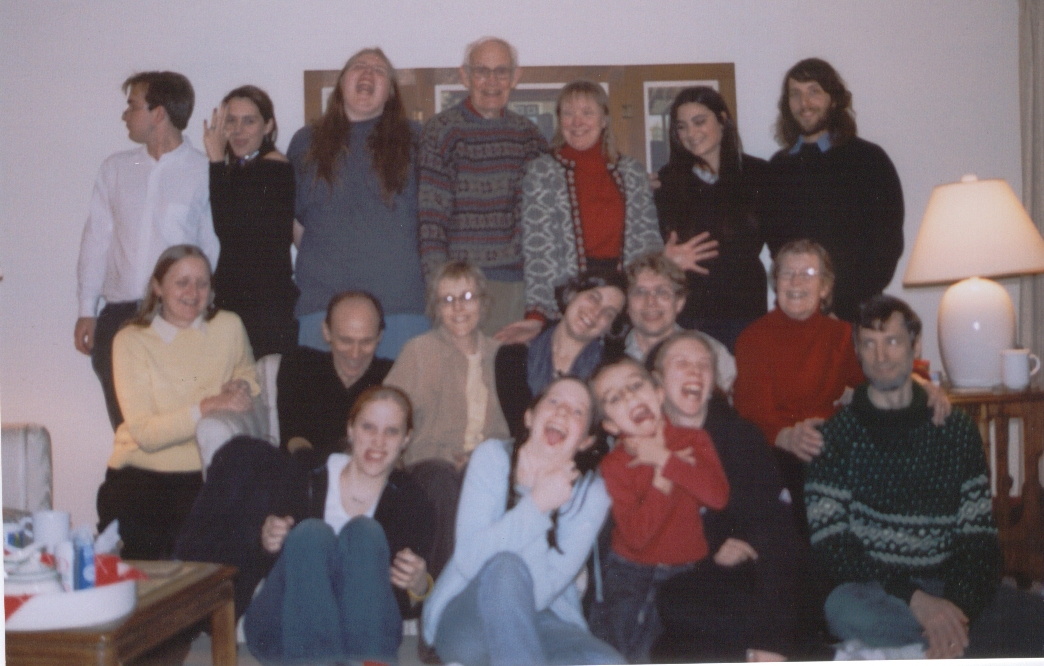
Xmas at the Anderson’s – 2004
I was able to get a coupla recordings out of my camcorder, mid-black-out, before the recharge light shut me down, but it’s gonna take time—I posted “Here Comes Sandy” before the hurricane hit, but I had another one, “The Calm Before” that is still waiting for processing—plus the two I’m planning on calling “Powers Out” and “Powers Still Out” (original, right?) and I guess I’ll be playing a “Powers Restored” tomorrow morning, when the piano keys have had a chance to thaw. But that’s all theoretical—first we have to wait and see about tonight’s snowstorm. (What the NYSE&G lineman give, the Precipitation may snatch right back again!) Maybe I should succumb, and get a generator like all my neighbors have….

Okay, when did Romney start running? Two years ago, maybe? And, at that time, his being a Mormon and a Republican and a Wall Street playah, etc. –was nothing compared to his fellow GOP hopefuls’ bags of bananas. So all this time the Media is focused on who is ahead in the GOP primary race: Cain, Perry, Gingrich, Jindal, et. al.—their party’s race started out with about ten of them, whittled it down to two or three, and finally, as if forced to swallow cod liver oil, they settle on the only candidate NOT provably crazy, stupid, or scandalous—Mitt.
Republicans were a little embarrassed about Mitt’s Massachusetts gubernatorial health care legislation—purportedly the model for what would become ‘Obama-Care’. And the hyper-evangelicals were not too crazy about his new-fangled Christianity (in spite of the LDS being the only major faith engendered by our great nation, rather than being imported from the Old World).
The Republican party was even more embarrassed by their last president, who left our armed forces mired overseas in multiple theaters of battle; who left our economy going into toxic shock—thus proving right the Democrats whose dire warnings about de-regulation and overdone tax-cuts for the First Estate had, ‘til then, been laughed off; and who left behind ‘No Child Left Behind” Policies that had managed to leave all our kids ‘behind’ (‘except for the rich’—that eternal GOP refrain).
So then, after the primaries, Obama and Mitt go head-to-head in a series of debates. I’m skipping over all the lies and misdirection employed by Mitt’s campaign—it’ll suffice to say that while being accused of being a ‘softy’, Obama had brought down Bin Laden and successfully surged into Afghanistan; while being accused of destroying the economy, Obama had made good headway (better than any of us had a right to expect) on lowering unemployment, preserving and creating jobs, and putting our national commerce back onto an upward incline, out of its free-fall begun under Bush; and while being accused of idleness, Obama had ended DADT, signed the Ledbetter Act, the Dream Act, and restored our reputation and our image in the big world outside of Washington DC. And he sings!—not a politician’s groan (see YouTube videos of Mitt attempting to match this—hilarious) but an actually fine singing voice.
So, having disproved all of Mitt’s and the GOP’s charges against him, Obama went to the first debate. Wasn’t he surprised to hear Mitt try to say that Obama’s policies were ruinous—while simultaneously avowing an administration almost identical to Obama’s (just without Obama—apparently the only thing that is really wrong about our present administration). The fact-checking added by the Media indicated that Mitt hadn’t said a word that wasn’t perpendicular to every word he had said publicly up until the debate. The Media also pointed out that while Mitt definitely ‘won’ the debate—he did it by mostly telling lies.
I understand that ‘massaging’ the truth is part and parcel of modern campaigning—I’m not even saying that the Democratic ticket is above giving back as good as they get. But the President’s party is different from the GOP in one very important way—it is the ‘intellectual’ party. The Democrats scruple at telling bald-faced lies because they know their constituency won’t put up with the kind of ignorance the GOP inspires—so they are far more limited in the amount of bull-puckey they can get away with slinging. A Democratic voter is the kind of person who would still vote for a candidate who admitted to atheism, or polio, or having an African father.
The GOP never falters at embracing the zealously Christian, the greedy Rich, the misogynistic, and the bullies, commercial or ethical. Their campaign doesn’t even deserve the name—it has been a treasonous rally, begun on the day of Obama’s inauguration and continued for the full length of Obama’s first term. It has been a flood of scandal-mongering, legislative stonewalling, and thinly veiled bigotry.
So the question I’m troubled by, what totally stumps me, is—why would Mitt Romney be so eager to take the presidency away from a man who has performed so valiantly, so effectively, and so in the spirit of what America means to the vast majority of us? Why would he take on the daunting task of a presidential campaign, when he clearly has no better ideas to offer us than Obama’s ideas? How could he imagine that the Presidency of the United States would be something he’d be comfortable with? He hasn’t the smarts. He hasn’t the charisma. He doesn’t have the ability to truly relate with average Americans. In spite of his claims to the contrary, I think this country could not be in greater danger than it is in right now.
I believe that because Mitt says he ‘knows business’. He says he knows how to help his country with its financial woes in a business-like way, rather than in the way of the former community organizer with no business experience. Well, I have two comments on that score—first, our country has given Obama a four-year intensive course in governmental finance—and, so far, he has aced his tests in nearly every category.
Second, the United States is not a business—it is a great experiment, a 200-year-old dream of humanity’s fulfillment—and the last thing it (or We) need right now is a Gordon Gecko having a fire sale on our social services—in the name of ‘small government’, no less—and a wheeler-dealer trying to lead us into a prosperous future (well, maybe not ALL of us).
And let me just say this about ‘small government’. Are you stupid, or just ignorant?! The USA is the richest, most powerful nation on Earth. The USA is home to over 300-million people. The USA is comprised of fifty sovereign states and a few territories. The USA leads the world in invention, research, space exploration, higher educational systems, and lots of other stuff. It’s huge, it’s important, it’s constantly under threat from terrorists and megalomaniacs, and let’s not forget—it is the year 2012—you know, the 21st century? Any idiot that suggests we run it all using town hall meetings and flyers and sunbeams of goodness—well, they will be disappointed, that’s all I’m saying.
What drives the Republican party? Well, my parents voted Democratic until they made their first million—then they started voting Republican. Its reputation for protecting the wealthy from taxes is its biggest draw in metropolitan areas. Its cozening up to evangelicals is its biggest draw in the rural areas. So, basically, it’s about greed and religious extremism—a strange choice for a Mormon—the LDS has a history of being driven away from our entire Eastern Seaboard, all the way to Utah, by God-fearing Christians.
And how can my fellow voters think a businessman is going to improve their country, or their living conditions? Corporate deregulation and runaway spending made the financial swamp we’ve been mired in this last decade-and-a-half. Raising our kids the best we can—that is bad business. After all, it’s all expense, with no revenue—of course we want to cut education during the lean years! But wait—maybe it’s bad for business, but we still want a good education for our kids. Hmmm. I wonder if that may also be true of medicine? –of law-enforcement?
Maybe running this country like a business is a bad idea. Maybe a president that understands the importance of both business and social services would be a better pick. Who knows, right? Being President is a big job—you know, I’m almost as scared for Mitt, should he win the election, as I am for myself and everybody else.
Tuesday, October 23, 2012 2:18 AM

Our sweet petunia, Jessy, came up on the Harlem North train tonight with her dog, Tuesday (the Wonder Dog). She came and asked for heartburn remedies, of which I have several. But she was in intense abdominal pain and she wanted a hug. So I gave her my best daddy-hug, but it didn’t work. Claire just called from Northern Westchester Hospital in Mt. Kisco. They say ‘appendicitis’ and she’ll call me back when she knows whether the surgery will be tonight or later this morning.
I know I’m not supposed to be worried about a little appendicitis operation, but it is surgery, minor or otherwise, plus I’ve been getting pessimistic lately and I could really use one in my win column—if only to convince me that there are two sides to luck, and not just the s**t end of it, which is all I’ve been getting lately. And our baby is so fragile. I couldn’t stand it if anything went wrong.
Just to give you an example of how things have been going lately: Jessy’s emergency surgery in the next few hours will require us to cancel the surgery scheduled for Tuesday later today—the reason Jessy came up to our house in the first place! I should be grateful—if she had stayed in the city, who knows what might have happened. Now she’s with Claire, up here in Westchester—and I’m watching Tuesday until they get back. And Tuesday’s surgery can wait—she’s just getting something removed, in case it’s cancerous. Maybe I should talk to my doctor about adding a third anti-depressant prescription….

And that debate tonight—I nearly gag every time that nut-job tries to criticize Obama while saying that his policies won’t be any different. It’s times like these that I really wish the USA had a higher standard of education—if Obama doesn’t get his ‘four more’, I’m just going to stop talking to people. If the people in this country have already forgotten what eight years of GOP admin has done to us, we have nothing to talk about.
Besides, it seems like the stupid people are always winning elections these days—those tea-party whack jobs got voted in in 2010, pretending they were a new, improved conservative agenda—they’re new, alright—we haven’t had such narrow-minded, fear-based elected officials since the Salem Witch Trials—who woulda thunk any group could out-stupid Geo. W. Bush!
But it will all happen the way it happens. I’ll be thrilled if we voters get the better man—but, if it’s Romney, that will only indicate that our days as an ‘empire’ are fading. And that’s something I’ve been hoping isn’t true for decades now, while suspecting that it already was. Making sense and having patience—stuff like that has never been the American way—hell, it’s never been the way of the world at large. Nor can I claim any great sense or patience in the way I lived my own life, so how can I complain?
If civilization doesn’t simply collapse under its own weight, it will only be due to a sea-change in the global paradigm. Unless the entrenched powers-that-be are overrun by angry mobs, nothing of significance will change quickly enough to stop our totally uncontrolled explosion of digital tech, the widening gap between rich and poor, and the abuse of natural resources that threaten the world’s ability to sustain life of any kind.
And that angry mob will have to be a global one—so, imagine Syria, then multiply that times the whole world. Not a pretty picture—yet, still the only alternative to allowing the stuffed shirts to guard their own precious quality-of-life until it is too late to reverse the damage. Am I advocating violence? No, I am not. But I would appreciate it if someone else can tell me what the hell else can change civilization’s inertia from self-destruction to self-awareness? And in just a few decades—because, while our ecological policies remain as is, the damage they cause accelerates constantly—and now we have all of China (and other just-now developing nations) well on their way to matching, even exceeding the pollution that we Americans produce.
I’m just saying.


( or “How Stupid Are We?”)
My wife and I just had an argument. I think we were arguing over her being disappointed with Obama’s loss in the first debate and my being understanding of that loss. Her point was that Obama should have called Romney out for lying throughout the debate, for reversing what few commitments he had made during the primary race, and while stumping afterwards, right up to the day of the first debate. My feeling was that Obama may have given us too much credit as an audience.
If I were to debate to an opponent who lied straight through the event, start to finish, would I choose to speak about the reality of the subject or would I spend the whole time accusing my opponent of being a liar? Should I assume that the audience knew better than to fall for a bunch of what Biden calls ‘malarkey’, or would I waste the entire evening ripping up every lie my opponent uttered? That’s not an easy call to make–especially in the USA, where the audience may shock you with its depth of ignorance and weakness of reasoning power.
Even the so-called ‘pundits’ and talking heads described the debate as a Romney ‘win’, with the caveat that he lied over and over, reversing his public views on everything. Is this a fair statement? Do I actual live in a country where liars are considered the winners of a debate, simply because they took some Ritalin® before the curtain went up? Is the president a loser simply because he overlooked all the lies of his opponent, opting instead to address the issues in an honest, substantive way?
According to the polls, yes, indeed! That’s exactly the type of country I live in. The USA has jumped the shark of free speech and gone for assessing ignorance as a respectable argument–merely another point of view, rather than a poor joke as compared to knowledgeable speakers’ statements. And this strategy may win the election for Mitt because, according to all those deep-thinking ‘undecided’s out there, Mitt CAN have it both ways.
He has warned the public for years now (as has his entire party) that Obama’s policies are destroying our country, our economy, and our way of life–and that our President must be replaced with a Republican before America goes completely to wrack and ruin. Then, at the first debate, he claimed that his policies were indistinguishable from Obama’s–with just a tweak here and there!
Can he have it both ways? Is impudence a debate ‘win’? Should we remove the President that turned around our economic landslide, and replace him with a Republican (the people that started the landslide)? Should Obama’s pro-active hunting down of global terrorism and piracy be replaced by a businessman who knows how to convert those evils into cold cash for the corporations, without unduly restricting said ‘evils’?
Tonight’s Town Hall debate should provide the answer–but I won’t be watching the two debaters–I’ll be watching the ‘towns-folk’. If the audience echoes the false memes of the GOP, accusing the President of false faults and lacks, and accepts Mitt Romney’s character as suitable for supreme leadership, then we live in a Wonderland as ludicrous as Alice’s. If they press Romney for substantive, specific answers, and accept some basic truths about the President (for example, that he has done a Herculean job of reversing our economic woes), then I shall watch the debate with great interest. But I’ll still remain more concerned over my fellow Americans’ powers of reason than the, to my eye, obvious differences between our two choices.

I’m having trouble backing away from my mind’s fomenting of angry thoughts over the shooting of Malala Yousafzai, a fourteen-year-old girl, in Karachi, Pakistan. Armed men pulled over the school bus by waving their guns at the bus driver (one terrorist rode a bicycle). They boarded the bus asking for Malala and, recognizing her, shot her in the head and neck. Fucking bastards—I want them to die slowly and painfully. Perhaps that is what will win the war on terrorism—when their insane behavior finally produces not Terror, but Rage (as it always ought to have done).
She’s still in hospital, in critical condition as of this writing, but the bullets have been removed from her head and neck. The Taliban were quick to take ‘credit’ for this atrocity, promising to try again if she survives. So, perhaps they aren’t effective girl-slaughterers, but dogged ones? Can you imagine the psychotic viewpoint of the creature who wrote up that public statement? I can’t—I’m too caught up in rage and disgust.
Large-scale gatherings have been a hallmark of the Arab Spring phenomenon these last few years—if I lived in Karachi, I’d be thinking pretty hard about getting together and stringing those bastards from the lampposts. Not that further lawlessness is any remedy for their situation, long term—but maybe this calls for a brief recess for civility, while they drag these madmen into the street and beat them to death. (I’m sorry!—Did I just say that?)
As you can see, I’m just seething about this. It is probably because I have a daughter of my own, though she is grown now (with a college degree) but I can only imagine the feelings of the family of Malala Yousafzai—and every daughter’s father in Pakistan.
I felt, and still feel, a great protectiveness towards my beloved daughter. Male chauvinism notwithstanding, I can’t help thinking that the fathers of the Swat Valley feel the same way. If the Taliban organizing there are not in fear for their lives, than there’s a lot more wrong with Pakistan than anyone ever imagined.

Thursday, October 11, 2012 6:03 PM
Dear Ladies and Gentlemen:
The USA has subjugated women in the past. In many ways, some or all of us still do today. But our society is against it, in an ethical sense—that is, in public places right-thinking folks will shout down any voice favoring male chauvinism; in private, the police can be called to jail a husband who physically abuses either his wife or their children. Honestly, many American men of misogynist outlook still feel that it is the ‘natural order’ of things to subjugate women as inferiors. But they are by and large forced to do it secretly or risk losing their own freedom. The majority of our people face the truth implicit in the following questions: How can we be superior to our mothers; how do we deserve better than our sisters; and how can we withhold humanity from our daughters?
We feel that we cannot. Our collective conscience won’t allow us. We see a difference between ‘difference’ and ‘hierarchy’—surely the two genders have many differences—but the females are only different, not less than the males.

We do not accept scriptural citations that suggest this is immoral—not in context of the overall message that commands us to love and respect each other. We see such aberrations as a product of the cultures and times of the setting down of our holy books. We see their citation as deliberately self-serving, since men are the chief ‘officers’ of these interpretations. There are many women who accept this as truth, as well, only because they have been taught these ‘truths’ from the day of their birth—and because they are denied literacy, cutting off any input beyond the men who subjugate them and the Imams who persecute them.
We Americans are called by some “The Great Satan”. Is not this title itself sinful? Are Pakistanis immune from Evil because they despise a far-off country? I believe all men and women are equally vulnerable to Evil and equally capable of Love. If there is much to hate about my nation, so be it. If Pakistan wants to pluck out the mote from America’s eye, it will still need to remove the beam in its own.

Don’t we want our children to learn more about the world made by their Creator? Don’t we do better when everyone shares ideas and questions? Only religious zealots ever answer those questions in the negative—because secrets and sacrifice are part of their stock in trade. Humbler believers take responsibility for their own knowledge and their own actions—they don’t presume as much on their Supreme Being because they respect that they themselves are responsible for what happens.
Only with religious zealotry are we shamed by the persecution of a brave little girl such as Malala Yousafzai. Only with the conviction of our own beliefs can we overpower the insanity of religious extremism.

There ain’t Nothing worse than Art
Cause Art’ll break your Heart
Even if you’ve Never Fallen
Deeply down in Love

An unpaid Actor plays a Part
Interrupted by a Fart
Just before Sweet words have Fallen
Sneezer gives’em a Shove

A Starving painter forms a Tart
Of Colors rich, Of Dawn’s first Start
But all the Beauty painter’s Drawn
Is repossessed Ungently of
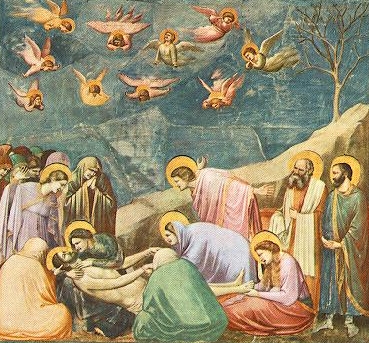
The Keepers of the Shops and Carts
Who, without Coin, will ne’er Part
With Tools or stuff of Inspiration
Naye Food or comfort’s Cove.


My post, “President At A Loss Arguing With Idiot”, has been slapped with a warning: ‘reported as “abusive” by one of Facebook’s “partners” (whatever that means)’ ..per my friend, Chris K. I think that means my aggression was palpable—I can get that way (and the funny thing is I feel quite dispassionate and logical as I write those kind of essays).
I read this one back to myself, partially to verify that this was a Republican tactic, vilifying their opposition’s more-rational public supporters. But I did, in fact, find it very abusive. I was insulting, facetious and just plain mean—So, does that mean the GOP have won? Have they taken a peaceful person like myself and pestered me into crazy-talk? Was it that easy?
It was the same with WWII. Before then, the idea of bombing a city was unthinkable to civilized folk. Before that war ended, America and the Allies had virtually carpet-bombed Germany, Japan, and a few other places—all in defense of liberty and equality. And ever since WWII, dropping a bomb on a city has been considered par for the course when at war—as can be seen today in Syria.
We also learned to use propaganda on ourselves, just to fight off anyone else’s—and now we expect our government to lie to us, and the government should expect lying right back. There’s also the coup de grace, atomic bombs—we use them twice and spend the next half-century (and counting) worrying about using them and having them used on us.
The GOP, as portrayed in the news, has been something of a sensation of late. Their entanglement in gayness, as an espoused evil and as a scandalous truth about many of their elected officials who most viciously attack the gay community, was hard to keep from laughing over. Human nature, so conspicuously on display, is hard not to laugh at.
But, my first thought was of sympathy. I can only imagine the difficulties of a gay person who fights politically to marginalize gay people. You couldn’t pay me to live in that skull.
But in other forums, the Republicans have become masters of the deconstructive. They realize that fear is their friend and there sure are plenty of fears to pass around. They brought up Obama’s having crossed paths with some radical, many years ago, and used it to try labeling him as ‘dangerous’—which is odd since those most endangered by Obama nowadays are the terrorists.
They began by criticizing his long-term church minister of being anti-American—and when that didn’t get any traction; they started whispering that Obama was a Muslim. They spent months after the election trying to convince people that the President wasn’t born in Hawaii. And even though this may sound ridiculous, there are a lot of conservatives who still swear that Barack Obama is a foreigner, a Muslim, and a threat to ‘real’ Americans. While that makes me feel impatient towards such people, it makes me even more upset with a party that could undermine the President so, in time of war.
They realize that losing faith in one’s religion is nearly inescapable for the educated, thoughtful people of our day—and so they champion it. Their detractors are, thusly, either ‘godless’—or they are just as pious as the GOP’s platform, i.e. insincerely. But this is an entirely manufactured schism. Plenty of people choose to belong to a church, to pray to a God, to live by its tenets, and seek fellowship with other church members, including social support programs for the locally disenfranchised. Only a tiny fraction of those people, however, insist on the myths of the Bible being set above scientific inquiry. Only a tiny slice of Americans are actively expecting an End Of Days in the near future. Just a few knuckleheads try to separate the various other ‘Single God’ religions from each other—to make Christians war against Muslims war against Jews, etc. and so forth. Extremism is a synonym for unbalanced. I can’t see much difference between an extremist zealot and an unbalanced mind. They’re both capable of killing themselves and others, they both reject the importance of civil obedience over ‘spiritual mission’ and they both do a terrible job of raising well-educated, emotionally well-balanced children.
With certain mid-eastern nations giving a perfect demonstration of how to ruin everything with dogmatic theocracies, there couldn’t be a worse time for us in the USA to break our long and hallowed tradition of separating church from state. There is a reason why Americans made that ideal a part of our heritage—and it should not be called into question by those who feel picked-on when asked if they read a newspaper now and then.
Our freedom of speech is now being questioned by some because of naysayers whose language is slaughter and burning of US diplomats, consuls, their staffs and buildings. Well, two wrongs and all that—What Would Allah Do? -is perhaps the best approach to this. Besides, America does not modify its rules whenever they annoy other nations—we know how strong our freedoms make us and we know how wrong it is for one person to have complete control over another’s thoughts and words.
But back to me. Have I been turned into a monster merely by witnessing the bile of Todd Akin claiming a difference between victims of ‘legitimate rape’ and, well, ‘illegitimate’ seems redundant when used with the word ‘rape’? The succession of crazies that were the GOP primary racers sensitized me to the fact that stunningly drastic changes in our country’s character were being threatened by the Republican party, many of them having no qualms about the continuing chasm that spreads between the rich and the poor. And it has been pointed out that many of their staunchest supporters, lower-income families, would clearly be hurt, financially and legally, by the GOP agenda.
Then there’s the audiences at these ‘rallies’ of extreme right-wingers such as Sarah Palin—they have the sound of a hungry mob. And the GOP speechifiers do this great little dance wherein they get these folks all lathered up without actually raising their own voices—but they also don’t ‘correct’ the crowd when they go too far—and that is a problem when it might be taped for the cable news channels.
Maybe the mid-westerners think all the folks who live on the coasts on either side are a bunch of spoiled intellectuals who think they know better because they went to college. To a certain degree, they’re right—the average person graduates from college knowing a lot more than they went in with—and college graduates of the mid-west have been known to return home and make great contributions to their state and their community. Besides which, smart is smart and dumb is dumb—only bullies try to minimize the value of education and only snooty brats think their diplomas make them better than someone else.
In short, every time the GOP is presented with a challenge, they go by the low road—to the point where some of their worst tactics (like strangling the legislature for four years) can seem downright unpatriotic, to put it mildly. They never answer a single issue with “we are in agreement with the opposition on this, except for a few details”. They never say, “We recognize the importance of settling this matter, and we’ll be bi-partisan on this bill’s passage because of that urgency”. And if one of them did, the rest would ostracize the traitor—I’m thinking here of the courageous Olympia Snowe—she suffered loud criticism of her attempts to create a middle-ground for the two parties.
These are only a few samples of what we’ve seen paraded across our TV screens for four long years—and every year they are emboldened to blame Obama for our economic troubles. They couldn’t do it on election day 2003, because it was still quite clearly Bush(W)’s spilt milk—but they only waited a few months before they began speaking of the economy as if Obama had made the mess to begin with. And according to several indices, Obama has had surprising success at pulling us up from the nose-dive the GOP left him. And so another claim is made to paper over this hole in their wall, “Obama isn’t fixing the mess quickly enough—Obama doesn’t know enough about business to fix this thing”. Well, employment is up, job losses are down, business is improving (although slowed by the EU crisis and the slowdown of China’s economy) and it is hard to justify kicking out a President who has so masterfully turned our economic frowns upside-down.
So, then the debate. I guess I blew my top on that one. When Mitt accused the President of ‘wasting time’ on health care reform when he should have been fixing the economy(!) –well, I tell ya, if I coulda crawled through that screen and got at’im—I’d be locked up in a sanitarium for the criminally insane by now. The GOP showed us foot-dragging as high art throughout their struggle to block health-care—if they’d really cared about getting Obama focused on fixing the economy, why’d they waste so much of his time, and the time of the hundreds of Democratic legislators?
I just can’t imagine that they’re fooling anyone with this whole ‘create a crisis, draw out a crisis, and blame the crisis on Obama’ strategy. It is very much of a piece with Mitt’s betrayal of every promise he made to the Neo-Cons during his primary race. It also answers the question of why Mitt hasn’t given details on his ‘plans’—he reveals his plans, as needed, during the debates to rebut any accusations against his older positions. I think it’s kinda funny that his supporters are all saying ‘He won the debate—and that’s that’. That’s because they don’t like the sound of ‘Yes, he made a great huff-and-a-puffing—too bad he made up his answers as he went along.’
As far as that goes, I think the President would have performed better if someone had told him he was playing liar’s poker—he thought he was there for a debate.
Now, there I’ve gone again. I simply lose all sense of propriety—I think it comes from a fear that more than 50% of my fellow citizens might disagree with me. I fear that the majority of Americans will say, “Hey, lying’s okay—all politicians do it” or they’ll say “Hey, women don’t really have the right to control their own reproductive choices.” Or they’ll say, “Yeah, we grow faster and go faster with fossil fuels—let’s drop all this ‘hybrid’ nonsense until the gas runs out—then we’ll worry about it.” Or they’ll say, “Climate change? It’s a hoax, the ice caps melt all the time—what are you, a big sissy?”
And I guess my fear that you all might find the GOP acceptable, when they have (to my eyes) conclusively proven their unfitness for office, makes me too excitable—I’ll try to calm down and write something less ‘abusive’ next time.


Romney has an unfair advantage in these debates—all he has to do is collect the facts and figure out how to twist them in favor of himself.
Obama has to work twice as hard—he has to put away his knowledge and facts, and waste valuable time to gain command of the ‘ideas‘ Romney’s cotton-candy world has so few of, memorize all the lies the Republican’s candidate has been telling for over a year, and then memorize the truths that refute those lies. Then he has to defend himself against this mountain of horse-dung without seeming dismissive. I understand how the President must feel—I’ve never felt anything but ‘dismissive’ towards our little Mittley-Droid—well, I take that back. When I heard about his high school bullying of a gay kid, I felt pure disgust. But then I went right back to ‘dismissive’.
Obama didn’t want to look him in the eye. Damn right—Romney, the ‘Grand Old Idiot’, doesn’t have a case for winning other than his demonstration that he’ll bend in the direction of the strongest wind—without pause or scruple, lying and flip-flopping. And, if he did win, he would continue to lie to us all for the worst potential four years of Republican mismanagement that will have ever been inflicted on the USA (And I say that knowing just how badly we were misled by his predecessor, Bush W). If I had to look that goon in the face while he made stupid jokes about our 20th anniversary, I’d have lost my mind. So I, for one, can attest to Obama having way more self-control than me. How about the rest of you? Could you really stay on that stage for 90 minutes without spitting in Romney’s eye and calling him a big, fat liar?
To pay attention to the words that come out of Romney’s rictus is to give him the same accord as an honest person. It’s like showing respect for that clown in Stephen King’s “It”. It is hideous, its presence may fill us with fear, but we do not ‘respect’ it any more than we respect Cancer. We just wish we were somewhere else.
I would feel much safer if everyone wasn’t so impressed by his ‘energized’ lies and reverses during the first debate. The Republicans, in courting the Fundamentalists and Big Business, have become an ugly bunch of folks. They are expert in lying because they haven’t stopped for twelve years and practice makes perfect, I guess. They have also been unforgivably brick-wall-like in putting all our legislative needs, including budgets, on hold so they can blame the President for this legislative deep-freeze. They want to replace the President and put those disastrous agendas back in place which caused the collapse that Obama has been digging us out from under, these last four years.
What gets me is the incivility. And that is not solely because I could be described as a ‘pansy’ when it comes to civility—it is, rather, for the same reason I favor it so—it is the only sane response in a modern nation’s leader that will win through when facing the savagery still found in much of the world, including quite a few places right here at home. Civility is the responsibility to lead a nation without letting oneself get swept up in childish petulance, passive-aggressive obstructionism, or resentment over personal slights.
Our current President has that civility. He didn’t let it stop him from taking down Osama, or from taking out those pirates off the coast of Somalia, and he didn’t let his civility get swept away by the contrarian nature of the Republican campaign. Obama is strong—as strong as any President—but not in his impulses, only in his dedication.
A man can’t control a nation if he can’t even rule himself—and we see that lack of resolve in the pasted-on grin of the President’s debating opponent. Mitt Romney would do better to return to honesty and plain-speaking (if, indeed, he has ever stopped there) rather than outshout his President in a respectable, public debate.
It burns me up that the GOP is trying to worm their way into power, rather than challenging Obama and the Democrats with forthrightness and sensibility. Even if GOP platforms made sense (and they don’t) I would be loath to support their candidate on the sheer effrontery of their campaign. It isn’t just their showing a disrespect for responsible Government, or a disrespect for our sitting President—it is a disrespect for the intelligence of the citizens they hope to win over.
Lying has worked well for the GOP in the recent past—one can see where they might start to accept it as ‘good tactics’—but the lies are so tired, so roundly disavowed by third parties, so blatant and ludicrous, that we would have to be brain-damaged to offer them any credibility at all. God forbid the GOP ever told the truth—at this point, whatever they said, I would believe ‘the opposite of that’ to be true for years before I could afford to grant them any credence at all.


Eftsoones the Nymphes, which now had Flowers their fill, 55
Ran all in haste to see that silver brood,
As they came floating on the Christal Flood;
Whom when they sawe, they stood amazèd still,
Their wondring eyes to fill;
Them seem’d they never saw a sight so fayre, 60
Of Fowles, so lovely, that they sure did deeme
Them heavenly borne, or to be that same payre
Which through the Skie draw Venus silver Teeme;
For sure they did not seeme
To be begot of any earthly Seede, 65
But rather Angels, or of Angels breede;
Yet were they bred of Somers-heat, they say,
In sweetest Season, when each Flower and weede
The earth did fresh aray;
So fresh they seem’d as day, 70
Even as their Brydale day, which was not long:
Sweete Themmes! runne softly, till I end my Song.
*[Arthur Quiller-Couch, ed. 1919. “The Oxford Book of English Verse: 1250–1900”.]
Monday, September 24, 2012 1:53 PM
Dear Daniel Mayes:
I’ve just been reading your excellent article “Are We Heading Towards A Big-Brother World?” regarding the use (or over-use?) of Closed Circuit TV (CCTV) camera systems in modern cities.
By and large I must agree that this is a ‘balancing act’ issue, with security and surveillance on the one side and an invasion of personal privacy on the other. But there is a larger issue being overlooked here. The once-a-decade National Census (an attempt to get an accurate-as-possible head-count of all US citizens) is written into our Constitution. It, along with voting (another data-sampling activity) are both minimal attempts at determining some information of the people’s presence and wishes with regard to ‘self-governing’.
Self-governing is an ideal that cannot be realized—even working towards an exact head-count is an attempt to determine how many people are in which location, so that their congressman can represent them in numbers proportional to the number of people in the state, for example. But no tabulation can count all the people in the United States at one instant of time—even if we had the manpower and resources to physically count every person in the country, people would be born, people would die, in the time it takes to tally the numbers, they will have already changed. So the ideal of self-governing, of a government that responds to every want and need of every single citizen is, like all ideals, something that can only be imagined.
In the voting process, we encounter ‘hanging chads’, voter suppression, voter turnout (especially ‘voter turn-out’–there are only 20% or 30%, at best, of eligible voters participating in any election). So this, too, is an ideal that we should not hold our breath, waiting for its realization in reality. Fortunately, we have mathematics.
Sociology is the study of humans as groups–the smaller the sample, the less accurate the results–and even in large-sample studies, the results cannot be expected to predict the behavior of a single individual. But as a group, humans are incredibly predictable–and whenever huge samples of data-sets are available, they can predict with uncanny certainty the percentage of the group that will go this way, the percent that will go that way, and how many are left undecided and standing pat.
When polls first came into everyday use, in the 1950s, most of the applications were commercial–sales and marketing jumped right on the new miracle science, and have stayed riveted to consumer-testing, market research and back-end analysis ever since. Both politicians and news outlets soon saw the inherent entertainment value of releasing survey results on current trends in the opinions, politics, and tastes of the masses.
But there were other, more sensible, uses to be had. Traffic surveys in high-traffic urban arteries allowed for more efficient design and maintenance of freeways and intersections. Foot-traffic surveys of mall-shoppers changed the designing of malls and parking lots. Supermarkets use their inventory turn-over to determine future shelf-stock purchases. Lawyers use medical-symptom-mapping to prove high-risk ‘cancer cells’ located near places of pollution. The list goes on.
Many are the benefits to business and commerce—but even so, the individual also benefits from some sociological data-sampling. In a world of terrorism, radiation, and bio-safety concerns, a data-set of every pedestrian within a particular ten-block-radius might hold vital clues to emerging threats or illegal activities. But it can also aid in the search for a lost child or pet (if the pet doesn’t already have a sub-dermal LoJack device), or rescue operations during a natural disaster.
Many people seem to think that only ‘bad-guys’ require surveillance—when the truth is that, as we become a faster-moving society using synthetic signposts to organize the flow of us, the provisioning of us, the educating of our children and the protecting of our weakest, we need to keep tabs on what’s happening. Is blanket coverage of CCTV cameras the right method for collecting this data? Perhaps not. But, is there a built-in need for record-keeping in our high-tech, high-speed global village? I’m afraid so.

I find something strange in the waves of anti-American sentiment in the Middle East. Where were these outraged Muslims when the Soviet Union banned religion throughout Eastern Europe? And what is all this talk of ‘respect’ without respect for life? If we were to ask the Syrians or the Libyans or the Egyptians for ‘respect’ we’d be accused of high-handedness; ‘the Great Satan demands respect, does it?’ We give billions in financial aid to some Mid-East nations, well, most Mid-East nations. Isn’t that respect for our fellow Peoples? Does the money not count, all of a sudden, because we built an Internet that allows the Middle Easterners to forget that we are an ocean apart?
This so-called movie (that is actually a ‘trailer’ (a preview) for an imaginary movie) was made by one person, maybe two. The armies of Islam have no beef with those individuals–if they did, they should have gone after those people in particular. Instead, they thought, what a great excuse for murdering the American closest at hand, the one with the best reputation–just so the whole world would know how ‘angry’ these folks are. Ambassador Christopher Stevens was in Libya to help the newly democratic nation transition to a more settled, less chaotic installation of an elected government. I assume he was also there to oversee the transaction of billions in aid. He wasn’t naïve–he knew he was risking his life to be there and to help.

He was not some puppeteer trying to coerce Libya into becoming a pawn of the United States–the world knows this. In all the fighting our armed forces have ever done, we have never taken permanent possession of any real estate–that is our tradition and it hasn’t changed in over two-hundred years. He was there to help, period. Likewise the three other innocent Americans executed by the mob that stormed our embassy.
Respect? We have a tradition in America, a common cause that many Americans have died to protect–it’s called free speech. The protesters say “We never insult Jehovah or Christ, why must you insult our prophet?” Well, first of all–Go ahead. I can call Christ a Pig. I can call Jehovah a Geezer in the Sky–we don’t CARE. Sticks and stones will break our bones but words will never hurt us. Or our gods, or our government. No. What these protestors are against is Free Speech.

They were nice and quiet all through the Cold War, many of them siding with the Soviets in exchange for arms or funds–working hand-in-hand with an enforced-atheism government. Syria still does it today–well, I shouldn’t say Syria, Syrians are being blown up in the streets by their own government–but that Government is still dealing with Communists, just like the good ol’days–as is Iran.
What do they have in common? Repression. They believe in repression of public dialogue–they prefer to keep political discourse as a blood sport. They want their governments to retain the ability to cow their citizens, instead of serve them. Why? Because Islam (again, perhaps not Islam, but it’s figureheads, the ones with the ability to rustle up some gang violence among the population) has a tradition of repression–they repress their women, they indoctrinate their young, and they punish people for speaking their minds. This is not a healthy format for a major religion. We will come back later to the issue of their longed-for dream of committing genocide in Israel.

There are Muslims in the United States–their lives are no different from us non-Muslims–they understand that Free Speech takes precedent over religious dogma, they don’t attack passers-by on the street every time someone takes a swipe at their religious traditions. There are Jews in America–hell, last I heard, there are more Jews in the New York metro area than there are in Israel. But the Muslims here understand that religious freedom takes precedence over some feud the Imams have been stoking the fires of for a millenia.
In America, we know that freedom is more important than dignity. We know that dignity is an illusion, that the Emperor is buck-naked, and that ‘fervent prayer’ is the limit of how far one citizen’s religion can impose its rules on another. When I was a kid, Catholics couldn’t eat meat on Fridays–but there was no pressure from Catholics to close the butcher shops on Friday by law.

And there is another bit of childishness to this Mid East violence–have they no faith? Can one sick guy’s post on an obscure web-site really touch their prophet? Is their faith truly encumbered by this arbitrary input from one stupid foreigner, half-way round the world? Don’t they see that their magnification of this one guy’s bad attempt at satire makes him a world-renowned figure? If they had an ounce of sense, they would have let this guy and his ‘trailer’ fade away like a billion other tasteless web-posts.
The way I see it, all these embassy protests have been orchestrated by Imams jealous of the power they wield in the Middle East that they enjoy nowhere else. They see repression as a necessary tool for their survival as leaders of their society. They see religious freedom as a death knell to their world order. They think that anyone with the nerve to face up to them, and tell their own truth, ought to be put to death.

Well, the terrorists have become very sophisticated. One can hear and read in the media of a new ‘discussion’ over freedom of expression. There is nothing to discuss. If we adopt any new legislation amending the freedom of the press or freedom of speech–I swear I’ll make a hundred videos ridiculing Islam. I’ll devote my frickin life to it.
My adventures in faith.
My age and health become factors in quality of life.

Susan Dickinson (Emily’s Sister)
I am, for many of you, stating the obvious. But I’ve noticed many of our ESL classmates of many nations are looking for a deeper understanding not just of poetry, but of the English language as well. So I’ve busied myself with this little exercise–I’ve taken every word in “I dwell in Possibility” in order, and provided what immediately comes to mind as the multiple meanings of each of them–when read by an English-speaking person. I have used ‘etc.’ in every case, because in every case, I could not possibly list all of the meanings for any of the words.
I think it is also important to note that, above and beyond the individual words’ and phrases’ multiple allusions, their combination into ideas and concepts by the poet (and the reader) allows an even greater multiplicity of meanings to the poem as a whole. I begin:
*** ***
“I dwell in” can mean “I live at” or “this is my mindset” or “this is where I’m stuck being”, etc.
*** ***
“Possibility” can have Many possible meanings (a little joke–yes, very little.)
*** ***
“A fairer House than” can mean “a better place to live” or “a finer home than another’s” or “a more legitimate gamblers den”, etc.
*** ***
“Prose” can refer to “writing”, “prosaic”, “worldly”, “tired”, etc.
*** ***
“More numerous of Windows –/ Superior – for Doors –” – well, let’s just agree that both ‘windows” and ‘doors’ are ubiquitous metaphors for just about anything, “openings”, “gateways”, “views”, “limits”, ad infinitum
*** ***
“Of Chambers” can mean “ones heart”, ‘ones cell”, “ones bedroom” , “a cave” , “chamber of a gun”, “chamber of a nautilus”, etc.”
*** ***
“as the Cedars –” – as previously addressed by older posts, manifold symbolisms are attached to “Cedar” and “Cedars”
*** ***
“Impregnable” can mean “inviolate”, “unknowable”, “unconquerable”, etc.
*** ***
“of eye” can be literally anything–I believe ‘Eye” may be the most used and referenced metaphor in the history of civilization–even those ancient Egyptian pictographs show ‘forward facing’ eyes rather than an eye’s actual ‘in profile’-appearance–that’s what makes Egyptian art so instantly recognizable. The feet, the ears, the mouth–all in profile–but the Eye (the Soul) always idealized as front-and-center vision.
*** ***
“And for an everlasting Roof” can mean “and to cap it all off” or “the covering I’ve selected” or “what I see as an upward limit”, etc.
*** ***
“The Gambrels ” can mean a dutch barn, a crucifix, a rounded-shaped roof, a gibbet, a butcher’s tool, etc.
*** ***
“of the Sky ” can mean “of a sky-blue color”, “of Heaven”, “of Infinity”, simply “above”, and a host of other metaphors.
*** ***
“Of Visitors – the fairest –” ‘visitors’ can mean anything from “recalled memories” to “extraterrestrial explorers” -and- ‘fairest’ can mean “most beautiful”, “most pure”, “most equal”, “kindest”, “best”, etc.
*** ***
“For Occupation – This –” can mean “how I make a living”, “how I keep busy”, “what distracts me from other things”, etc.
*** ***
“The spreading wide my narrow Hands
To gather Paradise –” this phrase of the poem paints a clear visual image–but none of the words in the phrase have one, simple, unambiguous meaning…
*** ***
So, there you have it. A poem can have thousands of meanings–even to just one reader or poet. A Poem may even be described (here in my conceit, at least) as something that has no definitive meaning. Hope I haven’t bored you all….

Late Tuesday (actually early Wednesday, September 12, 2012)
[LinkEds & writers / {LinkedIn} Randy B. -Randy B. H.
Multilingual, multicultural communications specialist
Greater New York City Area
Dear Randy:
I’m terribly sorry.
I didn’t realize that I’d been unclear–but I do now.
I filled out their questionnaire and went through their
spelling/grammar and ‘three styles’ exams, which was
much more ‘temp’-work-application -ish than I’d expected
(I’ve been a temp–it’s actually worse when one
has to spend the day there). But somehow I still thought
I’d be challenged somewhat by the work. By some miracle,
I was deemed good enough to bid on their jobs.
Then I went to their ‘Available Jobs’ page and saw,
as I described in my vague post, jobs that were specific
about the textbook being used, asking for specific numbers
of reference citations–and the dollar amount offers were
ridiculous.
I emailed them to ask if they felt that this work was ethical.
That’s when I got the stuff about ‘helping the students do
for themselves by giving a good example’.
But I thought it over and decided that was a rationalization.
I spent most my life in mail-marketing (junk mail, to you)
and I know a good rationalization for making money when
I hear one.
So all my jumping through their hoops was a waste of time.
I know I wasn’t clear about the details–but I thought it
was obvious I was doing anything BUT promoting them.
Sorry to distract from the thread–I shouldn’t have posted
at all, really–I’ve never been paid for any writing–unless you
count ad copy or copywriting/proofreading.
I may not belong, but I like the group, and your mediation of the thread.
*****
My comment on “The Necklace of Poetry” by (Joe)/(Kenneth) Massingham joemassblog.com (WordPress)
On September twelfth, 2012 2 am
I like the image or concept, a threading together of words, rather than plain speech, but I wonder if we go at this poetry business from the back end–Poetry may be as animalistic an urge as dancing or singing, simply translated as a unique form that occurs within a pack of people who’ve recently adopted a sophisticated form of language, such as Greek and Romans, Persians.and whoever. But those origins are obscured by time and now we see the poem almost less about what the poets are doing and more about what the audience is hearing. It makes much more sense that way, but it may not necessarily be how it began–just a thought. We are a consumerist society, but things weren’t always so.
The fact that bad poetry might not attract an audience may have had no weight in a society in which the leaders and sophisticates saw poetry as something all civilized people did, like getting exercise. You know, clean mind, clean body, but in Latin.
To me it’s become painfully clear–implying that a-n-y-t-h-i-n-g is NOT poetry is just an argument looking for a pal. So I have long ago stopped myself whenever such sentences come to mind–besides, technically, it’s true–that’s where the argument comes from. After that it gets all semantic-al and abstruse.
There are levels of applied poetry and then there’s ‘ideal’ poetry. On one level there is the obvious, published poets (and their nobility, the Nobel-winners and poets laureate). On another level there is academic poetry, which is when serious students of literature sit at the feet of professors and try to satisfy their professors that (a) they’ve understood (and unquestioningly accepted as gospel) the prof’s ideas of good poetry and what makes great poets great and (b) have produced work that the prof accepts as displaying the prof’s teachings, articulated in verse.
On a third level there are jokers like myself, who write poems and share them with their endlessly patient family and acquaintances who are too polite to tell me to get lost. What some may label the ‘failure’ level I think of more as an amateur standing. One of the great advantages of this level is that I’m the best judge of how good my poems are–though I’m not averse to appreciation, when offered, or criticism for that matter (see ‘best judge’ comment).
Theoretically, there is a fourth level wherein a natural-born poet who takes it all very much to heart and whose sensitivity makes the readers’ lips tremble and their eyelids dewy, or stirs the heart of a teenage boy with meter and trochee and ‘on the six-hundred’, or simply suggests the soul of the sight of a bird ascending–that poet goes where destiny takes such people.

Now Ideal poetry is what high-school students write–it has a piquancy all its own, but can seem over-earnest at times. Still, where would love-struck teenagers be without Ideal poetry? And, once one has seen the elephant, they’ll be plenty of time to write more experienced verse.
I try to be honest with my poetry, which makes it deadly dull and often lacking any lyrical quality–in fact, I recently wrote a poem, read it back to myself a couple of times and, on a whim, translated it into an essay, with complete, grammatically-correct sentences. I couldn’t have changed or added more than ten words. I’m usually better than that, but I’m no P.B. Shelley.
I get nervous sometimes, letting a poem become slightly ambiguous, and sometimes end up drawing or painting an illustration as part of the page design or as a ‘companion’ illustration to the poem page. It’s like talking during charades, I know, but I’m not a stickler for poetry rules (of which there ain’t any anyhow).

You know, this is an awfully long ‘comment’ (and I hope I haven’t talked your ear off). And I hope you won’t mind if I cut and paste it onto my blog, seeing as how these are pretty general comments about poetry. Yours is a nice essay, too–thanks for sharing it.
Now to go read your second post….
[NOTE: I pity the fool who invites me into a thread. I’m embarrassed to say that these are only two of three thread comments I posted today. I don’t know who I think I’m talking to–all this unsolicited verbiage…. Be warned!]

NIST estimated that approximately 17,400 civilians were in the World Trade Center complex at the time of the September 11, 2001 attacks.
Only 20 people escaped from the impact zone of the South Tower after it was hit and only four people from the floors above it.
19 hijackers and 2,977 victims. 372 foreign nationals (excluding the 19 perpetrators) perished in the attacks, representing just over 12% of the total.
292 people were killed at street level by burning debris and falling bodies of those who had jumped or fallen from the World Trade Center’s windows.
All the deaths in the attacks were civilians except for 55 military personnel killed at the Pentagon.
246 victims were on the four planes (there were no survivors).
There were no survivors from the collapse of the South Tower.
After the collapse of the towers, only 23 survivors who were in or below the towers escaped from the debris, including 15 rescue workers.
In 2007, the New York City medical examiner’s office began to add people to the official death toll who died of illnesses caused by exposure to dust from the site.
The first such victim was a woman who had died in February 2002 from a lung condition. In 2009, a man who died in 2008 was added, and in 2011 a man who died in 2010.
Country Total fatalities
Argentina 4
Australia 11
Bangladesh 6
Belarus 1
Belgium 1
Brazil 3
Canada 24
Chile 1
China 3
Ivory Coast 1
Colombia 18
Democratic
Republic
of the Congo 2
Dominican Republic 47
El Salvador 2
Ecuador 13
Ethiopia 3
France 3
Germany 11
Ghana 2
Guyana 3
Haiti 2
Honduras 1
India 41
Indonesia 1
Ireland 6
Israel 5
Italy 10
Jamaica 16
Japan 24
Jordan 2
Lebanon 4
Lithuania 1
Malaysia 3
Mexico 15
Moldova 1
Netherlands 1
New Zealand 2
Nigeria 1
Pakistan 8
Peru 5
Philippines 16
Portugal 5
Poland 6
Romania 4
Russia 1
Serbia 1
South Africa 2
South Korea 28
Spain 1
Sweden 2
Switzerland 2
Republic of China
(Taiwan) 1
Trinidad and Tobago 14
Ukraine 1
Uzbekistan 1
United Kingdom 68
Bermuda 2
Venezuela 1
The thing everyone overlooks is that Karl Marx was right. The desperation of the revolutions that are thought of as Communism were half-baked, seat-of-the-pants efforts to rectify the evils of Capitalism. There is no better example in human history of good intentions leading to a hell here on earth than the Socialist and Communist regimes that transformed into police states before the dust of overthrown palaces had settled. But that doesn’t make Marx wrong—it simply means that the struggle to recover humane principles from a Capitalist world is a complex and difficult thing.
The apoplexy that erupts whenever ‘Socialism’ is mentioned is part of this misperception. Let’s imagine we did something humane, that we paid for it with tax revenue because it is our responsibility to see to it that our country is a decent, human place to live—and we forgot to label it ‘Socialism’. Would that be so bad? We accept the rightness of keeping kids from going hungry—if our government can bring a more consistent and standardized effort to bear on the problem than local charities and churches, we are all for it. Then, as soon as someone calls it ‘Socialism’, we decide it’s better to let people suffer than to risk our great nation becoming a ‘socialist nightmare’.
I, for one, don’t give a damn about Socialist or non-Socialist—all I know is that we let our country become littered with former human beings who are now something less, something broke (in both senses of the word) and who deserve to be taken care of. This business of criticizing the unemployed for not being employed is total rot. For one thing, these people all had jobs up until the financial crash at the end of Bush’s second term. And our economy may recovery completely—with the one detail—that unemployment will remain.
This makes sense—nobody uses people in factories any more—automation is providing better precision, better quality control, and higher production capacity than sloppy humans who get tired, or sick, or have to sleep at night. Who needs’em? But with great automation comes great responsibility. If we are creating a world of robotic activity then we must deal with the other side of that coin—we have to stop judging people by how tired they get. If an average worker stays home all day because the old job has been automated, that worker has no money to participate in our consumer society.
So, owners who remove any need for human workers are, whether they realize it or not, saying No to consumerism. And without a consumer society, who’s going to buy any of the stuff that gets made at the factory? We can’t pretend that economic action has no equal, but opposite, reaction. We will only survive the robotic revolution by subsidizing unemployment. I’m sure someone can show me all the facts and figures proving that it’s impossible to subsidize the 1/10th of the human race that we simply don’t need labor from anymore. But we should anyway—billionaires don’t just keep a disproportionate amount of the fruits of prosperity, they also get off on being top dog.
But they shouldn’t think of it as something being done for others—that 1/10th of humanity will someday be ½ of humanity, 2/3rd of humanity, all of humanity! Someday in the not so distant future, even board chairmen will get the boot from our robotic AI overlords. Then won’t they be glad they started a systematic separation between employment and consumption!
We are very subjective about employment—we don’t see it objectively. We tend to discount the jobless as people who are too lazy to find work—unless we’ve been subjected to that massive degradation of ego that losing a job inflicts upon us. I have been on disability for years—but I’d do just about anything to have a job—and the sense of self-worth it bestows. And we tend to assume if the economy is healthy, then jobs are plentiful. This is a baseless assumption. It was true back in FDR’s day—a worker could be made useful digging a trench or paving a highway or building a bridge, a dam, a skyscraper. But masses of laborers are no longer the norm at construction sites. We have huge cranes, trucks bigger than houses, earthmoving vehicles and tunnel-digging machines. We still need workers to keep a hand in, but nothing like the mobs of laborers that built everything in those older times.
And what’s so ‘lazy’ about pounding the pavement every day being rejected from job after job, while the employed sit at PC keyboards, talk on phones, and decide about lunch. There are plenty of lazy people with jobs—they don’t add a whit to their employer’s business success, they do just enough to keep themselves from being fired, and in many cases are actually drags on the company’s bottom line. The owner would do better paying someone else to stay home than to support this viper at the breast of their business. What do we do when there are simply no more jobs and plenty of unemployed? Do we continue to blame them for a situation they are victims of? I think (and it’s surprising how often this is true) that charity is good business. If people are being reduced to desperate criminals or ghastly non-persons because our economy has no place for them, it is better to make a place for them.
In the sixties, Americans became aware that, after centuries of throwing trash over our shoulders, there were simply too many of us doing it now and we have to either stop littering or live in an ugly place, piled high with refuse. I believe that now is the time to stop throwing ‘useless’ people over our shoulder—they are capable, we just have no use for them right now. If we don’t take responsibility for all the people in the country we’ll see a decline of empire, and a well-deserved one, at that. If all those people become disaffected, or criminalized, then the super-wealthy will ultimately be surrounded by hungry wolves—and that’s not a very nice neighborhood.
Capitalism is sacred only because the more powerful a person is, the more that person’s security depends on the status quo. Ask a hungry person how they feel about Capitalism—I’m betting they couldn’t care less, unless Capitalism is code for ‘a hot meal’. Bill & Melinda Gates endowed the largest charity ever with half the personal fortune of the richest man in the world—but the poor abide. We have to make charity a part of business. We have to start moving away from the assumption that money must be earned. Lots of people have tons of money they didn’t earn—I hardly think it would be a crime to legitimize government support of the poor.
However, the implementation of such a change has at least as many pitfalls and risks as old-fashioned communism—we would need new perspectives and new approaches to even begin such a process. So, that won’t happen. Still, I think it is a sensible direction, compared to the alternatives.
Two-thousand years ago Christ addressed the problem of the poor. There are no doubt hundreds of institutions in operation today with the sole aim of feeding and caring for the poor. The number of poor has reached such heights that an entire country can be at risk of starvation for years without end.
How has this simple problem continued to grow and thrive in a world with so many people (and lots of them wealthy) trying so earnestly to end famine and homelessness and sickness and misery? Christ proposed that when someone asks for your coat; give him your cloak also. After decades of people giving away free turkeys on Thanksgiving and blankets to the shivering homeless on Xmas Eve, we see no reduction in poverty—but rather expansion, as if our very civilization were a culture for its growth.

So many people are digging wells in drought-ravaged communities. So many people are trying to spread literacy to the third world. So many doctors and nurses, clergy-persons and philanthropists strive to alleviate the preventable diseases and hunger pangs of the needy. What makes the situation an unshakeable constant in our global community?
There is no obvious answer—third world famine is a starker illustration of the problem than the developed worlds’ own citizens—but we can see poverty and homelessness in Appalachia, a not-so-long drive away from the center of commerce, the Big Apple itself. Even on the streets of that city, and most others, we can find deprivation and suffering.
By this we can see that the poor are not from some well-spring deep in the poorest, least-developed nations—the poor come to be everywhere. The sophisticated man-about-town, leaving his Fifth Avenue townhouse, will only walk a few blocks before he must step over someone who is sleeping on the sidewalk.
So the poor are always with us. Despite centuries of well-meaning charitable activism, the poor abide. Why?

They are the price we pay for having the luxury of becoming millionaires. The design of Capitalism is to compete in the marketplace, to outsell, to outdo, to win at all costs and thus become a ‘master of the universe’. That 99% of us are not millionaires (and have no foreseeable prospect of becoming millionaires) yet remain loyal to the idea of dollar-Darwinism is a marvel of misdirection. We are raised to be proud of our nation’s openness to a sharp operator’s victory against the established businesses—the iconic entrepreneur who plows through the marketplace unopposed due to our amazement at an unprecedented operation’s swift encroachment on established culture. A new marketplace to sell a new something that we poor sods didn’t even know we had to have!

But marketing is a side-issue, a symptom rather than a cause. For Capitalism to retain its power to elevate the odd Titan of Industry, it must have an environment of competitive struggle. Ideally, Capitalism would control the elevation of the few through a series of economic levels that never fell below subsistence. In that happy dream-world, the poor would simply be the least rich, the least pampered—the last place finishers in a sporting event, rather than the wasted, diseased, and tortured casualties of all-out, bleeding warfare. But that is an ideal that only the Canadians have manifested in our real world.

For economics to be stable enough to allow such immense disproportions as there are between billionaires and homeless starvlings, it has to be a blood sport. If any legislation were ever enacted that overruled the rules of finance in favor of humane re-distribution of some of that wealth to the ‘inactive players’ of the sport of Capitalism, the rich would simply block the legislation, or shoot the legislator, or (most likely of all) besmirch the bona fides of the proponents of humane reform of Capitalism. We have been victims of lazy thinking—the triumph of the Free World over the Soviet Union is not proof of the unleavened goodness of Capitalism—it only proves that you catch more flies with the honey of personal liberty than with the coercion of a police state.

Das Kapital is just as merciless and bloodthirsty as it was when Karl published his precious treatise. That soviets and red Chinese were perhaps guilty of trying to implement idealism with all-too-human humans does not change the fact that Capitalism is still the foot on the throat of human civilization it has always been, since it replaced monarchies (the only stupider form of society there is for comparison).
The solution, poor, naïve Karl supposed, was to give power back to the people—in the Iron Curtain countries this was ‘collectives’ and non-currency oriented culture; in the United States we thought labor unions had succeeded in stemming the predation of the owners upon the workers that made them rich. In neither case did any real change result. The soviets lost the majority of their internal economy to the black marketers (who had no objection to cash payment for goods). But here in the States, we had the illusion of equity among workers and owners/management—and union workers’ salaries, benefits and working conditions began a steady climb. But there’s more than one way for the Fat Cats to skin the Hoi Polloi.

And the most successful one was Lobbying. When WWII ended, the nation strode towards what we hoped would be a new age, with Fascism vanquished and the Communists content to regroup from the War’s devastation—and with civil liberties growing to include Social Security, Medicare, the right to form unions and to strike, the right to travel the country from coast–to-coast—and the shiny, new means to travel it.
Our country’s laws reflected a sense of fairness and protection from abusers of personal rights. But now the money began to roll in—and not all the hundreds of federal legislators in both houses were sterling saints of their offices. Eisenhower’s valediction to the people, as he left his presidency, was a warning against the ‘military-industrial complex’—a cadre of business moguls who saw huge riches in keeping our country on a war footing, just to create the demand for the arms manufacturers, and every army base, and all the boats, jets, and bombers we would need to ‘make the world safe for democracy’.
So, cutting military funding is the most unpopular idea for a politician to mention aloud. Second to that is speaking in favor of regulation of Capitalism. Those two ideas together will get a politician zero votes—in any state or county in the nation. I am suggesting that our rabid, knee-jerk response to either of those concepts is an attitude that has been carefully cultivated by our Capitalist media-moguls. Hitler, famously, invented Kindergarten as a way to reach his citizens with propaganda at their earliest possible age. And in our schools we have traditionally indoctrinated our American children with the ideals of the United States of America. But now we live in a time where policy-makers and tycoons have discovered that Skinner’s behavior-modification techniques continue to work on people of all ages, not just the innocent tykes of Kindergarten.
Competition is so much a part of who we are that the idea of turning our backs on it seems outright psychotic. But my thought is that competition exists all by itself—and we will always have to struggle to have the lives we work towards. If we placed some regulatory boundaries—not on a cap for fortune-makers, but a minimum for Capitalist-last-placers—then the players could all knock each other around all they liked. But the ones who have lost, the ones who are unable to function in that rough-and-tumble, could be assured that their society would not make them starve to death because they failed at the American Dream. Is the American Dream any less a dream if we admit that it doesn’t always come true?
Why should we? I hear ya. Who says we have to build decent housing and give free food and clothes and furniture and plumbing to a bunch of lazy, no-good goldbrickers? Who says we need to educate their children and give everyone free medical care? Well, the answer is—you do. Think about this—when you go out for a walk, is it nice and clean and peaceful and decent? If you had a choice between giving that up to live in a commercial ‘war zone’, or paying extra to keep everybody’s suffering to a dull roar, which would you pick?

If we want this country to be a nice neighborhood, we have to spend some money on maintenance. The rules of Capitalism insist that winners win at the expense of the losers—so, do we want our society to operate like a casino and try to take everyone’s last dollar before they leave? Or can we adjust Capitalism, as we did, after much violence and struggle, when we realized that it is only fair to let workers unite to protect their interests against the owners?
We should take that concept a bit further and resolve that Capitalism is only suitable for a decent society when it draws a line beyond which we will not sink, a line that guarantees no one will die from being poor—that losing in the marketplace doesn’t condemn a person, or an entire family, to slow, miserable death. We like to look back in horror on the old practice of keeping a Debtor’s Prison—but are we any better for letting our poor starve in broad daylight?
There are a great many traditions. Some are fun—like costumes and trick-or-treating; some are bitter—like tearing clothes and covering mirrors; and a few are surprisingly important—like standing when hearing the National Anthem—and singing along. I was reminded of this recently, at the end of “The Comedy Central Roast of Roseanne Barr”, when the Roastee, Roseanne, sang the last few bars of the anthem: “…o’er the laa-a-a-nd of the frre-e-e-e-e, and the hooome of the bra-a-a-a-ave!” with the voice of an angel—the complete opposite of her ‘comedic character’ performance at the start of baseball game, way back when, wherein she screeched and scratched herself and spit—just like some old baseball player before the days of the tight-shot on the players at the sidelines and bullpens.
Some people got it. But the ones who didn’t get it, as always, ended up fodder for the media-made scandal over ‘Roseanne’s insulting of the whole country’. Roseanne issued a statement afterwards, when told of the witless people who didn’t get, or like, her comedy, saying “I was doing a routine, it was all in fun.” But the media always ignores anything that actually settles a ruckus—they work too hard to create them to let any common-sense-spouter come along and ruin their fun. So, fin de siècle, Roseanne closed what may have been her final appearance on a stand-up comedy program by singing the song with perfect pitch and a surprisingly sweet tone. Back when the whole thing was a media firestorm (Roseanne, back when she was big, was BIG!) I remember sympathizing with her—she was obviously mugging her way through the stadium routine—and only the stupidest, most myopic cretin could have honestly seen it as an affront to the only nation that could have given rise to a ‘Roseanne’-type celebrity.
People seem to like accusing their enemies of lack of patriotism or loyalty—or, better yet, of immorality and blasphemy. But that’s just on the TV. In real life, if I don’t get along with someone all that well, I can recognize it as personal outlooks clashing, or mismatched personalities. No one in my neighborhood ever gets accused of treason or evil—and you never hear about anyone famous being accused of it either—until they get famous enough to become targets of all the embittered activists and scandalized ‘Mothers Against [enter cause here]’.
I can feel the pull of its gravity myself. When someone like Paul Ryan gets me all riled up, I get that urge. I wanna go get this guy! I wanna shout to the rooftops, “Can’t you see he’s an evil, lying, classist?!” Or when someone really gets under my skin, like Adele, I want to send her fan-mail. I’ve never talked to the woman in my life, but suddenly I want to communicate with her. Thankfully, I don’t follow through on those urges because I remind myself that I’m just drawn to the flame of attention. No one who ever gets a good dose of it fails to regret it, yet it lives on in all of us—we wanna be paid attention to. We have no reason, no great message to share—we just want everyone to look, look at me, look over here.
In our celebrity-oriented society, there are some new traditions. There’s the tradition of winning a talent show on TV, most notably American Idol, then getting a recording contract and then touring to promote the new CD—then going on the talk shows (morning and evening) to plug the new CD and to debut before the TV audience as a fully-vetted mini-celebrity. After that, there are forks in the road—movies, reality shows, big-time touring—these ‘winners’ have as many opportunities as they have the stamina and the talent for. But the first part, the enthronement process, if you will, is a familiar process by now—almost a tradition.
The talk-show circuit is its own tradition—no longer the plugging-directly-into-the-pulse-of-the-nation, as with the old, network-TV era of Johnny Carson’s “Tonight Show”, et.al.—but a more standardized program format there never was. Traditionally, Letterman, Leno, Conan, Ellen, Stewart, Colbert, Kimmel, Fallon, or Craig will do five-to-ten minutes of stand-up monologue based on the day’s news and the latest gossip and politics. Then we see the host do a bit: audience interaction, pre-taped clips of ‘funny’, Top Ten, Today’s Word, Back in Black, whatever. Then the lead celebrity is brought on. Film-pluggers and new TV-series stars always have a ‘clip’ to watch, and then host and guest discuss the film, or book, or Gold Medal—whatever. And that is the traditional way for an American to go to sleep at night, to dream of expensive products and exciting shows they will acquire and attend tomorrow.
There’s another new tradition. But it will wait. I plan to come back to this topic—not only to examine other, newer traditions but also to examine the changing nature of what is a ‘tradition’. Later….
Tempest by Erte
It’s sad, really. My PC does my spellchecking, but it is limited in its vocabulary, which requires me to check the spellchecker, not to mention the almost worthless grammar-checker. I didn’t study copyediting so that I could argue with a ‘user-friendly’ (read ‘dumbed-down’) grammar-checker. I have enough writing problems without heckling from my word-processor. Just ‘add’ the words to my PC’s ‘dictionary’, you say? Screw that—there’s no good mechanism for ensuring continuity of one’s own dictionary—and if they think they can glean new data from user input, I have no agreement in hand from MS giving me fair value for both my inconvenience and my input. Either way, MS Word is a fixer-upper, off-the-shelf app—just like it was twenty years ago. Like McDonalds, it satisfies the un-involved writer—for a serious writer, it’s about fifty-fifty, half convenience, half pain in the ass.

Rich people are manipulating the US Government to bail out their collapsed pyramid scheme called ‘investment and banking’. It is clearer than ever that these two industries should be kept separated, but the rich people are clamoring for a return to pro forma ‘regulation’, wherein these investors’ only rule is ‘don’t be left holding the bag’. The rich people also want to be given a pass on paying taxes—why should the government tax the wealthy when this country is full of helpless, hardworking, regular folk who can’t push back when they don’t like the deal?

The rich make me sad. They are so unconnected to reality that they fear poverty more than they appreciate their wealth. They’re not having as much fun as they hoped to while sailing their yachts and flying their private jets—but there’s one thing they’re dead sure of—they never want to find themselves on the street, among the 99%.

There are copyright-caretaker businesses that slap a ‘copyright-infringed’ on any recording of my piano-playing YouTube-uploads that aren’t my own, original works. Not just on my Beatles-song covers, or my Beach Boys covers, which I would expect, I suppose—no, they slap a ‘copyright-infringed’ on my classical piano performances, as well. Now, if their charge were that I was mauling these composers’ works with my horrendous recitals, they’d have an argument. In fact, I mostly post those types of things to demonstrate to anyone out there, who thinks they haven’t the right to post their perhaps-sub-par classical performances, that it is indeed not nearly as bad as that-guy-that’s-on-YouTube-already—my own personal ‘musical-empowerment’ project to any young, timid music-lovers across the globe.

Can you imagine the chutzpah of these cretins who charge me with copyright-infringement for posting Bach’s, Chopin’s, or Tchaikovsky’s piano works? Unbelievable! Just because their legal-watchdog agreements have one, single recording artist’s recording of the same Bach piece; they slap an ‘Invalid’ on my upload. Not only does YouTube condone this process, but they warn users like myself that, if I challenge any copyright accusation and fail, that they will cancel my account and remove my ‘YouTube channel’ from the internet. In more personal terms, this would be the total erasure of 900+ musical video uploads that I have placed on YouTube in good faith that they will not erase all my four years of work without a good reason.

Indeed, I have challenged all of my classical-music related accusations—and the good news is—YouTube will see reason when I point out that even Tchaikovsky’s compositions are well over a century old, not to mention Bach’s works being three times as old as that. Still, I feel insulted that the anti-infringement policies of YouTube favor the grasping law-clerks and place the onus of proof upon the accused. It makes me sad.

There are lots of things in this world that make me incredibly sad. The ones that sting me the worst are the situations in which stupidity has won the day, and money becomes the only real law. I used to feel that way about Big Tobacco, until someone finally nailed their asses to the wall. But nowadays it’s just as bad in the ‘war on drugs’—there are over one million prison convicts guilty of no violence other than growing, using, or having intent to sell some controlled substance. If that prison population could make me say that it’s much harder to buy drugs these days, maybe then it would make sense.

But, as it is, the law simply infringes on our rights to do things others may disapprove of (even though they will not be affected in any harmful way) and it doesn’t change the fact that drugs are grown, distributed, bought, sold, and used without interruption, every day, since Nancy Reagan announced the ‘just say no’ program—and did so for centuries before the issue became a ‘crisis’. Saddest of all, she’s right—people who are afraid of drugs, or see them as a danger, should say ‘no’—but those of us who are a bit lax about drug use because it is no more dangerous than alcohol or driving with a cell phone, should be given the personal freedom to look after our own health and choices, to say ‘yes’ where no victim is present and no violence is done.

In a larger sense, the poorly-named Patriot Act is a parallel notion on a wider scale—just because some powerful people have decided we all need protection from terrorists more than we need to keep our civil liberties and our privacy—we shouldn’t be asked to endure pat-downs every time we use mass transportation (or walk down the sidewalk—a brand-new totalitarianism just introduced in NYC). We are asked to suspend the rule of law whenever law enforcement gets nervous, suspend habeas corpus for suspects of terrorism—not for proof of terrorism, just suspicion. If our civil rights and our liberty are so non-essential in the age of terrorism, why did we bother enshrining them in our constitution, anyhow? It’s sad, how the cowardly have a monopoly on policy.

It makes me sad because I grew up during the Cold War—people forget what that was like. Let me tell you what it was like. It was just like the Republican and Democratic Parties of today, but with an ocean between them, and their leaders in possession of nuclear weapons. We were constantly arguing that our USA was superior to their USSR in every way. We allowed religions of all kinds—this was proof of our liberty-loving ways compared to the enforced atheism of the Soviets. We put big-shots in jail—even Nixon was driven from the Presidency by a caste-less, classless, populist nation. In the USSR, anyone who bad-mouthed Stalin got sent to the prison camps—and millions who didn’t do anything along with them. Our educational system was the Mecca for all foreigners with prowess in the sciences—no other nation innovated and invented like the good ol’USA. The Soviets taught their children political theory instead of science—and got nervous about giving anyone a chance to spend time in the free world, for fear they might not come back.

But now the big-shots control the media here—they don’t get exposed like they used to, when the fourth estate was a truly separate part of the media. And now, we do what the dastardly Commies used to do—arrest people without charges, without legal representation, and torture them during interrogation. That was one of the most awful things we dissed the Soviets about—their lack of respect for the individual. They are gone, but their methods live on. It makes me sad to see all those once-external evils now cropping up in our own neighborhoods. The Cold War is over, but I don’t know for sure whether the American people won that fight, or if the super-wealthy defeated both sides without anyone noticing.

Once there was an expression that went: ‘they’re set in their ways.’ This expression would often be used to describe individuals, nationalities, and cultures. When describing an individual who was ‘set’ in his or her ‘ways’, it denoted a maturity that, having been reached, allowed him or her to settle into their knowledge-base and neither add nor subtract from that gestalt for the rest of that person’s life.
I personally experienced this in the form of my (late) paternal grandmother, who insisted on denoting African-Americans by the term ‘darkies’. Many were the occasions when I’d attempt to explain that hate-speech was no longer acceptable, even at the dinner table. My gentle reproaches fell on deaf ears—grandma was ‘set in her ways’ and after eighty years of using her own vocabulary with no problems, she was not about to modify her speech, at her advanced age, to please others.

I would love to be ‘set in my ways’, if only it were still an option. I have been ‘set in my ways’ a hundred times in the last fifty-something years. I became a minicomputer expert—they were replaced by desktop PCs; I became an expert in MS Basic—it was replaced with dBase—and dBase was replaced by object-oriented, WYSIWYG, windows-based GUI Visual-dBase (and C++); I got used to pin-feed, multi-part ‘green-bar’ printer paper used by matrix- and band- printers—they were replaced with sheet-fed, ink-jet, color printers. Each half-year, at least one of my skills became obsolete—and a new manual, or guide, or user-instruction needed reading—and many of those early support documents were awkward, opaque translations from the original Japanese!
From standalone, to LAN, to DSL-internet, to Broadband—from point-to-point-Modems, to ‘bulletin-board’ file transfers, to dial-up web browsing, to HTTP/FTP over a T-1 via ISPs—from free-for-all systems design, to off-the-shelf apps with differing file-formats, to ‘Suites’ of Office Applications that permit shared-online documents and spreadsheets, etc.—all these things happened in tiny increments, sold as enhancements, upgrades, new versions, standardized versions, beta versions, and more powerful, smaller hardware with exponentially greater capacity and speed.

After twenty years of riding that wave, I had been kept too busy to go to college and get a bachelor degree. But as I left that job, the world suddenly decided to overturn the old wisdom, the notion that a college degree wasn’t necessarily a proof of intelligence—or even of education. Now I found myself, a capable office-manager, customer-service manager, and systems administrator of nearly twenty years, unemployable because I had no degree!
I still have no degree. My atrophied brain, my frayed CNS, and the PTSD that, in office drones, is called ‘burnout’—all these changes make a degree, at this present moment, a futile goal. But I tried the Continuing Ed. Courses, back before my liver transplant. And I tried the online-courses, afterwards. In every case (and this was also true throughout my first seven colleges/universities, from before I joined the workforce) I ended up becoming an extra study guide or TA, the person who sometimes helps bridge the gap between the teacher and the denser students. Invariably the teacher asks me something along the lines of, “You seem to know more about this class than I do—why are you taking this course?” When I explain that I’m trying to get certified with a degree, and I need the credits, or the mandatory courses, whatever—then the profs would usually ask if I wouldn’t mind tutoring the other students. I even earned my tuition for two years at one Castleton State College, in Vermont, by doing work-study as a calculus tutor.
I have also had great success as a tutor for high school mathematics, English, and science—but that was long ago. I can only brag about past proficiencies—I have accomplished nothing of note in over ten years. But even unemployed and virtually house-bound, I still can’t become ‘set in my ways’. TV becomes Cable/Satellite becomes VOD becomes “hulu”. Windows goes from “Windows NT” to “Windows 2000” to “Windows XP” to “Windows 7”. Laptops become PDAs become I-Phones, I-Pods, I-Pads, etc. My old ‘dictation’ digital audio recorder has been replaced with my ‘newish’ digital-camera/video/audio recorder with USB connector and a charger that only takes three hours (I remember when it was 24-hours and still didn’t hold the charge as long). I have a 1 terabyte external drive no bigger than my wallet. And all these handhelds and peripherals come with another User’s Manual. Still, I’m lucky I’m not a gamer—my 24-year-old son has been gaming since he was a toddler and the changes and evolutions of both online gaming and social apps are even more frequent and arcane.

But forget about the electronics—let’s just look at their collateral effects. There was a time I dreamed of owning a bookstore—now, they are nearly extinct. When our children were babies, we bought an Encyclopedia Britannica, which took up more than a yard of shelf space. Encyclopedias are no longer printed on paper—and for good reason: (1) That’s a LOT of Paper, and (2) Changes happen every minute, every second in our present lifestyle—far too quickly for the deliberate and exacting scholarship of the old encyclopedias to keep up with. Phonebooks, also, are rarely used—as are retail stores. I saw a sign at the A&P last week, offering delivery of one’s online-shopping-list postings! Actually, that is as much a step back as a step forward—groceries were often delivered by the grocer’s stock-boy in the first half of the Twentieth Century.
The immense changes, the obsolescence of so much of Americana, the removal or transfer of old businesses and services to online sites—the cultural changes that occur almost daily make this life a far more changeable one than that of our parents and grandparents. Plus, at the other extreme end, our children are spinning off into internal, digital worlds that make our changes seem like clumsy pokes at the new texture and complexity of the Information Age.
The scurrying to keep up that most people my age are doing is only just enough to keep us from losing the thread of progress—and we know that if we let it all get too far ahead of us, we may never participate in modern society again! Doctors, Lawyers, all professionals are required to take ongoing, continuing education courses in their field—and read a great deal of professional journals, besides—just to stay current in their field. Our legal system is perpetually digesting new crimes into legislation in a valiant, but perhaps doomed, effort to keep the law current with each new day’s opportunities and advances.
Many a geriatric has had to flip-flop on the issue of ‘computer stuff’—where once they swore they were too old to start learning all this new-fangled-ness, they are now flocking to the internet to talk to their grandchildren, download pics of their new-born great-grandchildren, play bridge with distant friends, find out about the latest medicinal breakthroughs, and re-connect with people that would have stayed, in the old way, mere memories (for good or ill).

And when I consider what pressure must have driven them to the internet, to email, to Facebook or MySpace or Google+ or Twitter—I shudder to think how much new stuff I’ll be forced to cram down my brain-stem at their age (I should live so long).
Thus, I am of the first generation for which there will never be an age ancient enough to allow us to become ‘set in our ways’. The alternative (i.e. apocalyptic collapse of the developed countries’ economies and governments) is no rosier, particularly in the case of senior citizens. So society has taken on aspects of the ‘moving sidewalks’ found in transport hubs and airports—we move forward even when at rest and, when walking, move at a run.
The old ways of civilization were much more integral with nature. As we aged, we became slower and duller, but more respected for our greater experience and wisdom. Now, our experiences are obsolete data, and wisdom—well, that was always as hard to come by as it was easy to ignore—nothing new about wisdom. When we wanted privacy, we simply took a walk around the block. When it got late at night, the mass media ‘signed off’ until tomorrow. When it was the day of rest, all the stores were closed and the streets were deserted. All these things were organic to a natural life. We move away from that integration with every new chipset-invention and global phenomenon. We are in danger of making civilization ‘user-un-friendly’. All this progress and change is of questionable value if the trade-off is increased stress and discomfort added to each individual’s lifestyle, or the splitting off of a new class structure, discriminating the tech-savvy from the digitally-illiterate.

And there is the basic activity of our old ways—walking, working, building, self-amusement, siestas, mid-day naps, and after-dinner constitutionals—almost gone already. How much joy will we squeeze from a world that sits at a keyboard and stares at a screen all day? I think I’d rather grow old getting ‘set in my ways’.
Okay, first there was the way Bush ‘elbowed’ his way into office while more rational people still had questions about the actual vote tallies. Then there was the way 9/11 was used by Bush to create a department of Homeland Security (cops without rules) and pass the ‘Patriot’ Act (a rescinding of the Bill of Rights) and use the political climate to declare war on Iraq under false pretenses. Then, having destroyed Iraq’s government, he allowed chaos to rule Baghdad, which led to the destruction of the infrastructure of the city we were supposedly ‘liberating’ (with severe loss of irreplaceable museum pieces–anthropological artifacts from man’s earliest civilizations—there’s something vast and sweeping about that BIG a screw-up).
Then he bumbled his way to a complete, global economic meltdown just as the country elected Bush’s opposite–a thinking, sincere, and respectable President, Barack Obama. And from the very first, the GOP behaved like a spoiled child–swearing that no matter what else happened, they would discredit our newly-elected president. And, true to their word (for once) they have spent the last four years trying to distract us from Obama’s sterling performance, from their own bankrupt, disproven policies, and from their religious zealotry. They have forestalled important legislation for four years to give themselves something to blame Obama for (how they expect the public not to see through that is beyond me–I call it treason, plain and simple).

Confederacy of Dunces
The richest people on earth ‘own’ the GOP–there’s no other way to explain their psychotic strategies and insufferable ignorance. I could fill page after page with a list of their incoherent behavior all through this dawn of a new millennium–some of it just stupid, some of it almost comic in its clumsiness, some of it terrifying to see held up as ‘family’ values. Whoever is touting Family Values in a country with a 50% divorce rate is living in a fantasy world, a world where we still haven’t seen through the pompous pieties of ancient religions, revived anew by good ol’ boys who willfully turn away from proven science, and use 21st century hi-tech communications and marketing techniques to snow their supporters.
I am speechless on the subject of the Tea Party. I shall hereafter refer to it as the Em-Tea Headed Party. I cannot fathom how Mitt Romney supposes we can support tax breaks for rich people–does that man actually know arithmetic? I don’t think he does. And his efforts to stay within the bounds of insanity delineated by his Republican base are hilarious. Apparently, even a blockhead like Mitt can’t support the more extreme idiocies of his party’s majority. If you lie down in a trailer park, you’re gonna get up with white-trash fleas–sorry, I couldn’t help it.
I’m not trying to be snippy. It’s just so hard to discuss some neo-con positions with a straight face. Are we supposed to have forgotten that the legalization of abortion was first hailed as an end to back-room abortion horror stories, and an end to centuries of men interfering in women’s rights? We men don’t even know what it’s like to have a single menstrual period! Yet we feel justified in telling the other half of the population how they should have unwanted children for the sake of some biblical mumbo-jumbo about an old man in the sky.
The most cherished ideals of the United States of America have been ‘separation of church and state’, religious freedom (which includes the right to not have one), and all people being born equal. By those lights, the GOP should be renamed the Anti-American party. Or maybe just the ‘death to all who refuse to bow down to the almighty dollar’ Party–but that name’s kinda long. Well, you know what I’m saying.
Because most Republican agendas for the last ten, twenty years have all been attacks on what were once touchstones of the American Spirit. They try to ignore–and get us to overlook–their trampling on our Constitution and our Bill of Rights–except when they want to distort it to their own advantage, as with this Chik-fil-a garbage being ‘religious freedom’ and ‘free speech’, when it is clearly hate speech dressed in red, white, and blue bunting.
It has me dazed–I cannot handle the volume and frequency of their desecrations of our way of life, or their purposefully and knowingly lying about Obama, the Democrats, and a host of other middle-to-liberal regular folks who got in the way of their vituperation. They have made celebrities of people like that druggie radio-nut and the former Governor of Alaska (you betcha). This is a woman who complained about Katie Couric innocently asking her what newspapers and magazines she read–because her answer was ‘none’. Now, whose fault is that, really? The anchorwoman who assumed anyone vying for executive office would read at least one gol’durn newspaper–or the pit-bull with lipstick on?
Sartre comes to mind. Are just about half of this country’s voters really behind these evil people, and their views and plans? These are the same people who fought slavery in the1860s, who supported anti-Semitism in the 1950s, who fought integration in the 1960s, who railed against the women’s lib movement in the seventies—the same people who still, today, want us to hate all homosexuals, when homosexuals clearly don’t hate us. Aren’t all those deluded people as ‘out of work’ as the rest of us? Can they really blame the guy who took office virtually the day after the ‘economy-bomb’ exploded on Wall Street—instead of the party that spent eight years getting us into that crater?
That new guy, btw, has been doing wonders with our economy, especially since he’s had to drag the Republicans kicking and screaming towards some kind of stimulus, regulation, and recovery. The GOP-led House of Representatives has carped, obfuscated, and turned up their noses at any attempt to restore this country, simply because it would be a Democrat President who would sign the legislation. Treason! There’s no other word for it.
But the past is prologue. They have crossed a line now. Now, they are trying to keep Democrats from voting, using the same old ‘Jim Crow’ bull that they used to use only on the African-Americans! How naked. How obscenely overt. How definitively reactionary. I must be going crazy. This is not the USA that I grew up in. That USA was far from perfect, I can’t deny that–but this nightmare landscape of devolutionary Social Justice, this macabre festival of Spin, Lies, Racism, Sexism, Evangelicalism, Greed… –and their lust for Power overriding any sense of responsibility to the ‘Land of the Free’. Ha. Not if they get their way…
A political party that purposely makes it more difficult for the poor, the elderly, and any-other-demographic-that-skews-left to cast their Votes! If they can manage to obstruct enough of the disenfranchised, they think they have a shot against a second term for Obama. I’m hoping this election will break their hearts as badly as they have broken mine, not only for the eight years their ‘W’ind-up Monkey trashed our nation, and its reputation, but for the last four years of their unabashedly irresponsible behavior towards the most dis-respected President that ever was. They should be ashamed of themselves, but I’m not sure they know what ‘shame’ is.

Veil Nebula
Wednesday, August 01, 2012 2:57 AM
Fascism Lives—And It’s Just Saying ‘No’
When Fascism first hit the world stage, it was hailed by many as an absolutism that would remove the unsightly wrinkles from our modern nations by insisting that each nation’s government had a right to categorize and control all the citizens of their nations. Today we call ‘categorization’ by its true name, ‘genocide’. We still fight governments over control of our lives, which has a tendency to creep up—but more importantly, we see few governments reversing their policies on surveillance and control—always creeping forward, but never moving back to the former, less-rigorous condition.
The governmental control over the Nazi’s lives was ultimately defeated, but it was defeated in part by America’s patriotic love of our ‘free’ way of life, which manifested itself as Americans’ willingness to cede control over their own fate and pull together to fight the enemy. Not only were military personnel expected to take orders without question—even the home front bought into the need for rationing gasoline, rationing food, blackout curfews, the Japanese-American concentration camps, metal and rubber drives, and even the presumed sacrifice of part of ones paycheck to buy ‘war bonds’ to support the government’s war activities. This was quite a different picture from the public response to the Viet Nam war, when our government’s military actions weren’t so fervently supported by its citizens.

The modern ‘Free World’ is a more sophisticated arrangement. Firstly, while we roundly condemn any hint of genocide, we have nevertheless become a culture which clearly separates the rich from the poor, with the resulting effect of making us all 2nd-class citizens whose laws and activities are unilaterally determined by the smallest upper-class, proportionately, that history has to offer.
In this respect, western civilization has returned to fascism with but the one caveat—that we are all Jews now, at least insofar as our needs are being addressed by those in power. And I use the phrase ‘in power’ advisedly, since we can all agree that we live in a democratic nation in which no elected office-holder was given less votes than any other candidate. (Most of the time, anyhow.)

But those in power are not these elected officials. The powerful are the super-wealthy, and the top management executives from the major corporations (domestic or otherwise), and the owners of mass-communication companies. Any one of the powerful may well be all of these things, but no one without at least one of these points of access is in a position to make a sea-change in the way our culture operates.
As a private citizen of no great notice, I will agree that I can vote for whoever I like at each and every election. But I will not concede that I am, therefore, influencing my country in any meaningful way. The candidates that make their way onto the ballots are chosen for me by both parties’ internal systems and are carefully chosen so as to play one against the other in frivolous, superficial arenas—while never brushing up against any substantive issue that might pit the citizens of our country against the wealthy-and-powerful’s established business and finance policies. The surface roils with issues of a personal nature, which entitle everyone to have an opinion, and to argue, before, during, and after any important choices are surreptitiously made for us by the ‘boys in the back room’.

Secondly, our control over our own fate is tamped down severely by the incessancy of mass media, an entertainment industry that still pretends to inform us objectively and thoroughly. This ‘mass-media-amalgam’ has chosen to buy into the two-party democracy story-line, in an era during which neither party has done much in the way of serving the public, i.e. at a time when we need third-, fourth, even nth- party, candidates in our politics—local, state, or national. The Nazis called this ‘propaganda’. We call it ‘cable’ and pay for it every month.
Nothing is changed more than by narration. The rich and powerful decree to their enthralled news-reporting businesses what POV is to be used, and all the news is told to us as it is perceived by the powerful. No, it’s worse than that, it is couched in language that purposely presents an audience with a biased POV—not sharing the elites’ misperceptions, but misleading us as to the reality behind the news events. And while we are barraged daily with this drenching of nonsense, no substantive public debate can begin on the issues our elite would like to keep any attention from.

Take this example. The gigantic downfall of the derivatives market was presented in the media as something that happened on the day they reported the plummeting of global markets that triggered. We are expected to believe that dedicated journalists had been haunting the offices and hallways of the executives in control of our financial institutions, and those running their corresponding governmental overseers. We are not expected to ask why none of this Credit Armageddon was reported on in the previous years, months or even days.
Here’s another example. DEA administrator Michele Leonhart recently responded to the question: “Why is marijuana bad?” with “Well, all illegal drugs are bad.” This condescension is meant to imply that all these bothersome details are above reproach, and always were, and always would be. The bitterest part of this ‘positioning’ is it’s implication that authority should not be questioned.
No, I take that back—even more embittering is that we citizens seem to stand still for them while they fit us with their ‘little peon’s’ driving-harnesses of oppression (Patent Pending). We are seeing employment figures rise by tiny increments over years of time. We are finding minimum wage employment, and being grateful for it. We have lost that American tradition of walking out on a job when our boss is too big of an ass. The only fear we need to fear is Unemployment—Liberty, sadly, takes the Silver in that race.

Friday, August 03, 2012
8:49 PM
Let me come at the drug problem in a pragmatic way—maybe then I can change your mind… Are drugs dangerous? Yes. Without question. And, even, really dangerous, deadly dangerous—yes, drugs are dangerous.
Do we fear for our children’s safety? Yes, again. Yes we do. Ours are grown now, but all through middle school and high school we lived in fear of their safety. We still do, but it has become a more amorphous fear, the yang to the yin of our hopes for their success. But back in those school days—every night was a horror movie—no, a veritable Cineplex of horror movies running through our parental minds as we waited for the phone’s ring or the car’s headlights swerving across the ceiling, signifying that both of them were still breathing for one more day. And it wasn’t just drugs we feared for their safety’s sake, there are plenty of other fear-options—ask the parent of a teenager.

To recap: Drugs are dangerous. They put our youngsters at risk every day, not to mention several types of adults—and the children they parent. It would appear obvious that drugs should be illegal. What is there to discuss?
I should like to discuss that which isn’t obvious—criminalizing drugs makes the problem worse. The drug problem has nothing to do with the law—well, no, that’s wrong—the drug problem has even bigger problems because of the law.
One of these additional drawbacks is the acquisition of great wealth by criminal organizations. The second drawback is that this black market economy is outside of both the domestic economy and the various governments’ (local, state, fed) taxation. When black market drugs are booming, none of that cash flow interacts with established businesses and NPOs. The money lost to drug lords is money that won’t be taxed by the government trying to control drugs with Customs, ATF, and DEA.

A third drawback of criminalized drug policy is the surreptitious distribution methods that black markets require. By using secret, compartmentalized means of distribution, the destinations are unlimited—they include schools, social venues, bars, restaurants, and residential neighborhoods.
Taxed, controlled drugs sold only to adults (as with alcoholic beverages) would make the acquisition of drugs by minors more difficult. Plus, the loss of income suffered by black market drug suppliers would put them out of business, curtailing the flow of uncontrolled drugs to the ‘street and schoolyard’ locations. Plus, it would be difficult for them to match the prices on officially sanctioned drugs—so, even if they kept going, we would soon price them out of business. Their serpentine methods of harvesting, processing, smuggling, and dealing would cost far more than an aboveboard operation of the same commodity.

We are afraid of drugs. We are especially afraid of drugs getting to our children. We want drugs to be illegal—they are too dangerous to allow the public to have legal access. It seems to make sense—but it doesn’t. What makes sense is for us to face the drug problem and stare it down. We need drug users to be visible, we need kids doing drugs to be visible, we need to treat addicts, we need to inspect the quality and purity of drugs being used. We need to study drugs as a part of our society.
Drugs are here. I could easily find a source for any illegal drug, if I wanted to. And everyone who wants to, finds a source. That drugs are criminalized doesn’t make them go away—it only drives them into the shadows where good people never look. Illegal drugs isolate the drug user from normal society—addiction isn’t treated until the most advanced condition presents them to the ER, half-dead already. And these separations of the drug-user/-abuser from the rest of us turn a mere black market into a full-fledged underground society, with pocket concentrations in the most underserved of neighborhoods.

Would making drugs legal give our children the idea that we condone hard drugs? Not necessarily. The businesses would still have drug tests—getting a job, particularly one requiring responsible behavior, would still be out of reach for drug abusers. Traffic cops would still arrest drug abusers who drove while under the influence (just as with alcohol). Licenses, much like liquor licenses, would control the number of retail drug sales establishments and, more importantly, would be accompanied by regular inspections by the drug control authority (just as bars and nightclubs are inspected and restricted in the manner of selling and the rules of permissible customer behavior). The children themselves would be barred from any place that sells drugs or any venue that offers drugs for use, which would tell them, just as the liquor and tobacco rules do now, that these are dangerous substances that only adults can be responsible for.
But it would tell them one other, important thing—that the government doesn’t tell people what to do, even if it is dangerous. It would tell them that liberty includes the right to be an idiot—a truism that we see proved virtually daily on the news. Prohibition gave us a lesson in banned substances—it creates a criminalized society, it empowers outlaws and organized crime, and it doesn’t ever stop the flow of the commodity to market, because the market never goes away.
One other benefit would be to relieve the enormous pressure of inmates being held in prisons—releasing every non-violent drug ‘criminal’ would create a much needed reduction in our national prison capacity. I think it is high time we ‘grasped the thistle’ of drug abuse—to forgo our fantasies of a drug free society and begin the real work of having drugs in our society.

An intrepid astronaut, a champion of the little guy during both the shuttle-crash investigations, a natural teacher and role-model for every American—if you heard a talking head start out that way, you might be forgiven for assuming the media-speaker was talking about a man. After all, most of our brave soldiers and daring explorers, so far, have been men. They fit neatly into our delusions about ourselves, and our country, being brave, noble, and caring.

Once you heard ‘Sally Ride’, though, you’d think, ‘aha! That’s the female astronaut! Such a great role-model for girls…’ And again, you’d naturally assume that Ms. Ride did nothing in her life other than be a female astronaut—after all, such a great achievement is enough for anyone to have as their legacy. Oddly enough, however, Ms. Ride didn’t see herself that way at all—she always preferred others to think of her as the youngest astronaut ever-which she was.

Our foolishness, as a group, can’t help but see her as a female first rather than a youngest first. Ms. Ride focused, quite correctly, on the fact that she was the youngest person ever to go to space—man or woman, she had more forward thrust than any other ‘naut. We’ve become used to these kinds of paradoxes, because human nature is very stubbornly biased towards the outer appearance of a man or woman as opposed to their strength of mind or will or soul.
Ms. Ride was a nationally-ranked tennis player and earned a Bachelor’s in both English Lit (Shakespeare) and Physics before she ever saw the newspaper ad calling for astronaut-volunteers (Yes, that’s really how she began her NASA career). Her Stanford Masters and PhD degrees for astrophysics and lasers were just the first stepping stones on her journey into our history.
The two women who preceded the first American female were the Soviet Cosmonauts—Valentina Tereshkova (in 1963—six years before Apollo 11 went to the Moon) and Svetlana Savitskaya (in 1982, the year before Sally’s ride). Again we Americans show a twisted kind of pride in our first female American in space, while pretending to ignore that it took the US decades longer than the supposedly-more-restrictive Soviets to include women in the flight program.

But this is just a sample of the gripes I have about what’s happening in the USA right now—I was moved to write about Sally Ride because she represents many of the mistakes we make as a society. Firstly, she was a great person and an exceptional one, yet media attention went to scandals and scams and the latest little fad—before her unfortunate leave-taking five days ago, no one had mentioned her name in the national media since the day after she disembarked from her second, final flight in 1984.
Ms. Ride’s contributions to the Shuttle Robot Arm’s development in the years just prior to her first flight were rewarded by her being the first person to ever capture a satellite with the Robot Arm. Despite eight months of training towards her third space flight, the shuttle, Challenger ‘s deadly accident (her vehicle for both prior flights) stopped all scheduled flights—and—she was chosen to be part of the Rogers Commission Report and to head that inquiry’s sub-committee on Operations.
Roger Boisjoly, the whistleblower who warned of the O-ring problem before the flight, had been sent to Coventry by both Morton-Thiokol and NASA as a ‘troublemaker’. He experienced first-hand Ms. Ride’s hugeness of spirit when she publicly embraced him during that media firestorm. She easily saw through the short-sightedness of sacrificing safety to financial and political pressure. She also knew how important the man’s honesty was, and how important it was for the USA to get behind that kind of selflessness.

In 2003, Ms. Ride was asked to be part of the Columbia accident investigation—making her the only person to sit on both Shuttle disaster inquiries. In between those two, horrible events, Sally Ride arranged for cameras to be set-up on the ISS—allowing schoolchildren across the nation to take their own pictures of Earth from space (something I’m quite sure was left off my school’s curricula, back in the day). But that was just another good thing of all the good things this tremendous lady tossed to the rest of us on a nearly daily basis. I’m tempted to just cut-and-paste her entire Wikipedia article—just one page, but each line a piece of history and proof of Ms. Ride’s ennobling of our nation’s history, and of the women who live here.

How disappointing her last years must have been—America becoming so low-ranked in Science education, our media more interested in covering some damaged young lady flashing her privates leaving her limo for a night-club’s front door, our politics become a good impression of a Three Stooges act, our economy being destroyed by the people who most benefit from it! Her starry-eyed dedication to a nation that was once less proud, but much more worthy of pride—a place where science would do more than generate revenue, where science would be a factor in our noble search for a more perfect union. It wouldn’t surprise me at all if she cried for this country, at some time, in her last years.
And now we come to the most pitiful part—Sally Ride was a lesbian. She spent that entire, amazing life keeping secret her most private self—because we are too stupid to let it go. People are gay, some of them—can’t we just move on? No, we can’t—just a few days ago a greasy-spoon fast-food franchise announced that their position on gays was that ‘homosexuality was ungodly and wrong’, period. Then, when more sensible people got upset about it, this company leader accused his critics of trampling on his freedom of speech!
Someone I know called this ‘family values’ today. I couldn’t help but point out that ‘family values’ had no definition, and was code for ‘My hate speech is okay, because I read the Bible’. This bothers me no end. First of all, the corporate executive who promotes this public support of bigotry is, by inference, including all his employees and franchisees in that policy. Call me a cock-eyed optimist, but I think that there could well be at least one clear-minded, civilized person in that group that would much prefer to speak for his- or her- self.
The trouble with an ideal, such as ‘liberty and justice for all’, is that one lone scumbag can screw up the entire thing—by taking advantage of everyone else’s good intentions. Lies are also harmful to a free society, as are graft, corruption, sexual harassment, gay-bashing, evangelical fascism, and Ponzi schemes.
When the far-right tries to defend its position against pluralism by citing ‘freedom of religion’, they know as well as we do that it’s nonsense—keeping one religion from defining our legislative guidelines is not an offense against the ideal of ‘separation of church and state’. It is simply accepting the fact that, even if it were true that our country began as an English colony talking about different Protestant sects, the rules don’t change when you don’t like the other person’s religion. Just as when we accepted ‘all men are created equal’, in spite of a clear inequality by both race and sex in 1776, we continue to refine our society toward following the truth of our words, rather than the truth of our baser traditions.
Much like the embrace of commercial success by televangelists, today’s religious institutions seem to have put aside their scruples over the means to their ends. Violence, propaganda, and obfuscation are good weapons to use against a society under pressure—not that we’ve never seen pressure before, as a nation—but we never expected our ‘spiritual institutions’ to lead the charge against honesty and good will, mercy and compassion.
I could type forever and those who hear me already know and agree, but those against my position will find sloppy connections between my words, here, and something ‘evil’, they will still speak with forked tongue on the subject of social justice. It’s impressive, really, in a way—who woulda thought that talking non-stop bull and shouting slogans, instead of being straightforward, was a good way to convince one’s followers that one has an open mind? It’s insane.

I can only suppose that these people are ignorant or just plain lazy-minded—just tell them what they want to believe and ignore the facts completely, and they’ll support you with such malice and venom that, in the end, the rest of us will be near despair, on the cusp of futility. And if it’s breaking the heart of this foolish typist, I can only imagine how badly it pained one of our great, though mostly ignored, heroes, the superlative Sally Ride.
Saturday, July 14, 2012
Okay, same drill as last time–click on a video title to hear my music.
It is recommended that the window be minimized and the music play in background while you play Snood or do Paperwork or whatever. I have tried to make some of them with interesting video effects and subtitled ‘factoids’, but even then, it is a video of myself at the keyboard–if I could have uploaded the Windows Media Player’s Alchemy visualization, you could see what I like to have on-screen while I listen to my stuff (It’s much better than the piano video, it has more motion and color–and the way it changes in time with the music is great.)
I post less and less of my sheet-music stuff–I can’t seem to sight-read as well as last year, and none of it ever seems worthy of sharing, since it is boring and annoying at the same time. Those few that I have posted recently will give ample evidence of what I’m talking about, unfortunately. On a happier note, my improvs seem to be ‘thickening’, if that’s a thing (?), and getting longer, too. It may be that my bag of tricks is big enough now to support these 10 to 20 minute improvs, without running out of new material. And another benefit of the increased ‘figures’-pallette is I have more things to mash together, rarely allowing me to make new ‘tricks’ even I wasn’t expecting….
XperDunn plays Piano (UpDate) for July 14th, 2012
Improv – Banquet Hall (2012July13)
Improv – Curlique (2012July13)
J.S.Bach “The Well-Tempered Clavier – Book II” – Prelude-Fugue in g Min__Fugue in G (2012Jul09)
Improv – Independence Day (Fourth of July! – 2012)
Improv – Independence Eve (2012Jul03)
Improv – Bouillabaisse (2012Jul01)
Improv – Long Lonely Wait (2012Jun25)
Improv – The Long Break (2012Jun24)
Improv – Sunny Summer Day (2012Jun19)
Improv – Noblest Of Daughters (2012Jan26)
“Imagination” (By Van Heusen and Burke) (2012Jun18)
Improv – Morning Bright (2012Jun08)
Improv – Take That, Piano! (2012Jun07)
Improv – Melodious (2012Jun07)
Improv – June Bride (2012Jun07)
Three(3) Jazz Standards (2012Jun07)
J.S. Bach’s the Well-Tempered Clavier Book II – Preludes & Fugues Nos.10,11,12 (2012May30)
Improv – Frying Pan (2012May18)
Improv – Flee From Fleas (2012May30)
Improv a La Exercise (2012May30)
Five (5) Jazz Standards (2012May24)
Improv* In 2 Parts (2012May16)*(w/apology2HrmansHermits”For Your Love”)
Improv – May Day! May Day! (2012May01)
A. Vivaldi -Concerto – transcribed for Keyboard by J.S. Bach (2012Apr26)

There are a group of talking points that recur in every election which have the dislikable quality of being a complete waste of time. They are the issues that boil down to a personal courage. We can include the ‘War on Drugs’, the Dangers of Socialism, and the Financial Regulation problem on this list, just to name three. In some ways I suppose a case could be made for the entirety of government’s legislation and policies, and every other aspect of a political campaign, being a case of people’s courage (or people’s lack of same).
Nonetheless, my focus at this point is on issues for which a moment’s thought would easily replace hours of speeches, statements, and proposal’s regarding the various sides of the argument. Let us begin with my favorite—more properly, my pet peeve—the criminalization of marijuana and the War on Drugs.
To start, I know that being in favor of marijuana’s legalization marks me as a pot-head—to which charge I plead guilty, if anyone cares—and that anyone agitating in favor of even medical marijuana suffers from the same assumption. By and large it’s most likely true, but my heart bleeds for any poor, straight-arrow person who tries to argue the facts while under such prejudice. Still, this assumption by society has another component, in demonstrating that a huge percentage of everyday Americans are trying to enjoy this weed in spite of its potential criminal consequences. If our society really felt that the law banning pot was a benefit, there would be a lot less successful comics using it as a punch-line—not to mention the birth of a new media genre—the ‘stoner comedy’.
In that sense, what we are really up against is the notion that enjoying the effects of smoking weed is irresponsible behavior. ‘Irresponsible’ has become a dirty word to us lately. The old-fashioned attitude that a person has the right to maunder through life’s experiences, without taking much of it too seriously, has given way to our present attitude—that irresponsibility is a crime against the community, endangering others and showing contempt for one’s own reputation.

I think I can pinpoint the exact moment this shift began—it was an episode of Dragnet which told the story of a young, newlywed couple becoming forgetful about the baby in the bathtub and letting the little angel drown—while they got high with their stoner friends in the very next room. I was horrified (I was also still too young to be personally familiar with the drug sub-culture of the 1960’s). But even children (as I was back then) would draw the real lesson from this episode—don’t forget the baby. This common understanding of life’s priorities has been keeping young parents from overindulging in anything, including sleep, since the beginning of time. They don’t get drunk at baby’s bath-time. They don’t let their baby drown in the tub because they’re in the middle of a real good story. They don’t do anything, because they’re taking care of the baby.
To begin with, one doesn’t give a baby a bath in the grown-ups’ tub—certainly not one filled entirely up. Neither do parents place their baby in any bathtub and walk into the next room! For ‘Joe Friday’ to sum up this case as ‘baby-slaughter by parental high-ness’ is stupid.
In truth, not every person given responsibility for an infant is a parent—some of them are too beset with personal demons, or poverty, or disability, to be good parents. And those poor souls will occasionally allow a baby to come to harm. However, smoking pot is only one of a thousand ways to neglect and endanger a child.
By suggesting that marijuana is the catalyst in such tragedies, we are not only scapegoating human failings by blaming the herb—we are also coloring society as some picture-perfect landscape of caring and selfless people, marred only occasionally by fiends—rude, violent fiends, driven insane by their pharmaceutical excesses and lack of respect for authority. The truth is something more nuanced, in which fear, greed, rage, and jealousy are far more likely to be the triggers for all violence, most felonies, many accidents—and a lot of so-called ‘white collar’ crimes.

Also nuanced is the effect of Cannabis on a person’s behavior—it makes one happy, it makes one dopey, and it makes one more sensitive and less responsible. If being an irresponsible dope is a crime, we must immediately begin building more jails than homes. Neither do I see ‘chemical enhancement’ of one’s mood to be an escapist notion. Many people have hard lives—if they can soften it with a nice buzz, how is that a crime? I see the crime as our society being a place where many people’s lives are made so hard to bear.
I won’t spend a lot of time on the hypocrisy of allowing alcohol and not weed, when smoking weed is a safer, healthier and less debilitating experience than drinking. We all know by now that there are no recorded deaths due to smoking weed—a statistic unmatched by even over-the-counter drugs, like aspirin. We know that Prohibition was a bad idea, and that Prohibition was repealed when the troubles of a ‘no-drinking-allowed’ society were clearly seen as far greater than the drinking troubles Prohibition sought to prevent.
And in the end, Repeal was a good thing. Now, instead of outlawing drinking, we have AA, Al-Anon, Rehab Facilities, enforcement of ‘domestic violence’ laws, child services, and therapy. Instead of preventing something that many people enjoy safely, we have a system that assists people in mental or emotional distress, whether their problems stem from alcoholism or not. Plus, ironically, we have these safeguards for people suffering from drug addiction, as well, in spite of those hard drugs remaining illegal (more on them later). But there are no pot rehabs, are there? No, there aren’t, because pot is safe, mild, and non-addictive. Let me assure you that if anyone you know claims to be a ‘pot addict’ what they’re really saying is that they’re unhappy or maybe lazy, possibly even thoughtless, or careless— but not addicted.
I should know—I’m an addict. I’m addicted to nicotine. If I go for more than an hour without smoking a cigarette, I’ll start climbing the walls—it’s no joke. But if I don’t smoke weed, the only result is my inability to watch TV. Present day television is so clogged with commercials, reality programming, skewed news channels, talk shows, and sit-coms that I can’t stand it—I turn it off. But when I’m high, I really enjoy television. Sometimes being dopey is just the correct choice—something important to remember in a society obsessed with leisure activities.

One of the darkest reasons behind our present laws on pot is the reactionary attitude most grown-ups feel towards having fun. Whether this is part of a fundamentalist religious screed, or simply the after-taste of this country’s long-standing Calvinism, the automatic dismissal of anything fun is a bad habit we’ve developed.
DEA administrator Michele Leonhart alleged: “[T]here are no adequate and well-controlled studies proving (marijuana’s) efficacy; the drug is not accepted by qualified experts. … At this time, the known risks of marijuana use have not been shown to be outweighed by specific benefits in well-controlled clinical trials that scientifically evaluate safety and efficacy.”
Last month, Ms. Leonhart testified before Congress that she believed that heroin and marijuana posed similar threats to the public’s health because, in her opinion, “all illegal drugs are bad.” This seems like a chapter from “Alice In Wonderland”!
“Why is marijuana illegal?” “Because it’s bad for you.” “How is it bad?” “Well, all illegal drugs are bad.”
Moving on… our laws against weed remain unchanged, even though no one has suffered any ill effects from it in the sixty years this debate has ground on. We are afraid to legalize pot—the politicians are understandably loath to address legalization—their role as ‘leaders’ is a fantasy (they seem more like ‘grasper’s to me) that will become impossible to maintain if their opponents can describe them as ‘party animals’. And this is in spite of the fact that there is nothing wrong with an occasional party. Somehow, a party is okay, but wanting to go to a party is the sign of the hedonist.
We are afraid to admit that we want to have fun. We are fearful of being laughed at—or worse yet scorned—for unabashedly enjoying ourselves, even on a Saturday night. We cannot accept the notion of an adult who can work hard and still have a little fun at the end of the week. Weren’t we, as children, told that we weren’t old enough to have a drink, to go dancing in clubs, or to smoke cigarettes? Was that our elders’ way of telling us that growing up meant giving up the whole idea of enjoying oneself?

I believe that a good mix of hard work and fun is a healthy life-style. Most people seem to have a mindset that makes alcohol a threat, not a treat; a mindset that makes going out at night a lapse, not leisure; a mindset that makes ‘recreational’ drug use a mental illness, instead of an innovation in leisure. I believe it is unhealthy, especially for people that have a lot of free time to spend, to focus exclusively on the negatives of most vices.
The trouble with vices is not in their negative effects, it is in the challenge of taking responsibility for ourselves. People who are afraid of their self-control being the only monitor between them and a good time, are people who don’t trust themselves to make their own choices—and this is cowardice of the worst kind. It is a cowardice that declares, “I can’t trust myself to make choices—so let the law state that I’m not, and everyone else isn’t allowed to have those choices!” It’s all very snug and charming, like a baby blanket. Its only drawback is its being the opposite of liberty—something we like to pretend we have.
Another nuance concerning marijuana is its unique-ness. A good part of our criminalization of weed is due to its being classified as a ‘hard drug’, along with Percocet and heroin. But that is just lazy thinking—authorities just selected a category for cannabis from those already extant—when it is quite clear that cannabis is as different from hard drugs as it is from vegetables. Granted, pot does make a person high—and pot is edible and grows in the dirt, but it just isn’t a vegetable or a ‘hard’ drug. People like to forget that the term ‘hard’ drugs was coined just to distinguish drugs with the potential to kill someone outright from drugs that have a more benign character (such as a glass of beer, a cup of coffee, a couple of aspirin, or a joint). The law may confuse pot with heroin, but an ER doctor doesn’t have the luxury of willful blindness to the practical facts.
Heroin can kill you. If you show up in an ER and tell the doctor, “Save me! I just smoked some weed!” the doctor will be furious—and he’ll tell the cops to eject you from the building. That’s what the real world has to say about weed—‘don’t bother me with silly nonsense—we’ve got serious stuff to worry about’. In the meantime, respectable folks risk jail-time whenever they choose to indulge in this victimless felony. Shouldn’t increasing stresses in society be matched with improved ways of relaxing?

Now, before you dismiss me completely as a self-serving psycho, let’s review: Pot has proven safe to use—even for people who aren’t on chemo. Pot is wrongly categorized as a schedule-one controlled substance—more dangerous than codeine—a schedule-three narcotic. Pot is milder and safer than drinking.
And let’s tie up some loose ends—yes, of course driving-while-high is dangerous and should not be treated more lightly than a DWI offense. I’m not suggesting that we ignore Marijuana’s effects, just that it shouldn’t be a felony to smoke it on your couch while doing a crossword puzzle. Likewise, I am not saying that kids should be allowed to smoke—again, like drinking and tobacco, it should be legal only for twenty-one-year-olds and above.
Marijuana should also have the same restraints placed upon it that alcohol has. It should be taxed up the whazoo, as well—just like cigarettes (another drug that is more dangerous and addictive than weed). Licenses for pot stores should be required, just like alcohol. I wouldn’t be in favor of ‘pot bars’ though—as with alcohol, what’s the thinking behind driving to an establishment that serves liquor? Is there some magic power in ‘bar’ alcohol that makes it safe to drive home? I don’t think so—and by the same reasoning, there’s no point in a place one drives to, to smoke pot and drive away again… ridiculous.
You can see that I’m not proposing we turn the USA into a hippie commune—I’m just proposing that we see Marijuana as it is, not as an alternative to Heroin. Why should you care—wouldn’t it be better to just leave it be? After all, you don’t smoke. It’s no skin off your nose. I can’t argue that point, really. However, there are a few possible benefits that could come of legalized marijuana—and they would benefit everyone, not just me and my buddies.
Tax revenue. A lot of tax revenue. New businesses—small start-ups in every town with a traffic light at the crossroads. Increased employment required for the new businesses. One or two people in every town and every city block—it’d add up, and it’d be new jobs everywhere, not just in Detroit or Los Angeles.
How about ending the black market for weed? Legalization would almost instantly bring the black market to an end. That would make it more difficult for minors to purchase marijuana. It would bring quality control and an honest marketplace to those of us who would much rather not be committing a crime every time we acquire our favorite past-time. And we would all enjoy TV shows that much more.
So, legalize it—what else can I say?

Now that we’ve settled that, I’d like to address the War on Drugs. I have no skin in this game, all my drugs are prescribed by doctors. But I do feel that one could just as easily call it the War on Human Nature. Place as many obstacles in their path as you want—if you can’t get people to stop wanting drugs (and I think that’s QED at this point) you can’t win a war on black-market drugs. Drug laws like ours only serve to create a criminal environment. And a significant number of citizens are not rooting for the police—they can’t, because the law puts them on the other side of the line.
I know it’s part of America to scruple at ‘coddling the weak-willed’. And, in a country founded on the strength of each individual’s will, that makes a lot of sense, at least at first glance. But if we look again… is it possible that we are fighting the image of drugs, rather than drugs’ reality? When taking drugs began, it was part of a ‘counter-culture’—it wasn’t just reckless, it was a characteristic of the hippy, peace-protesting, anti-establishment movement that really came close to churning the whole nation into anarchic chaos.
And from that moment on, drug-abuse became an important criticism upon the counter-culture—something bad that these crazies were guilty of, and responsible for. But even if that was true at the time (which is debatable) it is certainly not the reality of present day drug use. Nor is our society as unyielding towards emotional confusion and mental derangement, addiction and compulsion, as it was in the era of ‘free love’ (ha!-that phrase still makes me laugh).

No, we recognize the reality of drug abuse—and we respond to it with rehab centers, half-way houses, counselors and new drugs, such as methadone. And employment policies of most corporations provide for addicted or alcoholic employees—seeking to get them back to work, not to throw them in prison. And throwing people who use drugs in prison, in general, is pretty stupid—we swell the prison population, our taxes go to keeping these helpless victims housed, fed, and abused by their fellow inmates, real sociopaths that belong there.
So drugs are real, abusers come from every demographic of society, drugs have no political agenda, and it costs a sackful of money to maintain the DEA and that percentage of the prison population comprised of unfortunate drug-abusers. Keeping drugs illegal keeps black market gangs and terrorist groups in the money. Keeping drugs illegal keeps addicts, especially minors, from seeking help with their addiction—which keeps many of them from dropping their addiction before it kills them.
Again, I’m not in favor of hard drug use as recreation, or life-style, or habit. I am only in favor of decriminalizing drugs for the exact same reasons we repealed Prohibition eighty years ago. It wouldn’t surprise me at all if there were a team of lobbyists fighting to keep drugs illegal—funded by the drug lords who get rich beyond measure on the status quo. But if everyone else thinks that a drug user should be arrested and thrown in jail—because that is the best way of dealing with the issue—then I guess I’m wrong.

These drugs—meth, H, crack, Percocet, LSD, E… are dangerous. They’ll kill you quick—or leave you wishing you’d died. I don’t want to popularize hard drugs. But I think it would make a lot of sense to offer unconditional relief to addicts, to remove the revenue-stream that floods the coffers of organized, international criminals, and to save the revenue we now spend on the DEA’s hopeless, impossible task.
It’s like terrorism, in a way—the USA has fantastic armed forces—in conventional warfare, we kick ass. But terrorists don’t attack on a battle field. More complex and sophisticated responses have to be implemented—sheer force is useless. So now we fight a different way. In like fashion, it was once considered reasonable to try to prevent drug-abuse with the threat of criminal prosecution—all law-abiding citizens would surely stop. Today, we know that is too simplistic. Drug addicts are far more victims than criminals—and it’s time we saw the truth in that.
But, bottom line, the greatest loss here is ‘the bottom line’—all the money wasted, all the potential tax-revenue ignored, all the productive citizens sidelined by their moment’s lapse in judgment or control. We are talking huge amounts of money—and drug use continues to grow, in spite of decades of trying to hold back the tide—it’s a tragedy from several points of view. And our present policies, also, are stupid and ineffectual in more than just one sense.
So I guess my main message is—think about our drug laws, think about them rather than reacting emotionally to the issue. Try to look past “Drugs are Bad” and see that the problem is more one of human nature than of outlawry, and its solutions should focus more on the humans, and less on the outrage. Let’s all choose to face facts. Let’s all choose to have the courage to face the truth, and face the challenges of the human condition. Choose courage.

Saturday, June 30, 2012

The Politics Of Stupid
I never get over my surprise at how stupid people can be about politics—the media ‘ostinato’ giving equal weight to religion and reality, truth and spin, and lying and talking. Can’t folks see they’re being manipulated by some very cold-blooded psychopaths? The tremendous wealth and power these people possess is only an enabler, camouflaging their sociopathy under a veneer of dignity and worth. And this country (and the world at large) assents to this bull. I’ve accepted this as fact many years ago—but it is always in the back of my mind, coloring my vision of the future with inherent dishonesty and greed.
As a US citizen, I have endured a plethora of cognitive dissonance. As a child, I would see race riots in the southern states and be ashamed to be white. In school I would learn about the genocide of the Native Americans and the purposeful destruction of their culture being passed down from the survivors to their children. This would muddy my pride in being American. As a young, fire-in-the-belly Madison Ave. man, I learned about advertising vs. truth, financial might over ethical right, and propaganda/indoctrination/spin and the media-neglect concerning coverage of injustice in ‘attractive-resources nations’ vs. the total lack of coverage in nations suffering mere injustice (without any impact on the US economy). No amount of speechifying can change the fact that we care more about some countries than others. And it is crystal clear to me, personally, that these are short-sighted paradigms that ignore the long-term effects on the globe, and thus the USA’s own interests over time.

It is no picnic being an American, as far as morality goes. We get enough threats from foreign countries to make grousing about our foreign policy a tricky business, especially for media-figures like the Dixie Chicks girl band–who’s CDs were the subject of CD-burning protests in some cities, in reaction to the Dixie Chick’s public protests against the second invasion of Iraq. For such a free-speechy kinda country, it is surprisingly easy to become a pariah. Some of our greatest intellects (Noam Chomsky comes to mind) are marginalized into media blackout by the minimal-IQ-audience entertainers who spout conservative, fundamentalist, small-minded garbage into the ears of the electorate. And we, the electorate, have seen our education stats fall so low that we despair of any realization by the majority of us that we are being led like sheep.
I define the Republican party as ‘overt rule by the rich and powerful’ and I define the Democratic party as ‘covert rule by the less rich and less powerful’. I think this explains very neatly the back-and-forth of these two parties being elected for presidents, senators and congress-persons over the latest decades. When one side has power, they abuse it until the cracks in their façade start to show. The opposite party offers itself as the solution—and repeat, ad infinitum.
A specific node of cognitive dissonance in our government is this: we know that both parties have long since given us the dirty end of the stick –and- we know that a third party can’t be elected because of the tactics of the two big parties. This leaves us being forced to vote for the lesser-of-two-evils candidates, when in fact, long term, they are equally evil in their eschewing of good government and their eternal battle over which party machine lies the best.
Because of this fault in our democracy, many people do not vote—the years have proven that a different President, a different Senator, will make virtually no difference in their quality of life. These people will never vote unless a third-party candidate shows some chance of beating both parties. But those of us who still vote will avoid a third-party candidate in our urgency to vote for the lesser of the two conventional evils. In addition, the third-party candidate may be a wolf in sheep’s clothing, ushering in something even worse than our present status quo.
Our distorted and distorting media have taught us never to trust anyone. This is an improvement over the old-fashion concept of trusting whoever is in power, but it goes too far. I blame mass media for this—their new, commercial-based ‘journalism’ always quotes both sides, even when one of those sides is evil, stupid, or simply obnoxious. If we could hear an honest politician (Oxymoron, that.) without his or her message being juxtaposed against sheer, full-throated dishonesty, we might begin to cull from those elected offices individuals that are unquestionably more in favor of advancement of their personal careers over any wish to be a civil servant acting for the benefit of their voters.
But, as with all things that generate revenue (i.e. make money) the news media will never change except to improve their ratings or protect the large corporations that own them. So, now we need a third-party candidate and a whole new news service that conforms to the old-fashioned, public-service-oriented journalism that was once such an important part of our political process.
What else do we need to rescue Democracy? Well, I wouldn’t mind seeing the body-politic grow a pair. Who are these crazies that want to use Brown-Shirt tactics during electoral campaigns? Can the Tea party fail to see how un-American their behavior is? They seem blind to the contradiction between their beliefs and their actions—I suppose a majority of the Tea Partiers are using their politics to self-administer primal therapy—their lives have come to a place where nothing is left for them to do but scream at the tops of their lungs. And, in that sense, they are identical to the Left (but less restrained) in that they want big changes and more honesty and some government that makes even one iota of sense.

We have just endured the biggest robbery ever perpetrated against the entire country—and it was committed by the richest people in the world, our own financiers. Billions of dollars were just crossed off the people’s bank accounts and investments—and added to the ledgers of Fat Cats who just happen to be their own industry’s policemen. Shouldn’t the Tea Party be concerned with that? Do they ignore it simply to avoid agreeing with those ‘damned socialists’ in the Democrat party?
Then there are the rest of us—how did we rationalize this draining of the coffers of nearly every individual in this country? Why isn’t Washington, DC still the urban uprising it would have become in any other country (and has become in many Arab states’ capitols) with the people demanding at least the pretense of fair dealing from their government?
”…But when a long train of abuses and usurpations, pursuing invariably the same Object evinces a design to reduce them under absolute Despotism, it is their right, it is their duty, to throw off such Government, and to provide new Guards for their future security.”
United States Declaration of Independence
Which reminds me of another notable wit who pointed out that all governments are democratic in that, if a big enough majority is desperate enough, even a dictatorship will be removed from office—the only difference being that they won’t technically ‘vote’ him out of office. It would be more in the style of a bloodbath—which we’ve seen in recent news in several countries where people are tired of not having any say in their own governing.
Also, the above quote, from one of our three Founding Documents, makes clear that real Americans should not sit still for ‘absolute Despotism’. Also made clear is the fact that those early revolutionists were dissolving bonds with a government that was, in terms of today’s transportation, on the Moon—We have to deal with a government intertwined with our lives, our lands, and our way of life. To revolt from this is not nearly so easy as to rebel against George III. But our founders foresaw this difficulty and made allowance for it—democratically elected leaders. Our country has withstood the bombardments of the world and the chaotic growth of itself for over two centuries.

But the power-hungry and money-coveting of this era have finally broken the code. They have boxed us in with our own democracy. And now they are in charge. They control the media, the government, and the jobs. They have an army, police, and private security. Employees are paid subsistence wages while their hard work makes the Boss wealthy—the majority of jobs in our country today are simply slavery 2.0—the modern style of oppression, mislabeled as the ‘middle class’. I would think ‘working class’ more appropriate—and what do we call the super-wealthy? Royalty? Demigods? Or should we go more ‘honest’ and call them a pack of .… [insert expletives here]
Wednesday, June 06, 2012
1:36 PM

Galaxy ARP274
Blossoming
The 1960s were an era of blooming. Flower Power was the order of the day. When those first protestors stuck daisies into the barrels of the National Guard’s rifles—rifles that were pointed straight at the protestors and close enough for them to jam a flower stem into it—they began the revolt that was later assimilated into our culture. This was the dawning of the concept ‘think outside the box’, though no one would see the shift clearly enough to put into those words for another two decades. The 1950s had been a high-water mark for stultification in America. But that homogeneity was so pervasive that it became a weakness—a stiffness that almost dared you to deviate by so much as an inch.
In the 1960s, clever young college students (and even high school students) were taking that dare. The adult legions in their housing developments, automobiles, telephones, air conditioners and refrigerators, were enjoying a luxurious lifestyle compared to the three previous decades—a ‘middle class’—all of whom came from a prior poverty where such opulence as their present had been considered great wealth. They liked it—especially after getting back alive from a world war—and nothing their kids could say was gonna change that.
Blanket conformity like ours of the 1950s can be made to look ridiculous by something as simple as pretending to be unaware of the restrictions. If you have ever seen episodes of an old TV show, “Laugh-In”, you will note that the humor is pretty moronic. That such antics were enough to ‘scandalize’ audiences into ‘aren’t we naughty?’-tittering is both an example of how strait-laced our diversions had become, and an indication of how such boldness has gone from bravery, then –to commonplace, now.
Some young people saw ‘flower power’ primarily as a political statement insofar as forcing the issue into the basic ‘peace vs. war’, ‘hawks vs. doves’ arena—this made the geopolitical implications of the war in Viet Nam a moot point. Much was made of the great distance between our two nations, the lack of any immediate threat to US soil, and the youth of the soldiers being led to the slaughter. This damaged the premises which our government used to defend its policies, i.e. the ‘domino effect’ (the idea that, if Nam fell to the Commies, the Reds would just press on to the next victim-nation, and the next, ad infinitum.) This ‘controversy judo’, if you will, left Hippies free to brand themselves as “peace protestors” and the Establishment as “war-hawks. This was very powerful PR.
But others, including myself, saw ‘flower power’ as a philosophical quantum-leap—the idea that everything can be made light of (or, conversely, be made a looming tragedy) by ones approach, or point-of-view. This gives us the powerfully robust intellects of the digital age. Today’s budding scientists are not made de facto ‘monks in a cloister’ by those old assumptions (i.e. ‘geeks’ are inconsequential, space-flight is nonsensical, and racism, sexism, and anti-Semitism are all perfectly acceptable in our society.) Science is king (in business, finance and the military, anyway) even if the new, ‘indoctrinated from birth in closed communities’ Evangelicals (and other cultists) are making a brave stand against Reason.
We today are much more aware of the duality of things, the plurality of the open-mind, and the origins of the observable universe. We more easily accept the concept of 11-dimensional space (the other seven of which can only be inferred by theoretical physics), our new map of the Human Genome (the blueprints for making a healthy baby), the practicality of a permanent space outpost such as the International Space Station, and an understanding of the human brain that allows us to legislate against ‘cellphones while driving’ because we can clearly state that those two brain functions interfere with each other to a dangerous, often catastrophic, extent.

Such open-minded-ness is not without its costs. We see bullying and exclusion of students leading, next semester, to armed murder sprees. We see people spouting the most self-serving nonsense become popular, respected Christians in our communities. We see finely honed pro athletes accidentally shooting themselves in the tuchas in nightclubs (cause they gotta be carryin’ if they want any street cred, yo!)—and celebrities exiting limousines pausing to flash their privates for the paparazzi. We see a lot of ‘crazy’ along with pluralism—it is more a balancing act than a philosophy. But in our technology-driven culture, most of us need a lot of knowledge—and those of us who can’t absorb enough become walking examples of the adage: ‘a little knowledge is a dangerous thing’.
Ending of Saturday, June 09, 2012 1:26 AM
[Wednesday, June 13, 2012 7:50 PM New additions: ]
V V V
Where does that leave us? O, right, cyber-space! We have launched our civilization into cyber-space. Banks, Stock Exchanges, Military, Industry, Factories, record keeping of every kind, each and every transaction’s paperwork or contracts—and let’s not forget the fairly new ‘e-book’ push. The Times today announced that Thomas Pynchon, considered by most our greatest living novelist, has given his publisher permission to offer his works in ‘e-book’-form.
So, we are on the verge of replacing our school books, texts, references, and encyclopedias with electronic ‘books’. We’ve already (mostly) replaced paper checks, paper invoices & bills, paper receipts, typewriters…. Heck, we’ve even switched from ballpoints to felt-tips (felt-tips were unacceptable, pre-digital, because they didn’t leave an impression for the carbon copies on the sales receipts) because a data-file of a .doc ‘don’t need no steenkin’ carbons’ (if I may paraphrase Generalissimo Zapata).
Gone are the days of the gruff ol’grampaw who ‘just isn’t interested in those newfangled laptop-thingies’. If you want to talk to your friends, withdraw money from a bank, keep your photographs where you can share them with the rest of the family, or use the navigational system in the car to get anyplace at all—you’ve got to get in the pool and get wet. You must accept that you will have a life-time of hunting and pecking before you—a mouse is very useful, but there’s always gonna be some text input, i.e. typing. You must accept that every little blip on the screen display, even the different colors of the text-words (when it’s also a hyperlink) all of these tiny details are important. You must accept help from your grandchildren when you get stuck.
But mostly we just have to accept that we are now the most ignorant segment of society. All of our hard-earned knowledge is now garbage, all of our hard-won experience is more likely to mislead us, than guide us, through cyber-space. We must remember that the ethics of our youth are considered quite naïve—weaknesses that others will only exploit, never share.
Still, this discomfort, coming so late in life, is very exciting—and we know we won’t be here long enough to see even today’s perspective become quaint and dated—as it must, as every age has. The real victims are the low-IQ folks—even if they get full-on support at home, at school, for medical or therapy requirements—even the best case scenario—will still leave the learning-disabled unarmed in a world of speed and complexity and competition.

Speaking of IQ—it wouldn’t surprise me if the test has to be recalibrated in future to account for the rise in over-all IQ-strength needed to hold even a minimum-wage service-industry job. If legislation hadn’t passed so promptly, the texting-while-driving error would have swiftly winnowed out, in hyper-Darwinian fashion, the less sensible drivers among us. Then again, they may have taken out plenty of smarter, innocent car-full’s in the process!
Yes, perhaps I will have to reconsider this issue of increasing complexity in everyday life, and the bad position duller-minded people may find themselves in—it’s equally likely that their lack of comprehension will result in more oppressive government. If we can’t trust citizens to understand what they’re doing—well, of course, we’re gonna need to put some slight restraints on peoples’ activities, right? Yes, the intelligentsia will chafe at the bridle—but who listens to a bunch of eggheads anyway….
Ah, Flower-Power, where are you now? Have we gone beyond our blossoming, into the mulch of history?
Mostly tunes that clogged the airwaves when I was a youngster…
Poems with backgrounds–because I like to control the presentation….
Ultraphyte (Blog of Joan Slonczewski, Teacher and Sci-Fi Author)
Plants you Tickle… Joan explains Steven Shaviro’s examination of verdigenous sensory-systems!

‘Wayward’ (c)2012 by Christopher Dunn
Xper Dunn plays Piano June 7th, 2012 “Improv – Melodious”
‘Hypertext-ization’ of Randy Bell’s
[IN THE AIR TONIGHT – PROMPT #58] entitled: “I’m On Hiatus”:

I’m On Hiatus
Through the atmosphere
somewhere between Indus and Orion
when Pavo isn’t showing off
The Hunting Dogs are kept on tight leash
lest The Greater Dog outdo The Lesser Dog
or worse, The Arrow from Sagittarius find it’s mark
*****
I seek the unseekable
I crave the unknowable
I reach for the unreachable
I dream the undreamable
*****
I call the Milky Way
hearth and home
just a side street
off the road
of the Gods
&
The Constellations are just
mere lawn ornaments
in my front yard
~ Randy Bell ~
Johannes Brahms: Nänie, op. 82
Johannes Brahms (1833-1897)
Nänie, Op. 82 for chorus and orchestra. Text by Friedrich von Schiller (1759-1805) / Nénies / Elegy
San Francisco Symphony and Chorus
Conducted by Herbert Blomstedt
1989.
Language: English
Also Beauty must perish! What gods and humanity conquers,
Moves not the armored breast of the Stygian Zeus.
Only once did love come to soften the Lord of the Shadows,
And at the threshold at last, sternly he took back his gift.
Nor can Aphrodite assuage the wounds of the youngster,
That in his delicate form the boar had savagely torn.
Nor can rescue the hero divine his undying mother,
When, at the Scaean gate now falling, his fate he fulfills.
But she ascends from the sea with all the daughters of Nereus,
And she raises a plaint here for her glorified son.
See now, the gods, they are weeping, the goddesses weeping now also,
That the beauteous must fade, that the most perfect one dies.
But to be a lament on the lips of the loved one is glorious,
For the prosaic goes toneless to Orcus below.
Language–the original German:
Auch das Schöne muß sterben! Das Menschen und Götter bezwinget,
Nicht die eherne Brust rührt es des stygischen Zeus.
Einmal nur erweichte die Liebe den Schattenbeherrscher,
Und an der Schwelle noch, streng, rief er zurück sein Geschenk.
Nicht stillt Aphrodite dem schöne Knaben die Wunde,
die in den zierlichen Leib grausam der Eber geritzt.
Nicht erretet den göttlichen Held die unsterbliche Mutter,
Wann er, am skäischen Tor fallend, sein Schicksal erfüllt.
Aber sie steigt aus dem Meer mit allen Töchtern des Nereus,
Und die Klage hebt an um den verherrlichten Sohn.
Siehe, da weinen die Götter, es weinen die Göttinnin alle,
Daß das Schöne vergeht, daß das Vollkommene stirbt.
Auch ein Klaglied zu sein im Mund der Geliebten, ist Herrlich,
Denn das Gemeine geht klanglos zum Orkus hinab.
‘Business’—Pah!–there oughta be a law against it.
“You’re a million miles from reality—Cloud Nine!”
Every lovely thing they see, they wanna fence it
And set up that toll-booth to charge, n’rules n’fines.
The electronic super-highway of love and adventure
Awaits the synch of any new bizniz venture
A’muddyin’ hyperspace virtuality
You’re a million miles from Reality.
XperDunn – Improv in 2 Parts (2012May16)
Saturday, May 12, 2012
What’s the Big Tragedy?
The great tragedy in life is that meaning is individual
The things we assign meanings to are ours alone
And we are often surprised when someone close gives
No meaning to what we treasure or will obsess over what we ignore
The great divide between parent and child is made of meaning
The accrued meaning of the adult against the whims of youngsters
Our children simply cannot see things we see, or understand what
We have lived through, perhaps fought through, but still
These meanings they can never know, until time passes
And even then, though they be separate from their own kids
They will still see differing meanings from our own, because
So much of our understanding comes from our trials, our milieu,
Time is a gap that can never be bridged logically, only by heart and blood.
Even in the pews on the Sabbath, we pray abreast but never
To an identical god—our meanings define our concepts our priorities
And our values—my creator is not equal to yours and yours is not a
Duplicate of anyone else’s, what we each care about and how much we care
Can never be exactly the same. To quote T.S. Eliot: “Words reach..”
And we all do likewise, reaching towards each other from within
Our separate universes, which differ by being centered in my head or
in yours. Do you scoff? If you’re thinking that the differences are tiny
And insignificant, ask yourself how you can be certain—question
Why conversations take so long, why we argue so often, why we cry.
I’ll never know precisely why you love me, or just exactly why you
hate me so—you’ll never feel the hammering of my heart when you
Are close; you’ll never know the sadness you bestowed-you
Cannot know, me neither, we can’t know. We’ll never know each other
Only marvel at the thrill of love that binds us and shake our heads
At cruelty and at blame. Is there no way we ever touch, mind to mind?
Perhaps not, but this call is about the trying, the will we use when
We try to see things their way, the sacrifice that makes all of us a
Part of one, the charity that shares with others, the tenderness
That keeps our children safe, the honesty that never hires a lawyer
The ignorant, the cheaters, make it harder, but their bile has
A reason, they weren’t newborn cruel, and so their troubles come to
All of us, they need mercy more than to be caught, their violence
Calls for restraint more than torture. And that is why the civil of us
Keep on going—because there is no other way.
– May 2012 Xper Dunn
‘Tension’ by XperDunn
Saturday, May 12, 2012 Prose Version:
So, What’s the Big Tragedy?
The great tragedy in life is that ‘meaning’ is individual. The things we assign meanings to are ours alone and we are often surprised when someone close gives no meaning to what we treasure, or will obsess over what we ignore.
The great divide between parent and child is made of ‘meaning’—the accrued meaning of the adult against the whims of youngsters. Our children simply cannot see things we see, or understand what we have lived through, perhaps fought through. But still, these meanings they can never know, until time passes. And even then, though they be separated from their own kids, they will still see differing meanings from our own, because so much of our understanding comes from our trials, our milieu.
Time is a gap that can never be bridged logically, only by heart and blood. Even in the pews on the Sabbath, we pray abreast, but never to an identical God—our meanings define our concepts, our priorities, and our values—my creator is not equal to yours and yours is not a duplicate of anyone else’s.
What we each care about and how much we care can never be exactly the same. To quote T.S. Eliot: “Words reach..” And we all do, likewise, reaching towards each other from within our separate universes, which differ by being centered in my head or in yours.
Do you scoff? If you’re thinking that the differences are tiny, insignificant, just ask yourself how you can be certain—question why conversations take so long, why we argue so often, why we cry.
I’ll never know precisely why you love me, or just exactly why you hate me so—you’ll never feel the hammering of my heart when you are close; you’ll never know the sadness you bestowed-you cannot know, me neither, we can’t know. We’ll never know each other, only marvel at the thrill of love that binds us and shake our heads at cruelty and at blame.
Is there no way we ever touch, mind to mind? Perhaps not, but this ‘olly-olly-oxen-free’ call is about the trying, the will we use when we try to see things ‘their’ way, the sacrifice that makes all of us a part of one, the charity that shares with others, the tenderness that keeps our children safe, and trying to keep to the honesty that never hires a lawyer.
The ignorant, the cheaters, make it harder—but their bile has a reason—they weren’t new-born ‘cruel’, and so their troubles come back to all of us. They need mercy, more than to be caught; their violence calls for restraint, more than torture. And that is why the civil of us keep on going—because there is no other way.
But that doesn’t make it any easier—do you know what I mean? (Probably not.)
No more reportage, fie upon thee, Journalism! Do I look like a talking head? I don’t think so! No, I have a head- and heart-full of living inside me and the last thing I want to do is look ahead to the further complexity, the greater degeneration, the crimes we visit upon ourselves, and the acts of nature that wipe away a whole shoreline’s population.
What I want to do is listen to music from 1968: “Sunday Will Never Be The Same” as performed by ‘Spanky and Our Gang’—or 1962: “Green Onions” recorded by ‘Booker T. and The MGs’.

Spanky and Our Gang singing Sunday Will Never Be The Same”
I want that miasma of sentiment to choke the hell out of me—to stop me in my tracks and recall to me the feelings of my six-to-twelve-year-old self—that wonderful ignorance that enshrouds the young mind with possibility and potential, unknowns and discoveries awaiting. I was good then—I hadn’t really recognized the possibility of wrong—fairy tales were my texts, Santa was the story I was told, not the lie I told my own toddlers.
A beautiful glow appears in my backwards-cast glance that I couldn’t have felt back then, only now with the added perspective of tawdry, adult reality. It’s an emotional shock, to me, not too different from the physical shock of plunging into frigid waters, makes my heart ache and yearn and almost explode—but not regret (that I save for my forebrain) just a wistful longing for that long-past sweetness of times when I saw the world more optimistically.
And I don’t know why I knock my head against the wall trying to convey the feeling—it can’t be described. My emotional works are so tightly enmeshed with music that a certain feeling accompanies all music for me, this 60s solid-gold hit, that 70s Carol King classic, this Brahms symphony, that movie-soundtrack from my favorite movie of its day…. It’s all tangled up in my school days, my love life, my family, my days and nights, my feelings, my politics, my challenges and achievements—they all had a sound track. I have never held a job where music is forbidden—that may have been chance, for all I know, but I wouldn’t be surprised if it happened by not-so-accident.
I always read with music on—it’s just not the same without music. I always studied (in my school years) with the radio on—and not just any radio station. In the olden times, radio was its own thing—TV couldn’t compete with one thing that radio offered—the option of doing something else while it played music for atmosphere. Radios were portable—and popular! I remember childhood day-trips to Jones Beach when all the portable radios all up and down the beach would be tuned to the same station—and rock and roll followed one through the crowds and the waves—it can’t be described and, unfortunately, will probably never happen again. People were so communal back then—in our isolated and isolating 21st century we go without that—sometimes for good, but sometimes for bad, too.
People generally disapprove of the teenager with the ear-buds permanently implanted in the ears—but they forget what it was like when FM radio hit its peak—and punk-rockers would share their cacophony with the entire, unwilling neighborhood, carrying their boom-boxes with them wherever they went.
Before either of those remarkable eras, however, radio was a part of life. On Bethpage, Long Island, New York my single-digit years were a continuous ear-scape of AM 60’s Pop Hits. “Cousin Brucie” spieled the hit list and spun the 45s containing early-everything: early Beatles, early Stones, Diana Ross while she still had Supremes, the Bee Gees before they turned Disco, Paul Revere and the Raiders, Booker T. & the MGs, Simon & Garfunkel when they were still ‘Folk’ singers, et. al. Rock itself was new—the ‘dinosaurs’ that were still Elvis fans, including my dear Aunt Lois (Honey), were only a few years older than my oldest brother, James G.—who was only four years older than me.
At night, when we were sent upstairs to our bedrooms, we four boys (my sister, Kathy, was still a baby) would work on the perfect ‘tuning’ of the radio’s station knob. It changed with the weather, you see—AM radio had a great reach, because it could bounce the signal up off the ionosphere and down off the ground—if the signal was strong enough, it could reach well over the horizon. But the process required a carrier tone (a fairly high-pitched tone that was only audible during dead air—and that didn’t happen much) and the bouncing through the atmosphere made tuning-in a variable thing. At times of inclement weather we could even be forced to listen with a hand on the knob, to re-tune as conditions warranted—oh, yes, you earned your music back then.
So that was early ‘sonic’ life for me—the radio in our room, the radio in the car, and the occasional appearance of a band on “The Ed Sullivan Show”. By the time I got to high-school age, I had developed a strong interest in classical music—not in place of popular music, but in addition to it. We lived in Katonah by then and the Katonah Village Library had a listener-area with two record-players—I spent a lot of time there, head-phones on, listening to just about every record they had (quite a collection, but nothing compared to my own).
My dad used to get angry at me for lying on the floor of my bedroom (we all had our own bedrooms in the new Katonah house!) with the lights out, listening to really loud classical music—like Tchaikovsky’s “1812 Overture”, for example. It was all wrong—I was lying on the floor instead of sitting in a chair, I was in the dark instead of turning the light on like a normal person—and the damn music was too loud! O, he hated that. He’d fling open the door, flash on the lights, and yell—needless to say, he ruined the mood. But, being a hard-working commuter who took the train to Manhattan and back every workday, my dad wasn’t around for large parts of the day. So we bugged each other, but only for short periods of time, usually.
When FM came into its own, it was a wonder—no carrier tone, just hi-fidelity broadcasts of hi-fi LPs—when ‘dead-air’ occurred with FM, there was nothing—no sound of the radio itself. It was like listening to a record playing without worrying about skips, scratches, and bumps. You who haven’t lived through the Hi-Fidelity Stereophonic Record-Player Era cannot imagine how we agonized over our turntables. A heavy tread of someone walking across the room could make the player go nuts, the tone arm jumping up and down onto the grooved surface instead of being carefully dragged along the grooves (which was actually one very big groove spiraling from the outside edge of the LP to the blank spot at the center).
Before the tech explosion, I owned a metric-ton of LPs—Deutsche Grammophon’s “Complete Works of Beethoven” and Time-Life Sets of “The Baroque Era” and “The Romantic Era”, etc. are just two examples of the many free LP-sets my dad (the Madison Avenue ad-man) brought home as free samples of the products his clients provided him. Later, I would go through 8-track cassette players (a mercifully short period before audio-cassette tapes blew them away). Then I had stacks and piles of audio-cassettes during the audio-tape interlude, and have, today, a huge amount of audio CDs. I have been behind-hand on my I-Pod Nano and my purchasing of digital downloads for same, but I’m 56, dammit—life changes faster and I adapt more slowly. And I already own most every piece of music that I want to hear—Pop Music will have to do some serious changing before I feel compelled to follow its ins-and-outs like I used to.
Still, I have uploaded over 800 videos of my own music onto YouTube-channel: xperdunn, and I am only having trouble with my Nano because I’m still getting my ‘sea-legs’ on the Win7 OS (which seems to dislike even older Apple products, in addition to the new monitors, printers, scanners, etc. one is forced to buy to be compatible with MS’s latest-version OS) and also by virtue of being so busy with my various computer projects, mostly involving again, my own musical recordings, that I have trouble finding time to listen to my own playbacks, much less fuss over an I-Pod I never need because of my house-bound life-style. But I keep it plugged into the ‘Port’ Claire got me—it was a welcome bit of still-working tech during last year’s week-long power outage!
But I’m just an old codger—my fascination with music has become a comfort that I keep playing in the background, not really hearing it anymore because of my over-familiarity with all of it. Music that once made me emotionally fluoresce is now a part of me, so much so that I hear it even in silence. Plus computers ruin everything. I use to wish I had enough money to buy all the great stuff that a real painter needed to work with—easels, pallettes, palette-knives, hi-quality brushes, stretched canvases—then, one day, CorelDraw is released and it offers an infinity of options—over one million colors, easy copying and duplicating of any image—making things so easy and so unlimited that, to this day, I have trouble using it—it’s too much. And music is much the same—for a lousy $0.99, I can have a recording of any piece of classical music or swing-band classic—no more haunting record shops, hoping to find an actual artifact from that historical period, no more worrying about records getting old or scratched. Heck, I could listen to my I-Pod while I jackhammer my concrete driveway. And not only would the music be guaranteed not to skip or scratch, but the noise-suppression headphones would drown out the sound of the jackhammer!
Ask any artist. Creation is a struggle—it should be a struggle, that’s what gives it substance and meaning. Computers take away all the trouble of the arts, as if artists were accountants, overjoyed to be done with adding machines. If you gave Michelangelo a CAD-CAM sculpturing machine, could he still create the Pieta? Without holding a chisel, without feeling the stone? Maybe, but I doubt it. How many writers still write by hand? There are still a few left—they just can’t think up their stuff while sitting at a computer station. It doesn’t make it easier for them—it makes it impossible. Then again, if everyone in Renaissance Florence had a CAD/CAM program, how many sculptors would have been as good or better than big Mike, but went their whole lives long without the resources or the strength to do what he did, carving art from rocks?
So saying ‘computers ruin everything’ may be a little reactionary. We ‘transitional’s always get messed up. Those who came before had their lives in a world where writing was done by hand, calculations were done on a blackboard, messages had to be carried from place to place, and finding out one’s location in degrees of latitude and longitude was a tedious process that only ship’s navigators and bombardiers had to fret over. Those of our children’s age will spend their lives in a world of digital media and laser-guidance—they’ll be perfectly happy with things they’d had around and about them since infancy.
But we ‘middler’s have to be satisfied that the world of our childhood is gone and will never return; and that the future will only become more disorienting as we age. It’s exciting, yes—but it isn’t comfortable.
That old music: “Can’t Take My Eyes Off Of You”, “I’d Like To Get To Know You”, “Mony Mony”, “Opus 17”, “The Rain, The Park, And Other Things”, “I’m A Believer”—they weren’t trying to become rock stars, they were spilling out all the non-conformist thoughts and feelings that needed to be repressed to please one’s parents and teachers. They were glorying in the freedom to say right out loud exactly what they wanted to say. Even though Free Speech was just as recognized then as now, it wasn’t practiced. Etiquette could be said to trump Free Speech—and Etiquette had the strength of steel in those times.
Imagine being a girl wearing a t-shirt and getting thrown in jail for indecent exposure. Imagine being a boy getting beaten to death for holding hands with another boy. It was a tyranny of silence. Good Manners not only had a stranglehold on society, they also included the magic ingredient for their ‘eternal life’—that is wasn’t ‘proper’ to discuss sensitive topics. And don’t forget, ‘sensitive’ can be read as ‘important’ in this context. It was an age when Americans would tell each other that, with free speech, ‘we can even criticize our President’—but no one dared to actually criticize the President, or the Pope, or the Mayor, Governor, Senator, etc. Authoritarianism had been bolstered by the idea that our authorities had recently saved us (by getting a lot of us killed) from the horrors of Fascism—and were in the process of saving us from Communism.
Rock and Roll gave voice to the young people who were about to scream at the prissy, laissez faire, up-tightness of their elders—the veterans of WWII and Korea. But without the catastrophe that was the Korean Conflict (you know the BS is really flying when armies face each other, but the people in charge scruple at calling it a ‘war’!) we would not have had that tiny minority of disaffected veterans who had taken a different lesson away from their time in Korea. Youth was so helpless and ignored back then, they never could have pushed the culture so far towards rebellion unless a few grown-ups sympathized and abetted their drive towards a new kind of freedom.
So it isn’t the drive of the lead guitar licks, the pulse of the drums, or the suggestive, even rude, lyrics that set us all aglow—it was something few people mention in the recalling of the 60s: it was eclectic. Nothing was excluded, everything was, instead, pronounced ‘interesting’. What was new was Cool—even it was as old as Bach’s Fugues for Organ played by E. Power Biggs, or the Eastern-tinged harmonies of the Bulgarian Women’s Chorus as they sang songs their ancestors had sung working in the fields. My taste for Classical Music made me, for an oh-so-brief period, kind of cool as well. I turned people on to Tchaikovsky, Stravinsky, Prokofiev, Beethoven, Bach, etc. and I was, in turn, turned onto Glenn Gould, Wendy Carlos’ “Switched-On Bach”, George Winston, and Tomita.
But almost immediately came the change from eclectic to cool for cool’s sake—properly faded jeans, the fad boot of the week, kerchiefs, head-bands, and really loud music—it’s true, for a time the volume was the cardinal criteria for party music!
That early eclecticism gave me a charge, sent me on a path towards honesty and caring and savoring life and finding the greatest pleasure in the most challenging work (the opposite of what I’d previously assumed). And now, in the year 2012, having seen all that followed on up until today, I’m lost at the end of time, the leading edge of the future, a foreign land whose language escapes me. Is it any wonder that I can slip happily into that hammock? The warmth and earnestness of the early music from the dawn of, let’s call it, ‘intellectual freedom’ brings up not just my own youth, but what, for me, was the youth of the USA, the youth of the entire modern world.
We don’t realize, or perhaps we forget, that the past, before the 1960s, was a time when you had to watch your tongue. One incautious observation could get a person fired, imprisoned, thrown out of university, barred from a country club (not that that was a bad thing), or excommunicated. And I’m not talking about ‘doing’ anything, I’m saying that just to raise a certain topic in public (and there were far more than you can imagine) was as bad as being bad, or doing bad things. The things that people discuss on TV today are almost exclusively the topics that would have gotten their shows cancelled in those older years—that’s because, once we allowed ourselves to discuss these issues, we found that they were not only fascinating, but crucial matters—sex education, for example.
And having taken part in that grand shift of perspective towards openness and honesty, it breaks my heart to see a guy like ‘the Newt’ work so hard at dragging us back to those dark and ignorant times.
Be advised: Nothing in the far-right’s platform hasn’t already been addressed and found wanting by the majority of this country—about fifty years ago! We’ve come so far, it makes my blood boil when that idiot opens his mouth—to me, he’s saying, “Our last fifty years of social progress was a mistake—I’m gonna fight to drag us backward into the darkness of yesteryear.” The only thing that upsets me more? People listening to his pious ravings…
O, for a harp of light and a song of love!
Spring be springy—what tookya so long?
My nose besotted, senses all a-tripped—
The crocuses dancing, the breezes burst with
Sex.
O, if one, sole hour returned youth
And let me gallop ‘cross the grassy swards.
Yards upon yards my ten-league boots should fly,
Once more the air would bellow through my throat on
Fire.
Cruel April, Leonine March, and Stormy May—
The ground ferments, all sap and blood will flow!
And newborns with their clumsy joy engaged
While mothers mind them, giving a mothers’
Love.
– Xper Dunn – Friday, March 09, 2012
Blues/Jazz/Broadway/Swing/Pop/etc. songs I post:
I’m no Michael Feinstein–I know because I saw him on PublicTV recently-incredible!–I only post these old standards from the ‘American Songbook’-ish category as an opportunity to hear how they sound as an at-home, around-the-piano, maybe-sing-along-ish-type pastime.
If anyone finds them so, there are all these and more, available as piano sheet music–or more often, the popular ‘3-way’ songbooks for piano, voice and guitar chords. I usually go to Bramson Music in Mt. Kisco–but I sometimes order online from sheetmusicplus.com.
It seems felicitous that, where once every parlor had a piano, I grew up in a world where pianos had nearly disappeared from homes–and, today, the keyboard is once again a familiar site in the home, in the form of Casios, Korgs, etc. These new-fangled-pianers are also nice because they can be moved–even thrown in the trunk of one’s car.
As for the lyrics:
I rarely include any of these songs’ lyrics as sub-titles in my videos. It is very time-consuming and too much trouble for me. If I ever get a microphone, I’ll be able to make my voice audible over the piano. (Plus, adding lyrics seems to be a bigger infringement, copyright-wise, than playing and singing the actual sheet music — don’t ask me why, I just play here…)
But not to worry– Lyrics are easily Googled–and, once you’ve located your preferred ‘Song Lyrics’ WebSite, you can just search Song Titles on that site for any subsequent songs–try making the two windows on your desktop, side-by-side–and you can sing-along–even when you’re on your own…
The Bach, Tchaikovsky, Mendelssohn, and assorted classical pieces:
These are execrable, I know that — but I have to record them, when I can, just in case I someday play one all the way through without making any mistakes.
Finally, my Improvs:
These are just doodles but, sometimes, one comes out real nice–and I can’t tell without listening a few times, so I record all of them that I can.
here’s the URL list for February 16th, 2012:
Three (3) Standards (2012Jan26)
Improv – Splitsville (2012Feb06)
Improv – Cherry Pie (2012Feb06)
“Sugar, Sugar” and “Tequila” (2012Feb06)
Improv – Rousing Adventure (2012Feb07)
Improv – Roundhouse Right (2012Feb07)
Improv – Bold and Brash (2012Feb07)
Nine (9) Miscellaneous Standards (2012Feb07)
Improv – My Zippo Is Guaranteed (2012Feb10)
“You’re A Sweetheart” (2012Feb10)
“You Gotta Be A Football Hero (To Get Along With The Beautiful Girls)” (2012Feb10)
“Ragtime Cowboy Joe” (2012Feb10)
“Racing With The Moon” (2012Feb10)
J.S. Bach’s English Suite in A minor (2012Feb11)
Improv – Steamship Pilot (2012Feb14)
Improv – Stentorian Floatations (2012Feb14)
J.S. Bach – English Suite In G Major (2012Feb13)
Improv – Transfer Of Power (2012Feb13)
 XperDunn at Piano – March 9th, 2008
Older YouTube URLs on channel: xperdunn
(NOTE: Videos marked with the triple-asterix [‘***’] are either recordings I’m proud of, or recordings of special interest that I’d like to share.)
“How About You?” by Burton Lane (2012Jan24)
Two (2) By Burton Lane (2012Jan24)
Improv – Rich And Heady (2012Jan24)
Improv – Nimbus (2012Jan30) [***]
Improv – Noblest Of Daughters (2012Jan26) [***]
Improv – Morgana Le Fay (2012Jan24)
Improv – Tectonic Friction (2012Jan22)
Mozart (Excerpt) Sonata In A (2012Jan19)
Improv – Alien Probe (2012Jan19)
Improv – Getting The Kinks Out (2012Jan17)
Improv In G Major (2012Jan18) [***]
“Romance” – by Sigmund Romberg (2012Jan18)
Improv – Just A Mess (2012Jan12)
To contact me on Facebook: Chris Dunn
If you’d like to hear the music for these poems, goto: XperDunn plays Piano (on YouTube)
or, use the quick-menus at: Xper Dunn
To see “Bearly Bliss” ( An e-book of 30 Poems written and Illustrated by Xper Dunn):
use Bearly Bliss

